Last week’s Canada Investment Summit was widely hailed as a success. Foreign bankers, pension executives and investment fund managers said it was a great opportunity to meet with peers and project proponents. Hopes are high that capital commitments will follow. Canada’s own financial industry pledged $500 billion in new lending and investment prior to the event.
But the geopolitical urgency surrounding the event must be set against other, longer-term economic and planetary issues that the summit didn’t address. Only weeks after searing temperatures scorched Europe and wildfires blanketed much of eastern North America with smoke – and as a new El Niño threatens to unleash more heat worldwide – the summit featured little talk of global warming. It’s not clear that the investment to be generated by the summit will help Canada align its economy with the sustainable, lower-carbon world demanded by the climate emergency.
The actual additional dollars that will be invested into the Canadian economy remain to be seen, but one clue as to how the summit will advance or stall Canada’s sustainable economy comes from the federal government’s deal book of potential investment projects released before the summit.
Comparatively high sustainable capex
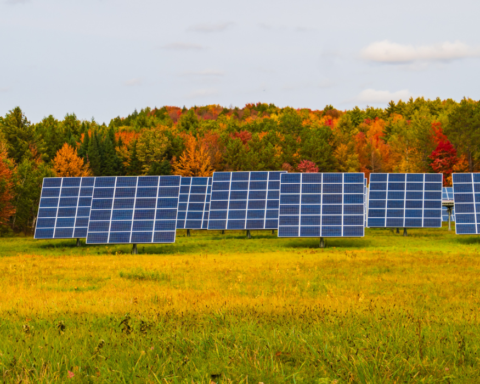
The Corporate Knights research unit conducted a sustainability analysis on the projects, finding that 43 of the 167 projects listed in the pre-summit book represent potential sustainable capital expenditures (capex). This sustainable capex is potentially worth $169 billion, or 36% of the $465 billion in the book’s total prospective investment projects.
Among the largest of these projects are the proposed $44-billion Wind West project in Nova Scotia, the $36-billion Novatron project to provide Atlantic wind energy to Quebec, and two high-speed rail projects in Western Canada estimated together at more than $30 billion. (Corporate Knights defines sustainable capex as capital expenditures that help to accelerate the transition to a low-carbon economy.)
Corporate Knights research director Ralph Torrie cautions that this is a “first blush” analysis requiring more information for firm conclusions. However, he notes that at 36%, the deal book’s sustainable capex is much higher than a comparable estimate of the global stock markets. Corporate Knights estimates that the All Country World Index (ACWI), the oft-cited global equity index, contained 16% sustainable capex in 2024, less than half the level in the summit’s deal book.
An additional $95 billion, or 21% of the total, might qualify as sustainable capex, but initial information isn’t detailed enough to do a firm determination. About $71 billion, or 15%, is categorized as infrastructure that has a neutral sustainability rating.
The prospect of carbon lock-in
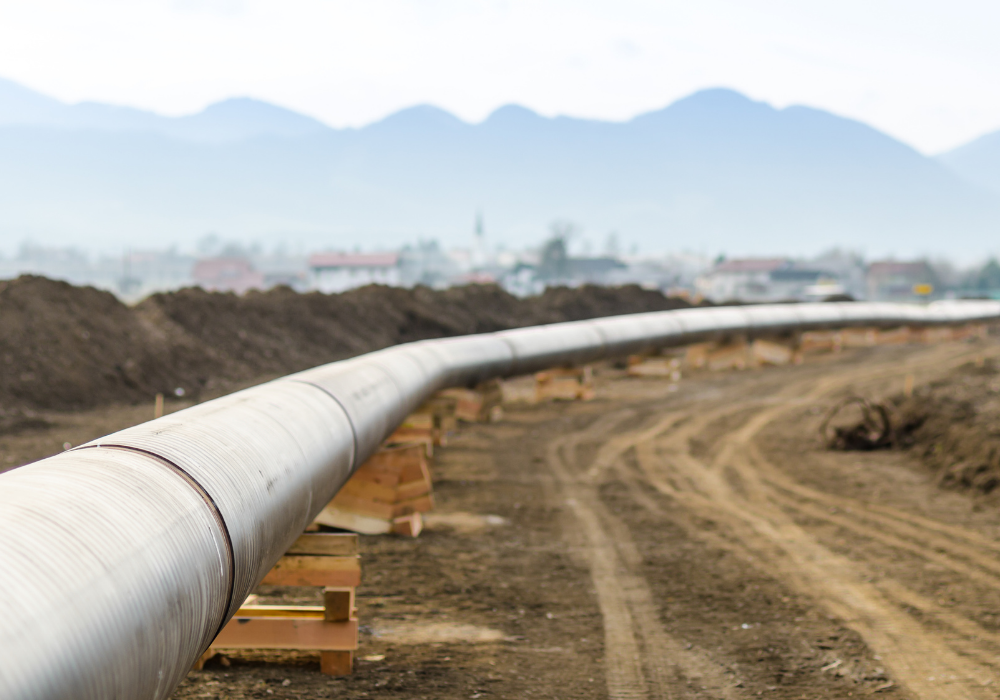
More than $129 billion, or 28%, of total potential new projects listed in the deal book would not qualify as sustainable capex under the Corporate Knights definition. These include Alberta’s proposed $35-billion pipeline proposal to bring oil from the oil sands to the West Coast, the $29-billion Ksi Lisims and $10-billion Woodfibre liquefied natural gas projects in British Columbia, and the $23-billion Kino Aski LNG project in Quebec.
The summit deal book’s oil and gas expansion projects threaten to continue the business-as-usual economy, Torrie says. “Fully 28% of the identified capex is in the old economy and would bring carbon lock-in,” he writes in an internal research note.
“The No. 1 problem with the deal book is the amount of oil and gas projects that are proposed,” said Richard Brooks, climate finance director at advocacy group Stand.earth. “It features $100 billion of new oil and gas projects that Mark Carney is seeking investment in.”
RELATED STORIES


But Kevin Thomas, CEO of the Shareholder Association for Research and Education (SHARE), says it’s simply not realistic to think that the current government would exclude fossil-fuel projects from the summit. “The likelihood that a Canadian federal government, at this point in time, would put all this together and not have any oil and gas on the table is pretty much nil,” he says in an interview.
The federal and provincial governments plan to subsidize construction of the West Coast pipeline, even in the face of financial analysts’ forecasts that oil demand will not cover its costs. Likewise, many forecasters are projecting that the proposed LNG projects face a market “bull trap,” mistaking current price increases caused by the Iran war for high long-term prices.
Thomas says this is a key problem for Canada’s new oil and gas projects. “How robust do we think that the actual market for legacy energy projects is going to be once those subsidies end?” he says. “You can get them built, but do you really think they’re going to generate revenues long-term?”
Short on strategy
Torrie says the deal book lacks a coherent vision and relies on a hodgepodge of projects brought forward by provinces and private interests. He also notes that a small number of projects concentrated in Eastern Canada make up the lion’s share of the sustainable capex. “There really isn’t any underlying strategy or framework under this – it’s the cards and letters that came in the mail,” he writes.
Thomas agrees that the lack of strategy is a problem since it can create more momentum for oil and gas projects than for more difficult but necessary projects, such as critical-minerals mines for the sustainable economy. To address this, he says the federal government should pay more attention to coordinating national electrification, a pledge made in the government’s electricity strategy earlier this year. He would like to see a “minor projects” initiative created in addition to the government’s Major Projects Office to get earlier-stage developments underway.
“That kind of dealmaking is probably more important to building out our economy than just the big headline numbers around how many billions are here and billions there,” he says.
Eugene Ellmen writes on sustainable business and finance. He is a former executive in the Canadian responsible investment industry.
The Weekly Roundup
Get all our stories in one place, every Wednesday at noon EST.