
Today, about 80% of Canada’s electricity comes from emissions-free sources. Wind and solar remain, by far, the cheapest new sources of electricity to add to the grid, according to the 2026 levelized-cost-of-energy report by the global accounting firm Lazard. But to build a grid that emits less carbon, we need much more capacity: as Canada’s roads, homes, buildings and industries reduce their dependence on fossil fuels, demand for electricity will grow. By the Canadian government’s own estimates, electric vehicles, heat pumps, data centres and more will require the Canadian grid to double the amount of electricity it produces in less than 25 years.
According to the Corporate Knights Climate Dollars analysis – a comprehensive look at the capital investments needed to decarbonize Canada’s economy, sector by sector – that shift will require approximately $2.17 trillion in capital investments over 25 years, of which $1.26 trillion is needed for investments in the grid and $915 billion for investments in the end-use sectors. For the grid part of the equation, that translates to average capital investments of around $50 billion per year over 25 years.
The challenge
Annual investments of $50 billion to transform the grids may seem daunting. In 2024, capital investments in the grid – for things like new power generation projects, storage solutions and network upgrades – totalled $32 billion, and that grew to $34 billion in 2025. This was the largest baseline capital expenditure for the nation’s energy sector, second only to oil and gas extraction at $42 billion.
Far from being a drain on public coffers, stepping up these investments would ultimately lead to treme ndous cost savings. A trans-Canada transmission line alone would, according to estimates by Corporate Knights researchers, result in up to $255 billion in savings after allowing for its estimated $100-billion price tag, and other improvements could save hundreds of billions more in fuel and other infrastructure costs, bringing down electricity rates for millions of Canadians.
The Mark Carney government announced its national electricity strategy on May 14, accompanied by new commitments to improve interprovincial grid connections. Yet, despite about $13 billion annually earmarked for clean-energy initiatives, there remain several hurdles.
The regulatory landscape is fragmented because the provinces administer their own electricity systems. Canada’s geography is also one of the most challenging in the world. More than 200 remote communities still rely on diesel generators year-round. And while massive centralized investing will be necessary to create the electrical grid of the future, top-down initiatives are not always warmly received. For example, 155 municipalities in Ontario formally denounced the wind turbines that were raised across rural farmlands under Ontario’s 2009 Green Energy Act, which stripped municipalities of their ability to block green-energy projects. Wind power remains a difficult sell in many parts of Ontario.
The opportunity
Of the $1.26-trillion funding equation outlined in Climate Dollars, only about 20% to 25% will come directly from government financing in the form of direct funding (through, for example, the smart renewables and electrification pathways program), tax credits and public financing. The rest will come from private players, including institutional investors like pensions and private utilities.
Community bonds can bring more ordinary Canadians into the funding equation. For a relatively small investment – a minimum of $1,000 in many cases – community bonds allow retail investors to become stakeholders in renewable energy projects. Their initial investments function as loans to the co-op administering the project and are repaid with interest. The returns may even exceed government-issued bonds. Investors should take note, however, that those higher returns can reflect additional risks, including the lack of a secondary market for community bonds – which may make them difficult to sell before maturity – or the possibility that an issuer could default.
RELATED STORIES


For renewable-energy projects, specifically, this financing structure comes with several key advantages:
- An antidote to NIMBYism: Grassroots resistance becomes advocacy when local communities have an opportunity to become active financial stakeholders. Wind farms or solar fields aren’t imposed on them by a government or a corporation – they become a wealth-generating asset for the community.
- Local support, local control: Community bonds create a funding framework that keeps the revenues earned by the project within the community and gives them control over the project, including setting interest rates at which the bonds are repaid.
- A bridge to greater investment: Much of the inertia in funding renewable-energy projects comes in the early stages, when it can be difficult to secure sufficient funding from institutional lenders. But community bonds have a lower barrier to entry. With enough support, this community financing becomes a bridge to secure further funding from larger investors who then feel more confident in the success of the project.
The momentum
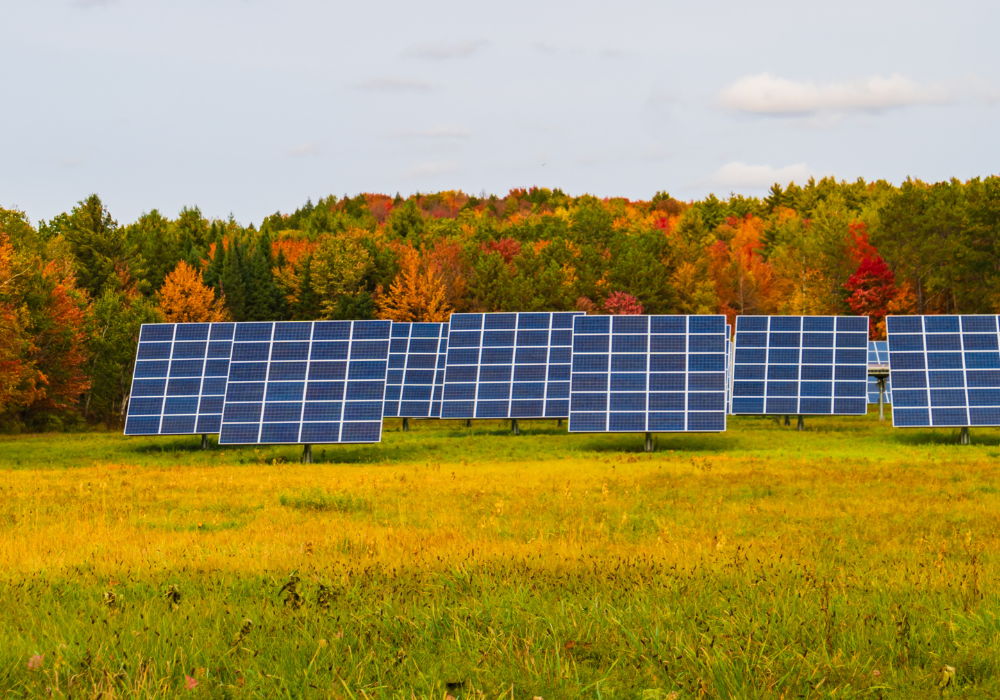
SolarShare is Canada’s largest renewable-energy co-op. It owns and operates 51 solar projects across Ontario. That includes rooftop solar installations at factories and community centres in the Greater Toronto Area and its massive “Sundance” installations in the non-arable fields of Timiskaming, north of Sudbury. These projects generate enough power, collectively, for about 2,000 homes annually, offsetting approximately 560 tonnes of carbon dioxide equivalent.
Since the founding in 2010, the co-op’s membership has grown to include more than 2,000 investors who have earned more than $17 million in interest on a total investment of about $80 million. According to Brian Chang, the general manager, the bond rates were at one time much higher than guaranteed investment certificates (GICs) and other fixed-income investments thanks in part to more generous energy contracts with the government. Today those rates are at least on par – about 4% over a three- to seven-year bond – and the co-op is actively exploring new revenue-generating opportunities.
There are also financial advantages to investing in a co-op like SolarShare as opposed to, for example, buying stock in a solar company. For one, bonds are fixed incomes, which means they are repaid at agreed-upon rates not linked to the value of the company or project. After SolarShare completes its own comprehensive feasibility analysis for a new project, it outsources the initial construction before buying ownership back at a premium – a process that helps de-risk the investment, Chang explains.
“If you invest in a solar company, you also don’t get much say,” Chang explains. “Here, every member gets one vote.” It doesn’t matter if you’ve invested $1,000 or $100,000.
Next steps
SolarShare is one of a relatively small group of co-ops leading renewable-energy projects across the country. One study out of Royal Roads University estimates that there are just 82 active energy co-ops across Canada, which own or co-own a total of 214 renewable-energy projects. Compare that to countries like Germany, which has 847 energy co-ops, and the Netherlands, which has 713.
The number of active renewable-energy co-ops in Canada has been cut in half since its peak in 2016, when guaranteed, long-term fixed-price energy contracts were discontinued. Tight regulations around the sale of electricity back to the grid, as well as expensive, burdensome legal requirements around fundraising, remain ongoing challenges for co-ops.
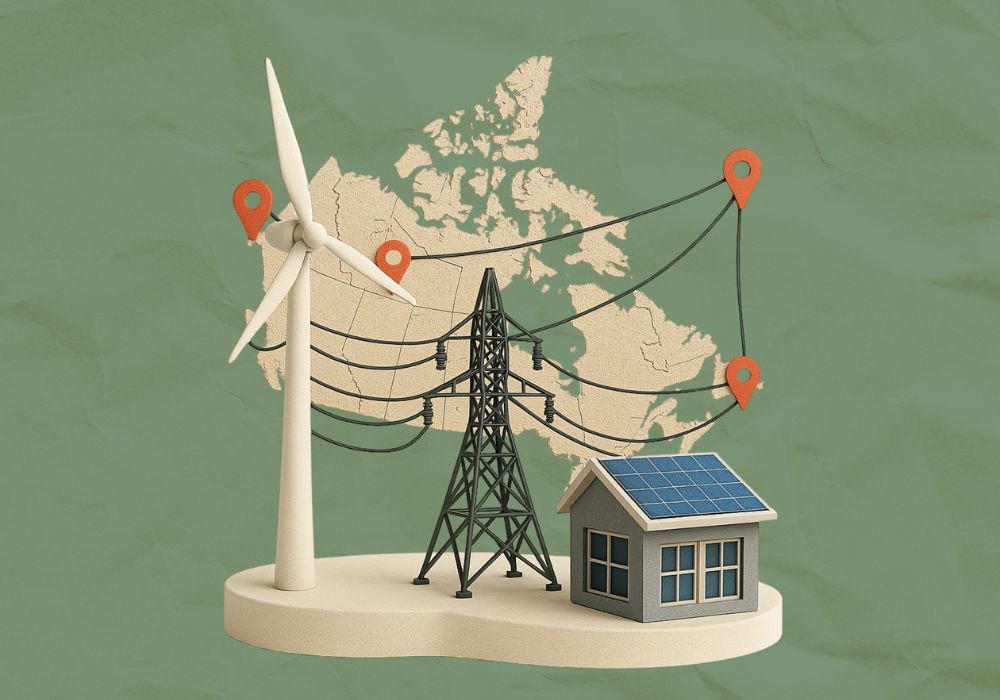
As well as supportive policies, decarbonizing the Canadian grid will require decentralizing both power generation and storage solutions. A trans-Canada transmission line will be able to bring offshore wind power generated in the Maritimes to serve peak energy demand in southern Ontario, but this system will be robust only if it is fed by power-generating nodes all over the country.
Canada’s current energy system has prioritized centralized electricity generation and distribution. But now there seems to be a recognition that decentralized solutions with broad community buy-in are essentially. If the political will exists and the policies are aligned, community bonds may be one of our best tools to help build them.
Tristan Bronca is a writer and editor based in Newmarket, Ontario.