
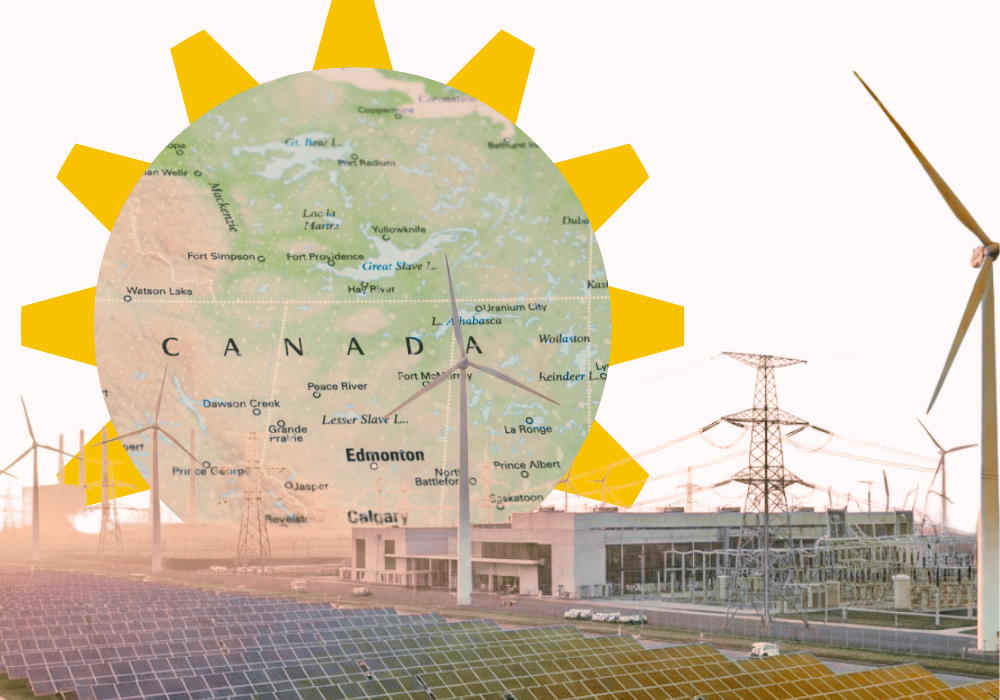
It’s been a big few weeks in Canadian climate policy. The new federal electricity strategy is largely good news, but the new industrial carbon-pricing plan that stems from the final Canada–Alberta memorandum of understanding is a significant step backwards.
That’s a real disappointment, to say the least. Industrial carbon pricing is Canada’s most consequential climate policy for cutting emissions and keeping costs low, but it needs serious reform. And while the memorandum makes slight improvements to the existing system in Alberta, the deal misses the mark by a long shot when it comes to living up to the policy’s potential, and it will have knock-on effects across the country as the changes are applied in other provinces. For the moment, it puts Canada off path in terms of reaching net-zero carbon emissions by 2050.
We’ll be talking about changes to electricity and industrial carbon-pricing policy for many months to come. But there’s another moment upcoming that deserves some greater public and media scrutiny: the imminent release of the federal government’s new vehicle emissions standards, the outline of which was announced by the prime minister back in February.
RELATED STORIES

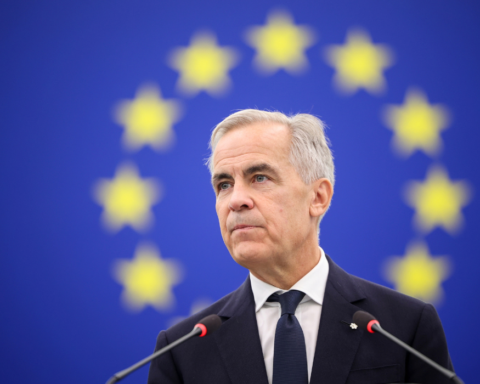
At that event, Mark Carney made a clear commitment to achieve “the equivalent emissions reductions of a 75% electric vehicle adoption rate” by 2035. Our team at the Canadian Climate Institute will be watching closely to ensure that the details of the policy package give us the tools to reach this outcome.
Some analysts have already concluded that the policy will fall short.
The Pembina Institute, for instance, has modelled the government’s vehicle emissions limit for 2035 – measured in grams of carbon dioxide equivalent per mile – and found that it is not strong enough to achieve the 75% EV sales target. Clean Energy Canada has outlined a number of additional design features that will be critical for the new standard to meet in order to achieve the government’s goals. That includes questions around speed of implementation, applying a single standard across all vehicle sizes, and limiting compliance flexibilities that can undermine the policy’s integrity and reduce its emissions impact.
This is an important test for the Carney government, and not just because transportation decarbonization is critically important. This is really the first new climate policy the Carney government has announced. Every other policy it inherited from the previous Trudeau government and has either eliminated (like the consumer carbon tax) or retained in a changed form (like industrial carbon pricing and methane regulation). The new approach to passenger vehicles is a new goal clearly outlined by the prime minister himself. For the sake of its credibility generally, it behooves the government to ensure there’s a tight relationship between its expressed goal and policy detail sufficiently ambitious to get there.

This is not just a matter of reducing emissions. It’s also about ensuring that Canada keeps pace with the rest of the world and is positioned properly to succeed economically in this new age dominated by electric technologies.
Last year, nearly 100 countries broke EV sales records, according to the latest from the International Energy Agency. Globally, one in every four cars sold on the market was electric in 2025.
In China – the largest auto market in the world and the main destination of Alberta crude exports through British Columbia – nearly 55% of new cars were electric in 2025. This past April, that number reached upwards of 60%. That level of uptake is driven by superior technology and cost: 70% of battery electric cars sold in China last year were cheaper than the average conventional car.
All of this is affecting global demand for oil. In 2025, EVs displaced between 1.7 million to 2.3 million barrels of oil per day. That could more than double by 2030 to 5.3 million barrels per day, according to BloombergNEF.
These are massive disruptions to global energy markets led by rapid technology changes that are now unstoppable. They threaten to radically alter the future of the auto sector and oil production in Canada. Simply put, Canadians can’t afford to be left behind.
Rick Smith is president of the Canadian Climate Institute, the co-author of two bestselling books on the effects of pollution on human health, and the executive producer of Plastic People, a 2024 documentary chronicling the damage done by microplastics in the human body.
The Weekly Roundup
Get all our stories in one place, every Wednesday at noon EST.