Nature loss could add US$162 billion per year to sovereign debt-servicing costs across 23 countries, according to new research. Among the major economies, China and India were found to be particularly vulnerable, each facing additional annual interest payments of $70 billion and $49 billion, respectively.
The analysis builds on a modelling framework that examines how the loss of natural capital affects economies and, in turn, financial markets. The findings raise questions about current approaches to financial risk modelling, with as much as $83 trillion of financial assets potentially mis-priced.
The two biggest surprises were “how far behind the financial system is on developing hard numbers around nature-related risk” and “how large the effects could be,” said the University of Sussex’s Matthew Agarwala, one of the authors.
Published in Nature Ecology & Evolution, a peer-reviewed scientific journal, the paper examined how declines in ecosystem services could affect sovereign credit ratings, the probability of defaulting on debt and government borrowing costs. With biodiversity largely treated as an environmental issue, the authors argue it should also be understood as a macro-financial one.
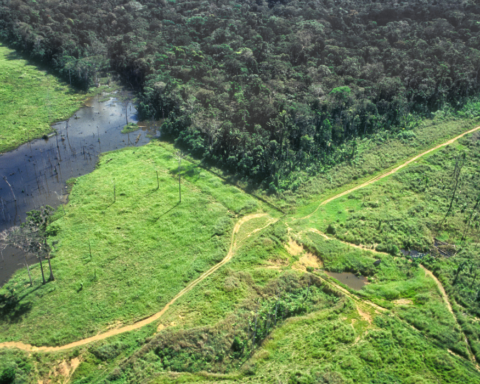
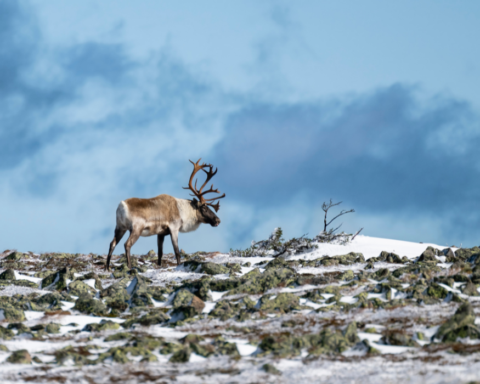
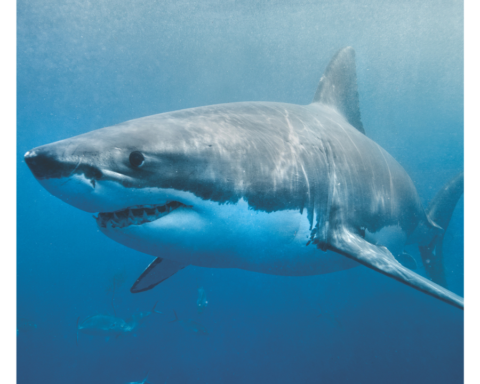
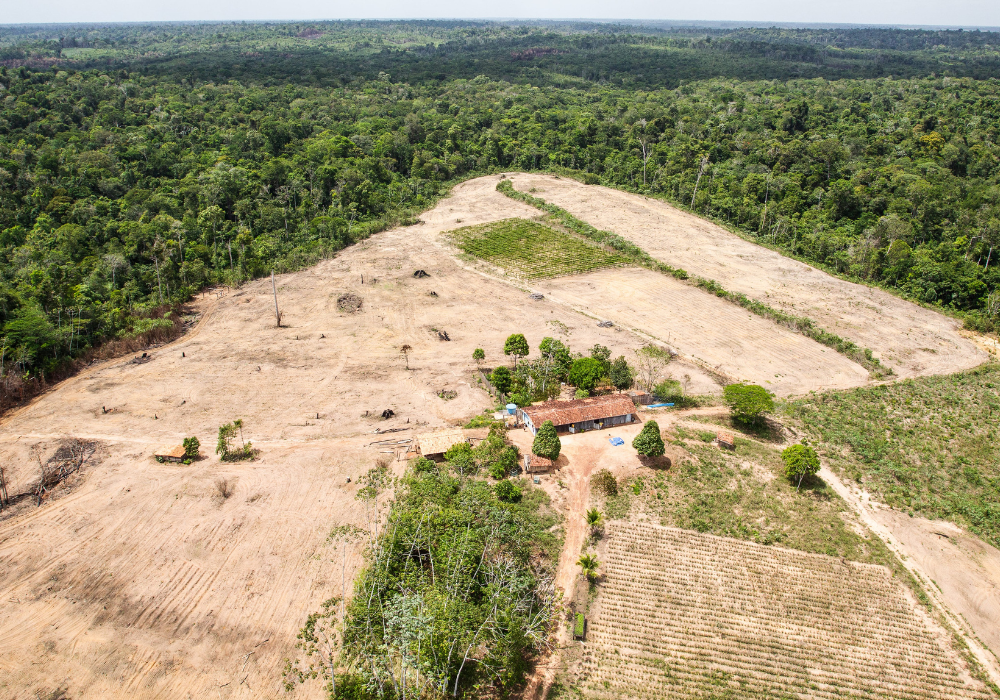
They looked at just three key ecosystem services – wild pollination, marine fisheries and tropical timber – and modelled a partial-ecosystem-collapse scenario, before incorporating the resulting economic effects into their credit-risk calculations based on S&P Global’s methodology.
A blind spot in the system
Among the 23 countries examined, representing 5.5 billion people, China and India were found to bear the greatest risk, but there were also significant potential consequences for developing nations. Madagascar, the Democratic Republic of Congo, Bangladesh, Angola and Pakistan were found to be the most vulnerable, facing losses to gross domestic product of more than 15% by 2030. Under such a scenario, already cash-strapped governments would have even less to invest in infrastructure, health, education and climate adaptation. GDP could decrease globally by $2 trillion annually by 2030.
Agarwala says that the findings demonstrate a “blind spot” in the system and highlight a fundamental policy choice: act now to ensure resilience through upfront conservation investment or pay later through higher borrowing costs. “Countries will pay this money either way,” he says. “Policy just lets us choose who, when and how.”
The scale of the potential increase is significant, as mounting debt-servicing costs would exceed 70% of the annual biodiversity finance target ($200 billion) under the Kunming–Montreal Global Biodiversity Framework.
The real question is whether these risks should be assessed proactively rather than only after they have become visible in traditional macroeconomic indicators.
– Daniel Cash, credit-rating researcher
Agarwala says the potential financial threat should be considered in terms of both scale and speed. The 2008 global financial crisis, sparked by the U.S. subprime mortgage market, had effects felt worldwide. Globally important ecosystems could affect economies on a much wider scale, he warns. “So long as nature loss remains gradual, without tipping points, and in largely isolated one-off collapses, biodiversity risks may be gently absorbed,” he says. “But if we see coordinated collapses and abrupt tipping points that catch us by surprise, then yes, a global crisis is possible.”
Assessing risks proactively
Agarwala says the findings are not intended as forecasts, but rather as forward-looking scenario-based assessments that anticipate how global financial systems might respond to major ecological shocks.
Daniel Cash, a researcher specializing in credit-rating methodologies, says rating agencies were already accustomed to assessing uncertain long-term risks, from demographic change to geopolitical tensions to institutional deterioration. The challenge with biodiversity was not uncertainty itself, he says, but establishing a reliable link between environmental change and sovereign creditworthiness. “Rating agencies need robust evidence that demonstrates how environmental change will affect a sovereign’s economic performance and repayment capacity within a defensible analytical framework,” he says. “The paper makes an important contribution by proposing one methodology for doing exactly that, translating biodiversity loss into macroeconomic variables that are already central to sovereign rating analysis.”
Despite not explicitly taking into account such nature-related risks before they occur, current risk-assessment methodologies already factor in the economic consequences of environmental shocks retrospectively, including changes to indicators such as debt-to-GDP ratios. For example, after Hurricane Melissa caused extensive damage in Jamaica when it made landfall in late October 2025, S&P revised its outlook from positive to stable.
However, the report authors argue that this approach is largely backward-looking, as by the time the economic effects are reflected in credit-rating agencies’ assessments, the damage has already been done. “The real question is whether these risks should be assessed proactively rather than only after they have become visible in traditional macroeconomic indicators,” Cash adds.
The climate threat
Comparing a business-as-usual approach with a partial-ecosystem-collapse scenario, China, India, Malaysia and Bangladesh could face sovereign credit-rating downgrades of at least four notches under the latter. For those countries whose economies rely heavily on tropical timber, marine fisheries and wild pollination services, the impacts were proportionately more acute. “Under this scenario, the DRC, Angola and Madagascar become unratable, as their simulated ratings fall below the lowest grade found in the training data,” the report says. “In practical terms, this scenario would probably lead to a sovereign default.”
Given the study’s limited scope, with just three biodiversity services examined, the findings represent a conservative estimate of the potential impacts of nature-related risks.
RELATED STORIES
“In my opinion, it is hard to overestimate the long-term importance of climate change,” Moritz Kraemer, one of the co-authors, said as Europe and the United States were gearing up for yet another heat wave. “The current heat waves on both sides of the Atlantic – and likely poor harvests and higher food prices down the road – should help to refocus attention,” he says.
While Kraemer’s comments focus on climate risk, he argues that reduced regulatory attention could also weaken banks’ capacity to assess broader environmental risks, including biodiversity loss.
Agarwala calls on financial institutions and central banks to use the findings to stress-test their bond holdings under future ecological scenarios.
As Cash notes, “Whether approaches like this become part of mainstream rating methodologies will depend not only on the quality of the underlying science, but also on whether agencies are confident enough to institutionalize those judgments within their formal processes.”
Soraya Kishtwari is a contributing editor at Green Central Banking.
This article was originally published by Green Central Banking. It has been edited to conform with Corporate Knights style. View the original here.
The Weekly Roundup
Get all our stories in one place, every Wednesday at noon EST.