
The day, at the end of August, was perfect for diving: warm and calm, with a light breeze and a faint tang of wildfire smoke in the air. At a beach near Halifax, Nova Scotia, instructor Eric Peterson was guiding a novice diver around a site popular with the local diving community – a sheltered, sandy-bottomed cove 40 minutes outside of the city, where dive shops often take beginners for their first forays under the water.
Shortly after entering the ocean, they were moving along the sand when Peterson looked up and saw a white shark passing a few metres away. “One half of me was like, ‘Yes, jackpot,’” Peterson says. “And the other half was like, ‘Oh crap.’”
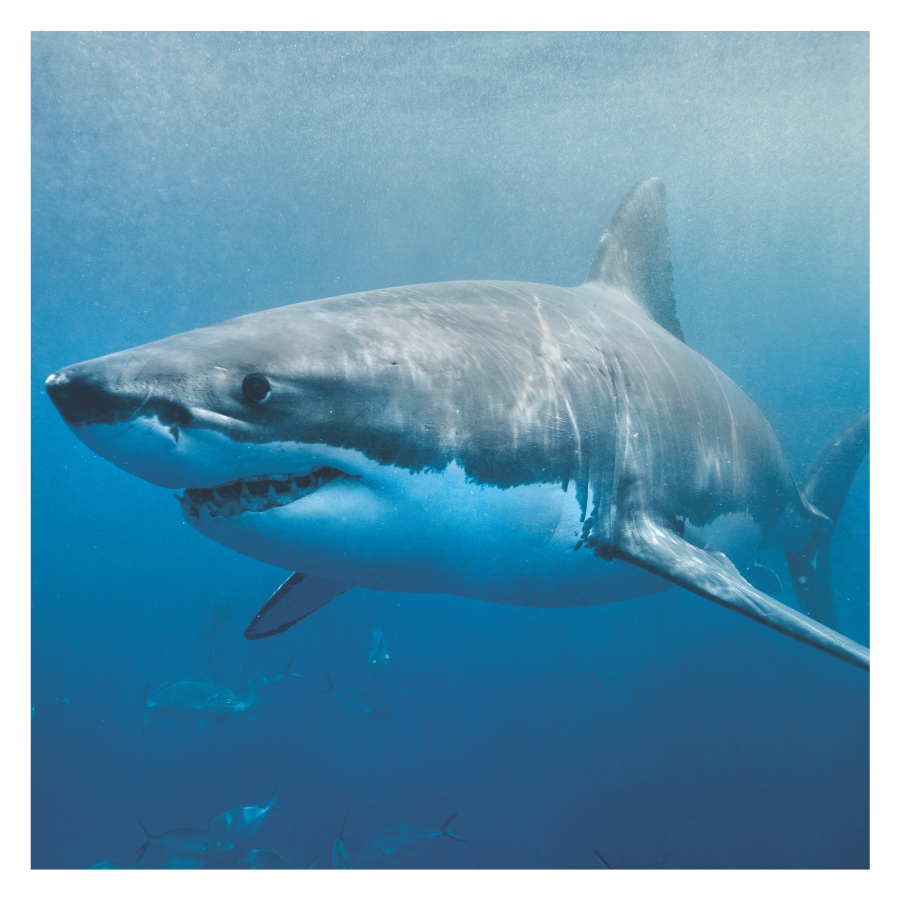
The animal disappeared into the murk, and then reappeared – first, her dark eyes and toothy smile, and then the rest of her muscular body – moving straight toward them. Peterson grabbed the harness of the other diver, a tourist from the United States, and pulled him to the bottom, where they waited, maintaining eye contact. The shark approached repeatedly, coming so close they could almost have reached out and touched her, before veering off each time (cutting off their exit, Peterson later realized). “This shark was investigating us,” Peterson says. “It was trying to figure out if we were food.”
After three passes, the shark decided they weren’t and disappeared into the gloom. Peterson and the other diver quickly surfaced and swam to shore, where they told the people swimming to get out of the water. With the danger passed, Peterson was exhilarated to have encountered an apex predator in her natural environment. “I was thrilled,” he says. “[It was] such a rare and special occurrence.”
Speaking with a biologist afterward, Peterson discovered it wasn’t as rare as he thought; in fact, he was about the 10th diver in the area to have reported an encounter with a white shark in the past three years.
Across the region, it’s not just divers noticing a change. There’s been a notable uptick in the number of people reporting white sharks along Canada’s Atlantic coast over the past decade. For a long time, white sharks were so rarely documented that scientists thought occasional sightings were just fringe members of a more southerly population. Now, they appear in Atlantic Canadian waters in the summer with a regularity that suggests a recurring seasonal population in the thousands.
“Atlantic Canada is the new white-shark population on the planet, at the moment,” says Nigel Hussey, professor of movement and trophic ecology at the University of Windsor. While there is some uncertainty as to the extent to which white sharks are moving in, scientists say that all signs point to a local population that’s growing, as white sharks recover from overexploitation and move northward because of warming waters.
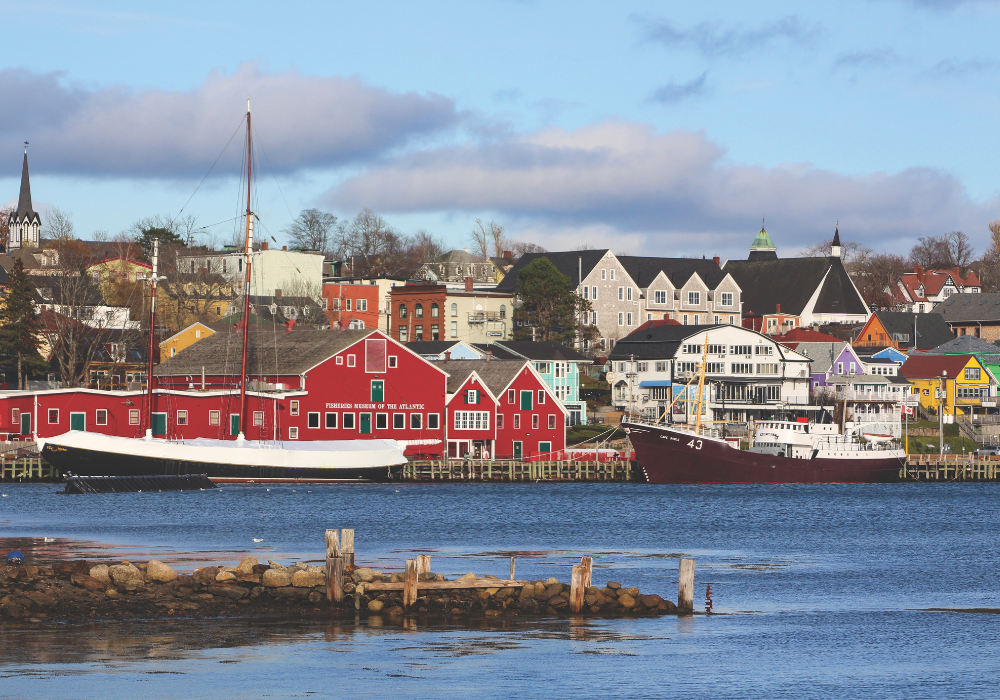
That increasing presence elicits complex feelings in the region. White sharks have an almost unparalleled ability to inspire fear – yet sharks also have the potential to bring new benefits to the region: in research opportunities, in economic activity and in healthy ecosystems. But experts note that some white-shark prep work is also required, especially in a region billed as “Canada’s ocean playground” by one province’s licence plate.
“It’s very exciting, but also there is some degree of challenge for [Canada] to start generating the data to manage it, because it’s an endangered species . . . and to manage the risk of negative human–shark interactions,” Hussey says.
A shark sector is born
Ocean shorelines exert a magnetic pull for vacationers around the world; coastal and maritime tourism represents a significant portion of the global tourist economy, generating approximately US$3 trillion in 2025. Shark- and ray-based tourism is an increasing share of this, producing about US$314 million annually from activities such as diving, fishing and boat tours, according to one 2013 study. Shark tourism takes place in dozens of countries, and in some cases, researchers suggest that it has the potential to contribute more to gross domestic product than fishing.

In Atlantic Canada, this activity is still in its infancy.
The first company to offer cage diving tours began operating on Nova Scotia’s south shore roughly three years ago. In starting the business, marine biologist Neil Hammerschlag was inspired by his master’s degree in South Africa decades before, where he ran cage diving tours to fund his research. After an academic career in the United States, he began looking for a way to return to Canada and, seeing the increasing number of shark sightings in Nova Scotia, recognized a chance to return to his roots: “I thought, why not kind of use this idea of combining cage diving and the public’s interest in sharks with science, and essentially came up with this concept for Atlantic Shark Expeditions, which is cage diving to support science.”
Hammerschlag says it took a few seasons, but Atlantic Shark Expeditions has managed to dial in its formula. In 2025, they saw white sharks on every expedition and identified 109 different individuals, tagging six sharks with satellite tags. The company has taken hundreds of people on white-shark expeditions, many of whom describe being motivated by the desire to participate in research or to see sharks up close. “Interestingly, it’s not thrill-seekers at all,” he says.
Hammerschlag’s operation came up against some local opposition initially. Local surfers and other ocean recreationalists raised concerns that its approach would make human–shark conflict more likely. Some of that concern was fuelled by rumour. People had heard that the company was throwing fresh chunks of fish in the water, a practice known as chumming, meant to draw the species in. Hammerschlag denies this, though the company does use tuna and seal blubber as bait. It also lowers waterproof speakers into the water to produce a low-frequency sound attractive to sharks. Hammerschlag acknowledges that some people have concerns about changing shark behaviour, but he says their own research doesn’t support the idea that bait causes sharks to hang around. Of the 109 sharks they saw, most they saw only once. “If they’re being habituated, you would expect to see the same ones day in and day out, right? But you don’t. You see completely different ones. They’re moving through.”
Researchers in other jurisdictions where shark tourism is more established have drawn similar conclusions. Studies of wildlife tourism in Mexico and Australia found no long-term habituation from baiting, though that didn’t stop Mexico from banning white-shark tourism on Guadalupe Island in 2023, citing bad practices in the industry that had sometimes proved deadly – for the sharks.
This reflects the broader reality: there were 12 confirmed fatalities from shark encounters worldwide in 2025, and there were 65 “unprovoked” attacks, including one in Nova Scotia, where a white shark bit through a paddleboard at a beach near Halifax (the paddler was unharmed). That pales in comparison to the number of sharks killed by humans, which exceeds 100 million a year.
Despite these stark figures, sharks are nonetheless often perceived as remorseless killers and humans their defenceless victims – a narrative whose strength demonstrates just how deep-seated (and culturally reinforced) our fear of them is. In Atlantic Canada, scientists warn, a lack of familiarity and preparation has the potential to drive conflict.
Nigel Hussey, who runs a field research station tracking sharks on Nova Scotia’s southshore, says that everywhere else in the world where there are significant white shark populations, there are programs to mitigate the interactions with people that will inevitably occur. Yet in Atlantic Canada, these are so far lacking.
Sharks are not interested in people, Hussey says, but because they spend most of their time in the same part of the ocean that we do, conflict can arise. “We’re certainly at a point, and have been for a while now, where [Nova Scotia] needs to acknowledge white sharks are here and they’re here in numbers,” he says. Without the right data and preparation, there’s a risk of a negative encounter, he says, which could in turn be negative for shark conservation.
Steve Crawford, professor of integrative biology at the University of Guelph, points out that visitors may not understand that white sharks are now part of
the environment in Atlantic Canada. For several years, Crawford says, he’s been advocating for white-shark signage and accompanying trauma kits at popular coastal destinations in the region, as beaches in Maine and Massachusetts have done. “To date, not a single government agency anywhere in Atlantic Canada has made the responsible decision to provide this kind of risk-management signage.”
Getting the opportunity right
Increasing numbers of sharks are not only a source of risk – they’re also a draw.
In other shark hot spots, such as Australia and South Africa, sizable industries have arisen out of people’s desire to interact with sharks; a 2017 study found that shark-diving tourism contributed $25.5 million (AUD) annually to Australia’s regional economy. While research suggests that activities like cage diving have minimal behavioural impact, the context of that research is that it happened in jurisdictions that have navigated a learning curve to establish effective regulations, Hussey says.
 Cage diving isn’t the only appeal. White sharks have the potential to fuel a range of economic activity, from scientific research and tourism to wildlife documentary production. “There is a whole economic ecosystem around white sharks that could be very positive in Nova Scotia, but we all acknowledge . . . we need regulations in place,” Hussey says.
It’s worth doing the work to get this right, scientists say, because as white sharks become more established in the region, opportunities to get close could help dispel fear of the unfamiliar.
In mid-summer of last year, Geraldine Fernandez was on an outing on the Atlantic Shark Expeditions vessel, as part of a research project she was doing with Dalhousie University’s Future of Marine Ecosystems lab. It was a day like any other: some guests were enjoying the ocean in the cage, and Fernandez was standing atop the cage, dipping a tool she uses for estimating shark length in the water.
A blue shark glided past, only to suddenly disappear; seconds later, a large white shark swam into view. Fernandez says he was more than four metres long and beautifully coloured, but what was most striking was his gracefulness. The shark was not interested in the bait but spent “what felt like forever” calmly observing the people in the cage and poking his head out of the water (a behaviour called spy-hopping) to look at the people on the boat. “He was soaking it all in with all the guests,” she says. “He was not afraid. We were not afraid. It was an absolutely incredible experience.”
Seeing the people there respond with delight and curiosity to an animal that’s so often maligned was a deeply fulfilling experience, Fernandez says. It’s an example of how, if managed correctly, the increasing presence of sharks in Atlantic Canadian waters can serve as a reminder about what is, after all, the shark’s environment: when we go in the ocean, we’re not alone. And we wouldn’t want to be.
Moira Donovan is an award-winning journalist based in Nova Scotia, specializing in the environment and climate change.
The Weekly Roundup
Get all our stories in one place, every Wednesday at noon EST.