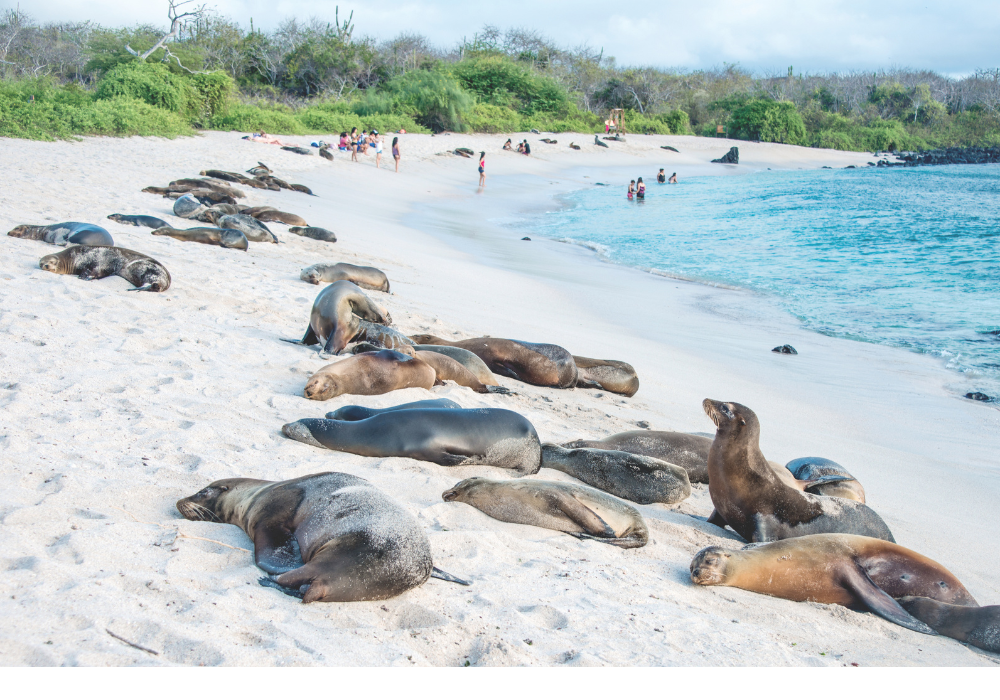
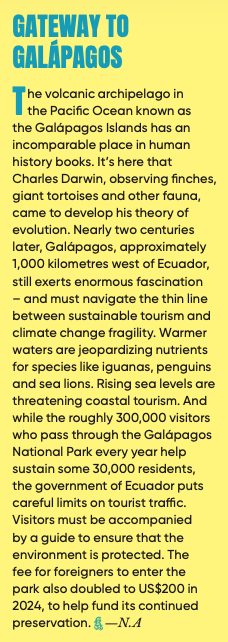
In 2024, the Galápagos Islands doubled its tourist entry fee. Instead of $100, visitors now pay $200 to experience one of the seven natural wonders of the world (all figures in U.S. dollars). Why the dramatic hike? Increased tourism was harming the sensitive ecosystem, creating food and water insecurity for year-round residents, and escalating the risk of introducing invasive species to the otherwise isolated island, CNN reported in 2024. Visitors can console themselves that most of the entry fee goes toward conservation.
While the Galápagos is home to many species that exist nowhere else, implementing tourist fees in the name of conservation is common. Bhutan, for example, charges tourists a $100-per-night “sustainable development fee” that funds economic, social, environmental and cultural projects. Greece charges a nightly “climate crisis resilience fee” that is allocated to a dedicated fund for natural disaster preparedness and emergency response.
While the revenues generated from these examples and others fund community and environment projects, it also raises the question: does putting a price on a nature destination help protect it? Or does it just commodify it?
Natural accounting
Defining nature in economic terms – as the movement to codify natural capital as an asset class seeks to do – helps make it visible on a balance sheet. What may seem like an accounting exercise can produce striking insights. For instance, a 2026 United Nations Environment Programme report outlined a staggering gap between finance that harms the environment and investments in nature-based solutions: in 2023, $7.3 trillion flowed toward activities that harm nature, such as public subsidies for fossil fuels, whereas only $220 billion went toward solutions. In other words, for every $1 invested in protecting nature, $30 are spent destroying it.
When harm outpaces conservation 30 to one, building entire industries around keeping nature intact might seem like the obvious remedy. In 2023, the U.S. National Park Service estimated that it received 325.5 million visitors who collectively spent $26.4 billion in communities near national parks. This spending supported 415,400 jobs and contributed $55.6 billion to the U.S. economy. Despite the proven economic gains, the 2027 federal budget proposed more than a $736-million cut in parks funding. This comes after about 4,000 Park Service people were cut from the workforce in 2025. To compensate, already crowded U.S. national parks will need to attract more visitors as a source of funding, putting additional pressure on their infrastructure and habitats.
 Markets can help businesses understand the value of nature, says Niak Sian Koh, researcher at the Nature Positive Hub at Oxford University, but economics can’t fully capture nature’s value: “because nature is not only something that’s isolated in a [national] park and in ecotourism – it’s also all around us.” A 2022 report from the Intergovernmental Science-Policy Platform on Biodiversity and Ecosystem Services highlighted the other ways that nature’s value can be understood and expressed, such as its relational value, like our personal connection to a forest or coastline, and its intrinsic value, the right for nature to exist. In other words, things that cannot be measured in dollars and cents.
Nature’s legal status
When it comes to nature’s right to exist, legislation is another tool that protects places, wildlife and the tourism it attracts. For example, the Whanganui River was granted legal personhood status in 2017, which means that harm to the river is the same as harming the Whanganui tribe. The Maori, Indigenous people of New Zealand, fought for the river’s rights for more than 160 years and have a cultural duty to protect the landscape. This legal status has unlocked protections and finances that are used to support the health of the river ecosystem. It reshaped the market forces affecting the Whanganui River: harm to the river became a liability and conservation became an asset. “Markets are supported by legal structures,” Koh points out. “We can redesign markets to do better, but often we don’t do this.”
While the tourist fees in the Galápagos and other celebrated destinations are designed with good intentions, their relationship to nature conservation is more complicated. Higher fees don’t necessarily equate to better protection. Popular destinations with lucrative markets could find their ecosystems under threat if a sudden policy change fails to prioritize the very nature that makes them special. “Markets can do what we design them to do,” Koh says. If “we don’t design them to think about communities, to think about diverse values of nature, they’re just going to perpetuate the same existing problems.”