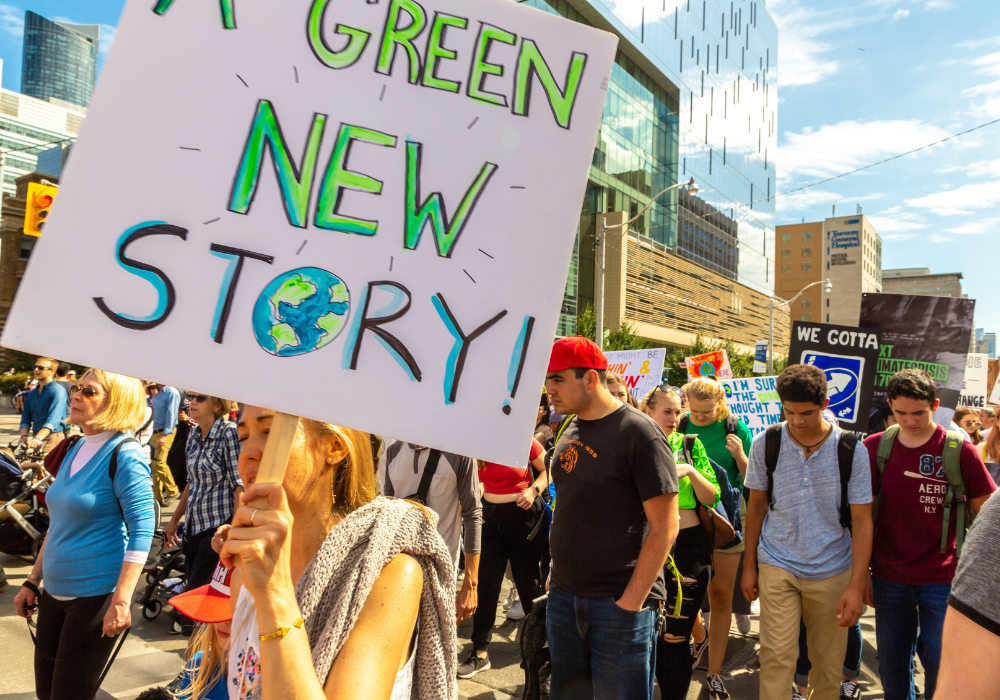
Nobody cares about climate change anymore, right?
I mean, that’s the received wisdom of the moment. The media are full of commentators (many of whom, like this guy, barely believe that climate change is real) crowing about the so-called collapse of net-zero.
Over the past year it has sometimes felt as though the issue has been banished from polite company, relegated to the nosebleeds in the national political arena.
But here’s the thing: climate change hasn’t disappeared from the consciousness of Canadians. It’s simply been displaced, at the moment, by other issues. As pollster David Coletto has found, “At the top of Canadians’ worry list sit the rising cost of living (66%), the economy (39%) and healthcare (35%). The public mood is focused intensely on the pressures of the everyday.”
There’s lots of evidence that Canadians still feel strongly about climate change, despite this recent reshuffling of their priorities. Nearly two-thirds of Canadians think of it as a “major crisis,” and clear supermajorities think governments and companies should be doing more to address it.
So, what should we make of all this?
2026 marks 30 years that I’ve been a working advocate for environmental progress. Through multiple great organizations, countless campaigns and every kind of sustainability issue you can imagine, here’s one of my most important lessons learned – a good thing to remember this Earth Day:
Though it has its ups and downs, concern about climate change will always come roaring back as a top public concern.
There are at least two reasons for this that are often lost on commentators who are too focused on the temporary swings in issue polling.
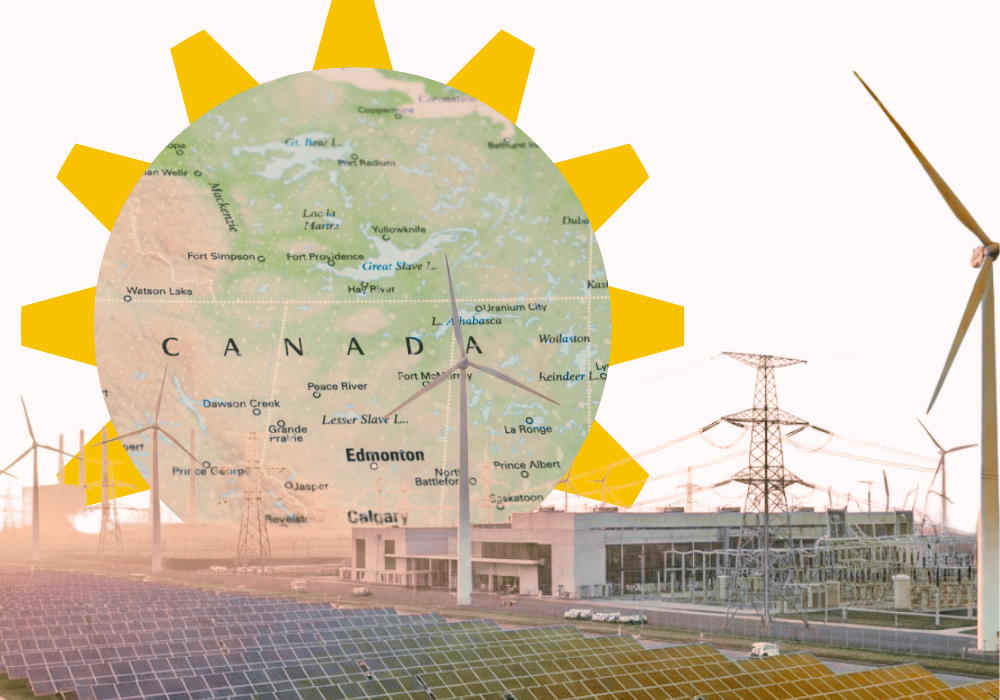
The first is that, as I’ve said many times in this space, climate change progress is now driven by technological and economic trends that are unstoppable. These trends have been accelerating for years. But they have now been turbocharged by the Iran war, which is constraining global oil and gas supply and cranking up the price of gasoline and natural gas. As a result, consumers are rushing to buy electric options that are increasingly affordable and not subject to these wild price swings: from electric vehicles to solar panels to induction stoves, in places as diverse as Lagos, San Francisco and New Delhi.
The second reason is that – perhaps unique among public policy issues – climate change has a built-in ratcheting effect. Even if we stopped all production of carbon dioxide tomorrow, more severe wildfires and flooding and drought are going to keep getting worse around the world. The negative impacts of climate change are increasingly visible and dramatic and measurable.
It’s quite often the case that policy files get bumped back up the priority list only because of things going wrong. One recent example that people may remember is the safety of long-term care homes. Before the pandemic, provincial governments scarcely gave it a thought, and regulatory oversight and public scrutiny were almost non-existent. When the death toll among the elderly in long-term care homes tragically took off during the pandemic, public outrage forced those governments to move quickly to address the issue.
The grim reality is that climate change is going to serve up endless, worsening, disasters over the next few decades to fire up the public imagination, and force a political response.
The issue may wax and wane in prominence, but it will never disappear for long.
RELATED STORIES
Let’s get even more specific as to timing: because so much of the climate change malaise currently afflicting the world is related to the bone-headed moves of the Trump administration (my most recent favourite being the payment of US$1 billion to a French energy company to refrain from building offshore wind farms on leases it had purchased), I’m going to predict that climate change starts re-entering the public discourse on November 4, the day after the Democrats pick up considerable seats in the U.S. House of Representatives and Senate, which all public polling says they are on track to do.
Democrats have internalized an urgency to solve climate change. Yes, this may vary from candidate to candidate and from place to place, but whether it’s centrist Virginia Governor Abigail Spanberger’s commitment to accelerating clean-energy deployment or progressive New York City Mayor Zohran Mamdani’s tying together of heat pumps and affordability, a basic commitment to reducing greenhouse gas emissions is a permanent part of the Democratic Party’s offering.
Why is this the case? Because it’s a big deal for a significant majority of their voting base. More than 85% of registered Democrats think that developing clean energy should be a high or very high priority for government. But beyond the brass tacks of electoral incentives, there is the hard-headed dollars-and-cents argument that the United States cannot let China dominate this new industrial revolution powered by clean electricity and electrical machines like EVs and heat pumps.
History will record Donald Trump’s quixotic crusade against windmills and the rest of the clean-energy transition as an irrational, short-lived and economically disastrous footnote.
So this Earth Day, take heart: the pendulum of climate change concern is about to swing again. We’re almost through this difficult period. This time next year it’s going to be a whole new ball game. And we’re going to be on the offence again.
Rick Smith is president of the Canadian Climate Institute, the co-author of two bestselling books on the effects of pollution on human health, and the executive producer of Plastic People, a 2024 documentary chronicling the damage done by microplastics in the human body.
The Weekly Roundup
Get all our stories in one place, every Wednesday at noon EST.