
Corporate Knights is a media sponsor of Toronto Climate Week.
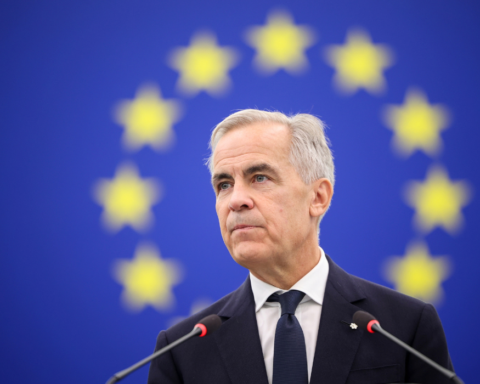
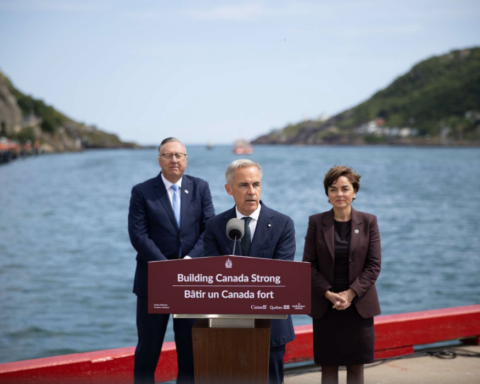
In January, Mark Carney told the crowd at the World Economic Forum’s annual meeting that the middle powers, like Canada, have the capacity to build a new world order and that allies will need to diversify to hedge against uncertainty. For Canada, the government is partly betting on a lower-carbon economy to meet this middle-power moment. The federal government’s climate competitiveness strategy aims to leverage clean technology and the nation’s abundant natural resources to boost Canada’s economy and position itself as a climate leader.
Though there are federal actions that have undercut this ambition, such as continued oil and gas subsidies, and evidence that curbing emissions in Canada has stalled, the economic case for climate action in Canada is strong. Some 66% of investments in Canadian oil and gas infrastructure are at risk of becoming stranded, according to a 2025 report by the International Institute for Sustainable Development. Canadian pension giant La Caisse saw investments in renewable energy tripled between 2017 and 2025, from $9 billion to $27.4 billion. Jobs within the environmental and clean technologies sector have grown faster compared to the broader economy for three years straight, according to a 2026 Statistics Canada study.
It’s against this backdrop that Toronto Climate Week (TOCW) 2026 will bring together innovators, business leaders, policymakers, researchers, artists and community members from all over the world. The second annual week-long event, from June 1 to 7, aims to showcase local and Canadian innovations while connecting to global opportunities, all while tapping into the discourse around the future of the global sustainable economy.
“I think Canada has a major opportunity right now to shape the global conversation around the clean-energy transition, and how the benefits of that transition to green energy can be an economic benefit for Canada,” says Kate Johnson, regional director for North America at C40 Cities, a global network of mayors from major cities working on climate action.
Cities lead on climate
Johnson, who is attending the Toronto event, has seen several climate action weeks pop up around the world. In some ways, that’s no surprise: “[Cities are] really the first responders,” she says, when it comes to climate change impacts, which intersect with rising energy bills and housing costs. Cities want to respond holistically to these overlapping crises, but it’s challenging, she says. Cities in the C40 network share resources and clout, and they’re making the case that it’s smart to use climate-smart solutions to address broader concerns.
Toronto Climate Week is “a really great opportunity just to get a pulse of what’s happening, not just in Toronto, but in Canada more broadly,” Johnson says. The event is expected to attract around 10,000 attendees to more than 200 scheduled events across the city. On the agenda are things like carbon solutions, the circular economy, cleantech and environmental justice.
Carbon focus
One of the flagship events, Carbon Solutions: Canada’s Competitive Advantage, will look at several carbon-removal and -management solutions in Canada and global markets. Carbon removal is forecast to be a US$1.2-trillion industry by 2050, according to a 2023 McKinsey report. With 20% of the world’s fresh water, 347 million hectares of boreal forest, 62.2 million hectares of farmland, more than 240,000 kilometres of coastline and an abundance of nature, Canada has ample opportunities to leverage its resources to help support climate action – and a lot to protect, too. Several companies have already started to look to Canada’s landscapes to sequester carbon.
Brady Paron, senior vice president of carbon market partnerships at Mast, a reforestation company working on restoring landscapes after wildfires, will be on a panel at the carbon-solutions flagship event. Mast takes trees that were killed in wildfires and buries them deep underground to prevent the wood from further decomposing and releasing more carbon into the atmosphere. To fund wildfire cleanup and landscape restoration expenses, Mast sells carbon credits to companies.

So far, there has been only a pilot project in Montana, but Canada is on Mast’s radar. “We see there’s a huge opportunity for biomass burial projects in Canada, given that we’ve got tons of forests in Canada,” Paron says, “and we’re unfortunately also seeing increasing wildfires here as well.” Paron is Canadian and based in Toronto but works for a U.S.-based company. He says this hybridity affords him a useful lens for TOCW: it’s not just about highlighting the incredible innovation in Canada, but also showcasing solutions to the entire world. “Canada can be a superpower for this moving forward.”
Sequestration strategy
Undo, a U.K.-registered company, has also focused on carbon sequestration projects in Canada. Working with farmers in Ontario, Undo offers enhanced rock weathering, a method that crushes abundant silicate rocks into a powder, through carbon credits sold to companies. The crushed rock both captures carbon from the atmosphere and can improve soil health, creating a win-win for the climate and farmers.
Peggy Sue Deaven, general manager for Canada at Undo, thinks that climate-solution companies like Undo need to showcase that they can make just as much business sense as the conventional big emitters. “We are a robust, competitive, for-profit, eat-your-heart-out [business], and we do good things.” Deaven, who will also be on a panel during the flagship TOCW carbon-solutions event, adds that climate solutions is an area where Canada can already own its leadership status in the world and that there are solutions that make economic sense.
With an existential threat like climate change, it’s important to connect with others, Deaven argues. “The soaring potential for folk to come together audaciously and to think what’s next, how are we pulse-checking with one another – that kind of community coming together is exceptional,” she says. “Toronto’s such a hub for innovation, so it does bring out the best in folk there.”
Corporate Knights is a media sponsor of Toronto Climate Week. This article was produced independently by the Corporate Knights editorial team, and Toronto Climate Week did not review or approve the content prior to publication.
The Weekly Roundup
Get all our stories in one place, every Wednesday at noon EST.