Shannon MacLaggan and her husband, Pete, did not have a business plan when they stumbled upon an abandoned hunting and fishing lodge located along the upper Ottawa River. But they did have a vision. It was 2021, and the couple had sold the yoga studio they had operated for 10 years. “Everybody is so addicted to their phones,” MacLaggan thought at the time. “And we’re all exhausted. Physically, but also digitally.” Immediately, they dreamed of converting the lodge into a resort with a real mission to help people connect to the land.
The couple took the plunge and bought the 12-acre property, armed with the proceeds from the sale of the studio and a guiding philosophy: “We wanted to create a place where people could simplify.”
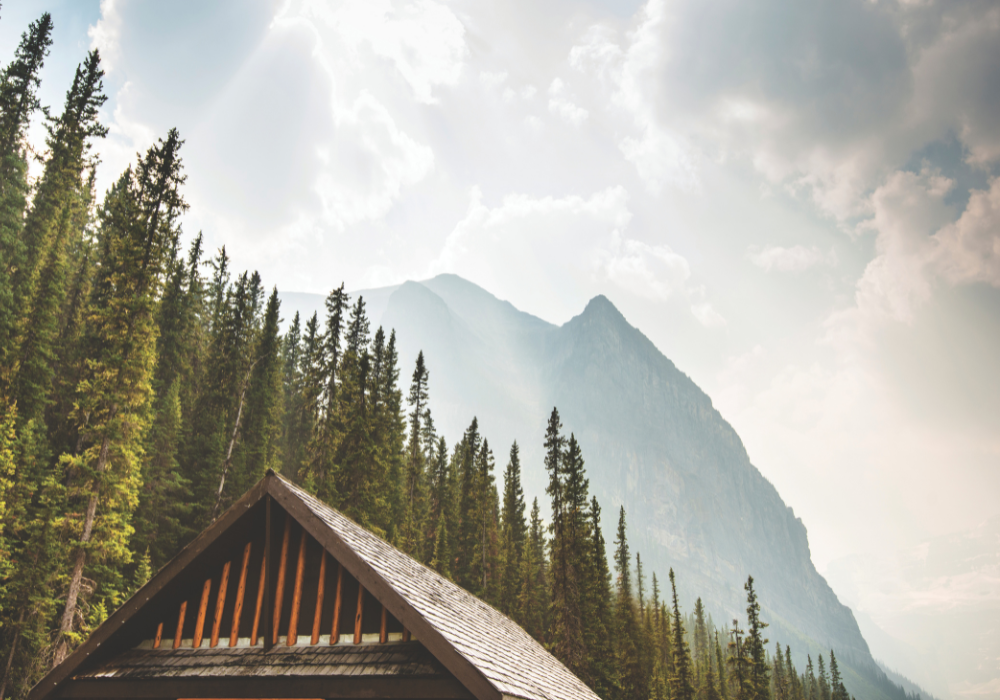
Today, the Anupaya Cabin Co. is a well-tended wildernes retreat with eight renovated cabins and spectacular views of the towering Laurentian Mountains and surrounding forests. The couple seeded an apple orchard, planted vegetable and herb gardens, and built a chicken coop.
As many as 5,000 guests come every year for the usual reasons: to escape the daily grind, paddle the river and hike through the woods. But they also undertake tasks that many vacationers might find unappealing: removing invasive plant species, collecting eggs, helping harvest crops. Visitors are encouraged to replenish and revitalize the land, a new approach to destination travel known as regenerative tourism.
Like sustainable tourism, regenerative tourism aims to minimize the industry’s negative impact from environmental damage as well as the social toll on local communities from over-crowding. But where sustainable tourism mainly guards against resource depletion, regenerative travel seeks to actively restore and regenerate ecosystems, cultures and local economies.
The Journal of Responsible Tourism Management notes that regenerative tourism often emphasizes opportunities to heal tourist destinations.
British Columbia’s Maple Leaf Adventures, which offers small-scale expedition cruises to the Gulf Islands, the Great Bear Rainforest and southeast Alaska, recently revived its “marine debris removal initiative,” an effort to clean up the accumulation of marine debris along B.C.’s remote coastline. In 2024 alone, approximately 32.5 tonnes of debris was collected. The haul included fishing gear, nets, rope, polystyrene floats, plastic bottles and more. Coastal care is now integrated into Maple Leaf expeditions and guests on the tours join in the beach clean-ups.
Tourism is big business
Although the travel industry has seen a decline in business of late, prior to the pandemic, tourism was one of the world’s largest sectors, accounting for nearly 10.3% of all jobs (333 million) and 10.3% of global gross domestic product (US$9.6 trillion) as reported by the World Travel & Tourism Council.

Conventional tourism is based on an economic model of increasing visitor numbers, which becomes self-defeating when the size of the crowd exceeds the coping capacity of the infrastructure and community. With its emphasis on reversing the environmental and socio-economic toll of visitors, regenerative tourism has a lot of appeal for locals.
Not everyone is convinced, however. Writing for Bloomberg News, Amanda Little flagged the industry’s heavy reliance on carbon-intensive air travel and concluded that the sector has a very long road to “transition from being less-bad to becoming that essential meaning of regenerative, which is to ‘bring forth again.’”
As a newcomer to the travel business, regenerative tourism is especially susceptible to greenwashing. Third-party certification helps mitigate against misleading marketing, although the labels range from rigorous to not so much. The respected U.S.-based non-profit Global Sustainable Tourism Council, however, has established global standards for sustainable travel and tourism, which are the result of a worldwide effort to develop a common language about sustainability in tourism.
Anupaya received certification from GreenStep, a sustainable travel consultancy that offers certification services. The process was rigorous, MacLaggan says. It took six months to achieve silver certification (the second-highest level), and GreenStep audits certified businesses every two years. Adhering to those standards is no joke, she says: “It’s really challenging.” But, she adds, “When we saw this place, we knew instantly we would do anything to be able to steward this land.”
Victoria Foote is a writer and editor who specializes in clean energy and climate.
Get all our stories in one place, every Wednesday at noon EST.The Weekly Roundup