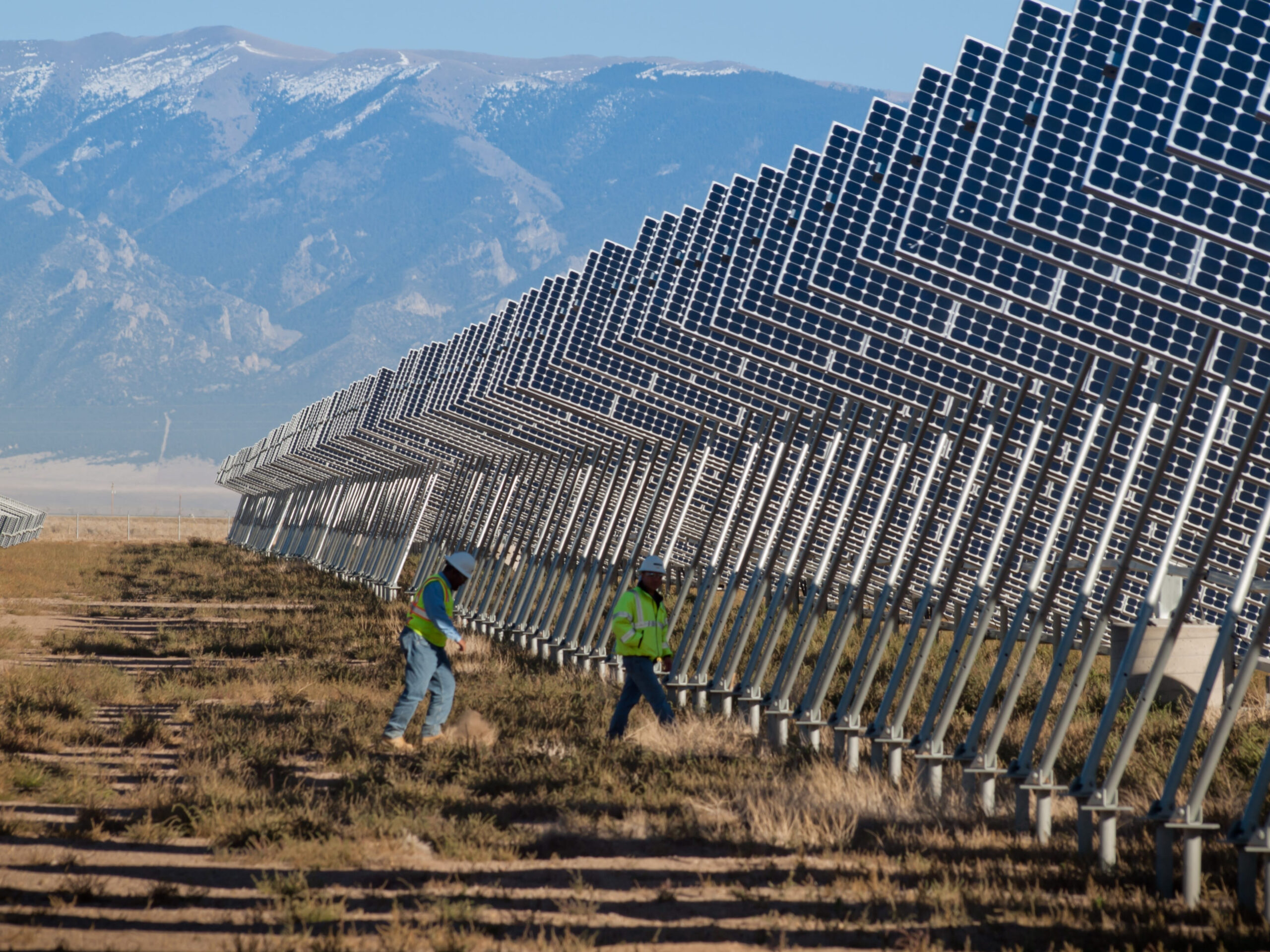
In an announcement set against the behatted pageantry of the Calgary Stampede last week, federal Minister of Energy and Natural Resources Tim Hodgson used a phrase that has become a hallmark of the Mark Carney government: “We need to build to be a clean and conventional energy superpower.”
This “clean and conventional energy superpower” construct pops up a lot in recent government speeches and announcements and was the framing for the prime minister’s “Forward Guidance: Canada’s Energy Future” video released just before Canada Day.
The argument is a double-barrelled one.
Let’s start with the clean part of the equation: looking into the future, the world will be powered by electricity, not fossil fuels. Electricity is inherently more efficient, and therefore cheaper for consumers. It’s also something that can be produced domestically at lower and lower costs, and something that we can control, freeing the Canadian economy from the volatility and unpredictability of foreign-caused oil price spikes.
Canada needs to lay track to prosper in this emerging Electric Age, but in the meantime the Carney government argues that the path to that cleaner future will be paved with the profits from expanded oil and gas production. Maximizing this profit requires curbing the industry’s greenhouse gas emissions so that Canadian oil and gas is the “greenest” option in the marketplace (something, it should be noted, that Canadian companies have been claiming for years). This is the “conventional” part of the argument, and there is no doubt, after last week, that the federal government is prepared to throw everything but the kitchen sink at it to make it a reality.
In fact, it appears Ottawa is even prepared to ignore an important aspect of the recently signed Alberta–federal memorandum of understanding related to the necessity of the new pipeline having a private-sector proponent. With none in the offing (which Canadian Climate Institute board chair Peter Nicholson predicted would be the case in a widely read recent article), the Alberta and federal governments are contemplating up to 90% public ownership.
What isn’t yet clear is the extent to which the federal government is prepared to put its money where its mouth is when it comes to sparking the “clean” side of its energy superpower ambitions.
The prime minister’s statements last week could not have been more categorical. Invoking the name of the visionary founder of Ontario Hydro, he said, “Our new plan will help build clean energy on a scale that would astound even Sir Adam Beck.” Later in his video, the PM underlined the broad societal benefits of electrification: “The path to affordability is electrification. The path to competitiveness is electrification. The path to sustainability is electrification.” He’s on solid ground with all of this, and recent Canadian Climate Institute research underlines this point.
Thus far, however, the rhetorical enthusiasm for “clean” has not been backed by on-the-ground support at a scale similar to what’s rolling out for “conventional” projects. The duelling announcements last week were a case in point. The press conference by Minister Hodgson referenced above was for a federal government contribution of $26 million for 17 clean-energy projects. A couple of days prior, Prime Minister Carney and Alberta Premier Danielle Smith announced that Canadian taxpayers may be on the hook for up to 90% of a $35- to $43-billion price tag.
Millions of dollars for “clean” versus billions for “conventional.”
The next few months will provide no shortage of key moments that put the federal government’s “clean” commitments to the test.
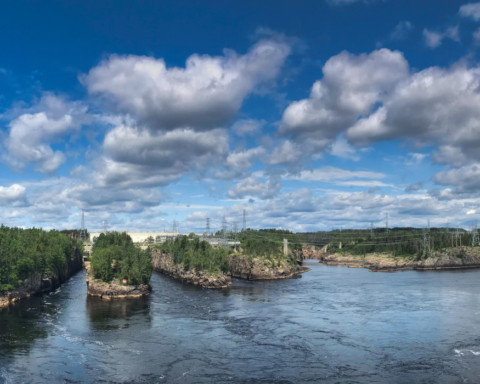
Will Saskatchewan keep burning coal in violation of a Harper-era policy? Will the dispute between Newfoundland and Labrador and Quebec over hydro development on the lower Churchill River be resolved? Will Alberta continue its de facto moratorium on low-cost renewables while building new unabated natural gas plants for artificial intelligence?
There will also be ongoing tests of the commitment to shrink the emissions of Canadian oil and gas production: it’s not clear at the moment whether the revised industrial carbon price will actually enable the long-promised Pathways carbon-capture project.
After last week, it’s clear that Carney intends to forge an entirely new way forward on climate and energy – one he views as more strategic and sustainable than climate policies of the past and aligned with a goal of net-zero emissions by 2050. In his own words: “The climate crisis is still with us and our commitment to fighting it is absolute.”
Achieving that goal requires deliberate policy choices. Net-zero isn’t a switch that can be flipped in 2045; becoming a clean-energy superpower requires steady, sustained effort. The most interesting question to watch in the months ahead is whether Carney’s government assembles a new climate and clean-growth plan with sufficiently ambitious detail to achieve the outcomes the prime minister has now personally set.
Rick Smith is president of the Canadian Climate Institute.
The Weekly Roundup
Get all our stories in one place, every Wednesday at noon EST.