
There was nothing subtle about Javier Milei’s 2023 campaign for the presidency of Argentina. Under his extraordinary mop of brown hair, the self-proclaimed anarcho-capitalist wielded a chainsaw as he promised to slash public spending, remove environmental protections and fully exploit Argentina’s natural resources.
Since becoming president, Milei has set his sights on the country’s most valuable untapped resource: copper. With global demand for the critical mineral soaring, Milei sees a golden opportunity. So do global mining giants, like McEwen Copper Inc., owned by Canadian Rob McEwen, which possesses a major copper deposit in the northwestern province of San Juan.
McEwen is now a central player in the copper rush currently underway in Argentina, one that stands to generate billions of dollars in annual export revenue for the country and to boost the global supply of a mineral that is essential to the energy transition. But while McEwen sees his Los Azules mine as an opportunity to showcase sustainability and best mining practice, many in Argentina see the country’s copper boom as a travesty of environmental justice and are predicting that it will end in bust.
Opening Argentina’s copper reserves
Vast deposits of copper are embedded in the Andes Mountains that form Argentina’s spine. It’s the same geological formation that has turned neighbouring Chile into the world’s largest copper producer and one of South America’s most stable economies. But Argentina, which has been mired in debt, financial crises and crippling inflation, has left most of its copper in the ground: exports dropped to nil in 2018 and have remained there ever since.
Copper mining in Argentina has been hindered by political and economic instability, but also a unique piece of legislation. When it was enacted in 2010, the National Glacier Protection Law (Minimum Standards for the Preservation of Glaciers and the Periglacial Environmental Law in full) was considered a groundbreaking piece of environmental legislation. Declaring Argentina’s glaciers and periglacial zones – frozen grounds that often are saturated with subsurface ice – to be vital water reserves and therefore public assets, it made them subject to special protection. The law prioritized water security above all else: a compelling position in an increasingly drought-prone country that depends heavily on agriculture.
In April, Argentina’s Congress voted to reform the law, downloading responsibility for glaciers and periglacial areas onto the country’s 24 provinces. Now it falls to provincial governments, rather than a federal scientific body – Argentina’s Institute for Snow, Ice and Environmental Sciences – to determine if an area is hydrologically “relevant.” Argentina’s mineral-rich provinces welcomed the change. But many Argentinians did not.
“Now we have a crisis of representation,” says Juan Pablo Milana, a professor of geological science at the Universidad Nacional de San Juan, located in the capital city of San Juan province. “Congress is not representing the people. This law will not last for very long.”
Save the glaciers
Opposition to the legislative change was vocal and swift. By the end of April, two provinces – Santa Cruz and La Pampa – had filed injunctions to block its implementation, and three national organizations – Greenpeace, the Argentine Association of Environmental Lawyers, and the Environment and Natural Resources Foundation – had banded together to declare the reform unconstitutional, gathering nearly a million signatures in support.
Milana has served as a consultant on copper mining projects in Chile and has seen many turned down in the name of glacier protection. While Chile doesn’t rely on federal legislation, Milana says the non-profits that regulate water use are rigorous in their environmental assessments. That rigour, he insists, is necessary. “If a country allows miners to destroy glaciers, they will,” Milana says, citing Canadian-owned Centerra’s Kumtor gold mine in the mountains of Kyrgyzstan as evidence. “Miners go for minerals. They don’t care what is beside, below or above them. They have no conscience.”
A history of harms
The mining industry’s poor reputation in Argentina can be attributed in large part to Toronto-based Barrick Mining Corp. Multiple cyanide spills at its Veladero gold mine in San Juan led to a suspension of operations in 2016, and its Pascua-Lama mine, which straddles the Chilean border, was fined repeatedly for environmental violations before being forced to close by Chilean authorities. Barrick has also led the mining industry’s charge against the National Glacier Protection Law; in 2019, Argentina’s Supreme Court dismissed Barrick’s claim that the legislation was unconstitutional.
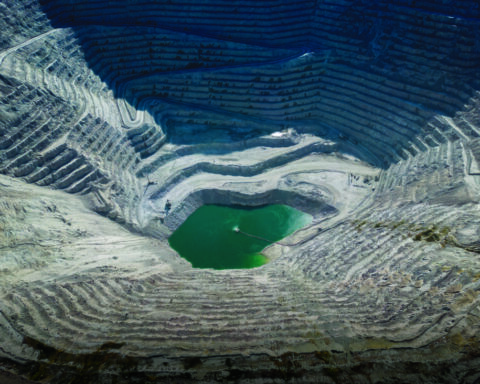
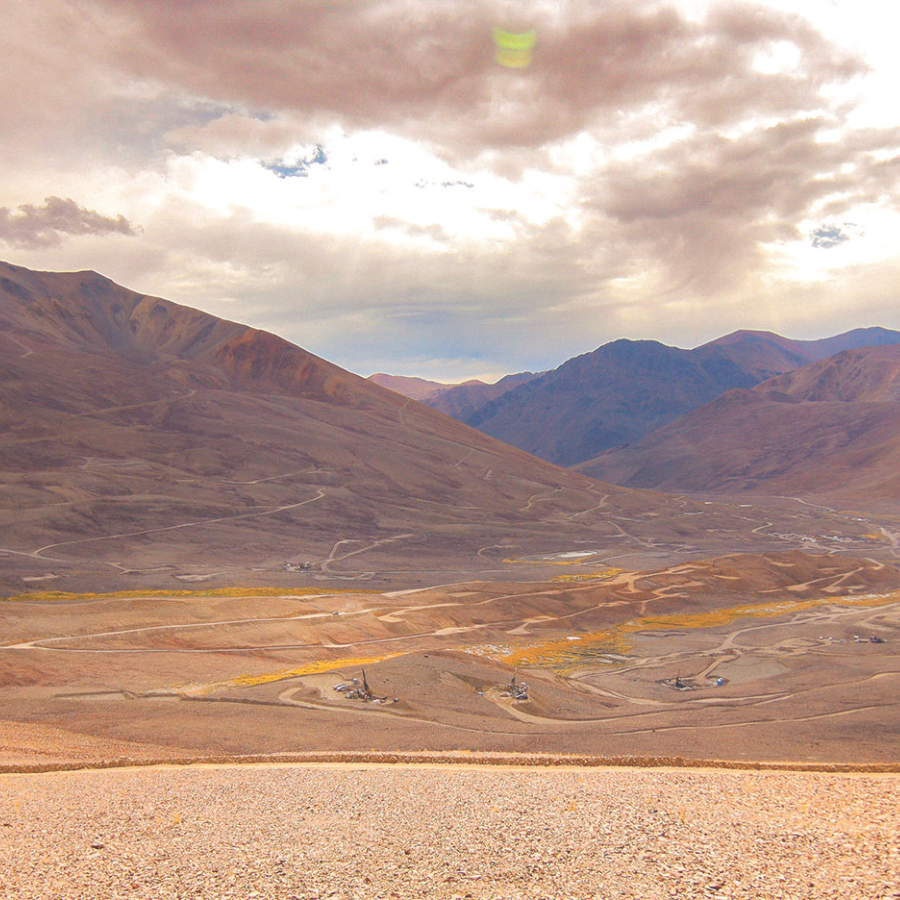
But now that the law has been softened, there is little to stop the 76 copper mining projects currently registered in Argentina from entering full gear. McEwen’s Los Azules property is one of the largest and most advanced of the crop. According to a feasibility study that was completed last October, the deposit, located in a remote mountain bowl at 3,500 metres elevation, could produce some 327 million pounds of copper cathode a year, with an after-tax “net present value” – a projection of total cash flow from the mine minus taxes and royalties – estimated at US$2.9 billion. But McEwen says this mine is as much about rebranding mining in Argentina, and the world, as it is about digging for copper. The driving question, he says over the phone from his Toronto office, is “How do we make a mine that will change the public’s perception of mining?”
McEwen’s status as a mining magnate is well established. His many successful ventures in gold mining earned him a spot in the Canadian Mining Hall of Fame in 2017. Two years later, his company Goldcorp, which he founded in 1983, sold to Newmont Mining in a deal valued at US$10 billion.
McEwen’s also known to be something of a maverick. In 2000, he turned convention on its head when he solicited public input on an underperforming gold mine he had purchased near Thunder Bay, Ontario. Rather than jealously guarding the Red Lake mine’s geological data – as is standard practice – he published it online and offered sizable cash prizes for the best exploration suggestions. More than a thousand submissions came in: input that resulted in a 10-fold increase in the mine’s yield. It was crowdsourcing before its time.
A different kind of mine
Now McEwen wants to roll the dice in a different way. Even though an Argentine environmental non-profit has challenged the Los Azules project in the past for contravening the National Glacier Protection Law, McEwen is confident that the operation will affect no glaciers. More, he wants the project to be a model of sustainability. Opting for heap leaching – an extraction technology that uses considerably less water and energy than conventional copper processing – McEwen says the mine will produce no tailings and be powered by exclusively renewable energy. He has engaged prominent Sudbury-born architect Jason McLennan “to put some beauty on the landscape”: renderings for the workers’ accommodation show a futuristic terraced structure three football fields long, full of hanging gardens and encased in glass. McEwen is even considering putting in a hotel “to enhance transparency of the business.”
And then there is copper’s end use. As the best conductor of all non-precious metals, the mineral is critical to electrification: a core component of wind turbines, solar panels and EV batteries. The International Energy Agency projects a 30% increase in demand by 2040, and its chief executive officer, Fatih Birol, has warned that shortfalls in supply could slow down the energy transition.
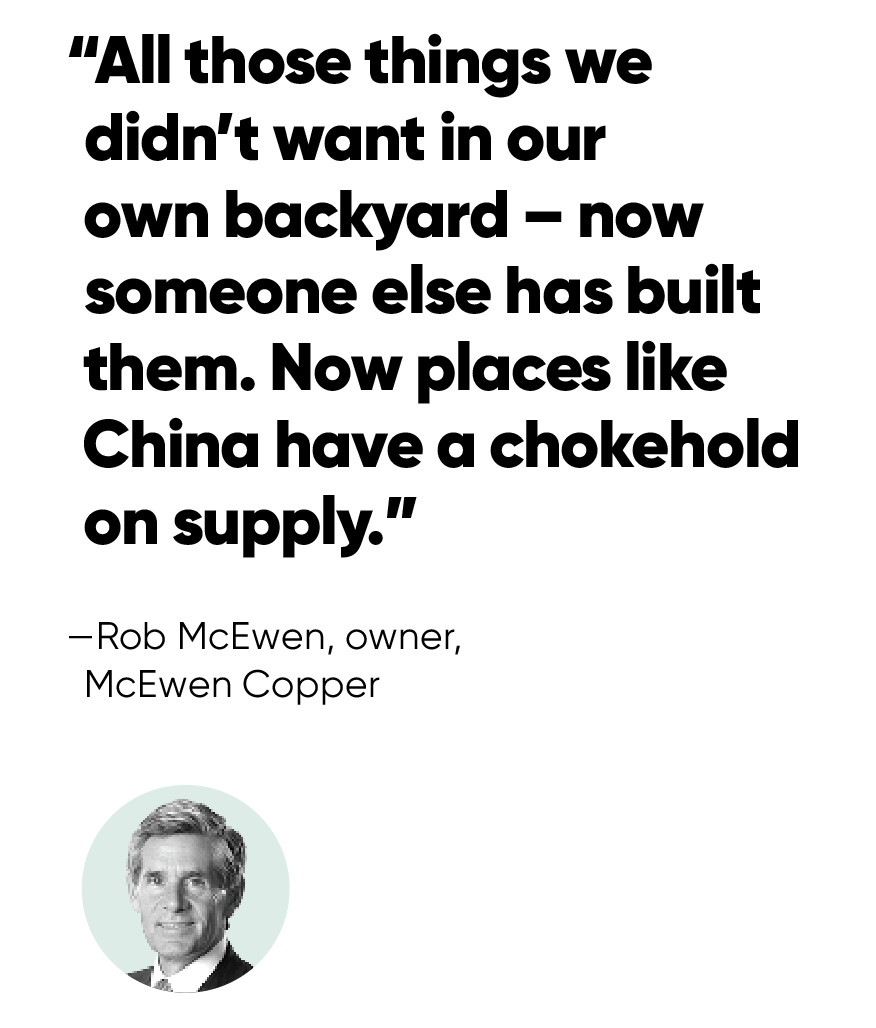
“The world has woken up to the fact that minerals are needed to support modern society,” McEwen says. “All those things we didn’t want in our own backyard – now someone else has built them. Now places like China have a chokehold on supply.”
But the argument leaves some in Argentina cold. For Leandro Gómez, investments and rights program coordinator for the Environment and Natural Resources Foundation – one of the three organizations contesting the reform to the National Glacier Protection Law – the explosion of copper mining in Argentina is a sad case of self-interested politics trumping environmental rights, and an example of local communities losing out in the race to decarbonize. “The current model of the energy transition does not include the interests of the Global South,” he says from Buenos Aires.
Meanwhile, McEwen expects construction in Los Azules to begin next year and the first copper to be in production by 2030.
Naomi Buck is a Toronto-based writer.
The Weekly Roundup
Get all our stories in one place, every Wednesday at noon EST.