B.C. Premier David Eby recently threatened to cut off a key energy-related B.C. export as a bargaining chip in negotiations over the Canada-United States-Mexico Agreement (CUSMA), and it wasn’t a fossil fuel.
With the volume of the conversation around Canada’s new pipeline, you’d be forgiven for thinking oil was Canada’s only major energy export opportunity. But the reality is that global energy systems have shifted dramatically in the last decade, and critical minerals — Eby’s aforementioned bargaining chip — are becoming the new oil, so to speak.
But unlike oil, global demand for key critical minerals is set to skyrocket, driven primarily by demand from clean technologies. An electric vehicle, for example, requires six times the mineral inputs of a conventional vehicle. Even the Trump administration is realizing the urgency, recently announcing more than $2 billion in investment for critical-mineral-related projects and plotting forays in its ever-expanding sphere of influence.
Canada has significant reserves of critical minerals. But with the Americans failing to play fair, Canada has an opportunity to take its business elsewhere, chiefly by prioritizing trade with jurisdictions where we have reliable and functioning free trade agreements. Enter the European Union.
Demand, meet supply
The EU represents the world’s third-largest economy after the United States and China. And it is actively seeking countries like Canada to solve a growing problem: a reliance on a small handful of non-allied countries — China in particular — for its critical minerals supply.
The EU is leading the field when it comes to the energy transition, making big moves to cut dependence on (pricey and usually imported) fossil fuels by supporting electrification and building more domestic renewable power. EU lithium demand from EVs and energy storage is projected to increase nine- to 12-fold by 2030, for example.
And yet the EU does not have sufficient domestic resources to meet the increasing demand for critical minerals. In fact, it is aiming to supply just 10% of its extraction needs domestically and, for the remaining 90%, has set ambitious targets to reduce its reliance on any one single country. The EU is also specifically seeking global partners that meet its high environmental, social and governance standards.
With Canada’s clean grid, growing opportunities for Indigenous-led mining projects, and existing trade agreements, Canada is well-placed to be a key supplier. Only Norway ranked higher than Canada in a recent Clean Energy Canada analysis of how well the EU’s current suppliers meet its trade and sustainability criteria.
Beyond MOUs
But despite ticking all the right boxes — not to mention this government’s widely touted vision of Canada as a “clean energy superpower” — the Canadian pipeline of critical minerals to the EU has barely increased in recent years. There have, however, been some recent signs of change. The last year or so has seen a flurry of memorandums of understanding and agreements on critical minerals, with Canada signing deals with numerous EU partners, including Italy, Germany and Sweden.
While these represent real progress, we need to move past the MOU stage and focus on key areas of EU demand while leveraging Canada’s existing strengths. The upcoming Canada Investment Summit on September 14 and 15 represents a key opportunity to get these wheels turning, provided the right people are at the table.
To more effectively woo European interest, Canada needs to do a better job of promoting its ample advantages and tailoring them to the EU’s requirements. Canada has a number of specific opportunities that it could seize, from sending our low-carbon raw cobalt to refineries in Finland (reducing the EU’s dependence on the Congo) to exporting graphite to German EV battery manufacturers (limiting their reliance on Chinese supply).
RELATED STORIES
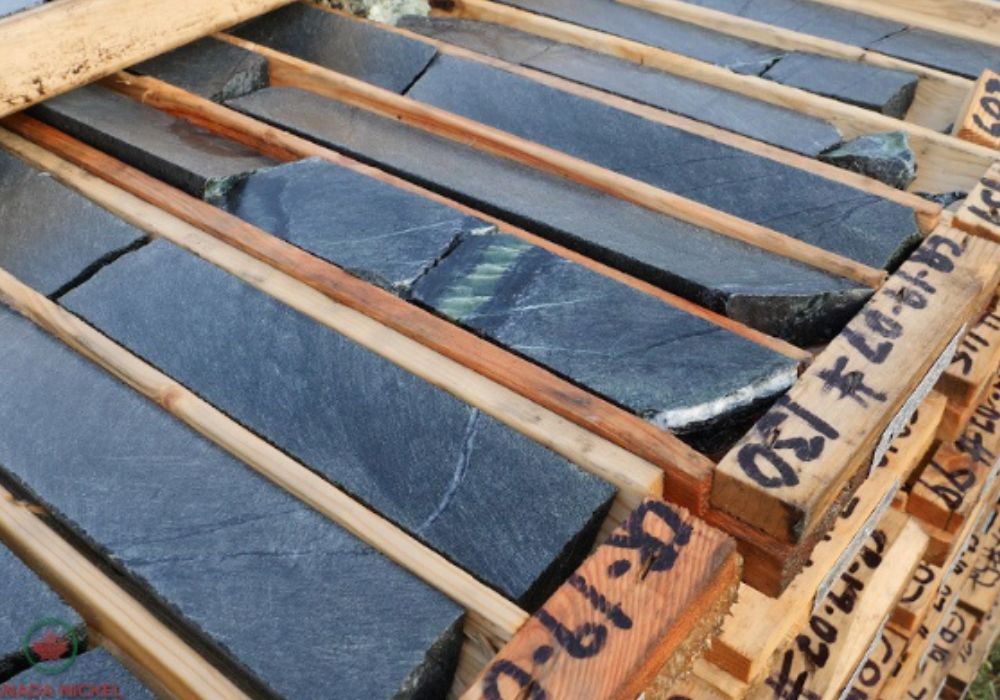
Additionally, Canada should stop splitting Canadian public investment resources across tens of critical minerals and focus a greater share on just six that are essential to the global energy transition and the EU’s growing clean-energy sector: cobalt, copper, graphite, lithium, nickel and rare earth elements.
By being proactive, Canada could also unlock new EU financing opportunities. Canada already has a letter of intent with the European Investment Bank — one of the biggest multilateral financial institutions in the world — to cooperate on critical minerals. The next step is to convert this into a signed framework and first transaction as soon as possible. Canada could also work to get more Canadian projects onto the EU’s strategic projects list, which could further unlock European investment.
The time to act is now. As CUSMA negotiations continue to stall, and Canada prepares to host investors from around the world at next month’s summit, European investors and potential offtakers looking at Canadian critical mineral projects should be at the top of the prime minister’s invite list.
Joanna Kyriazis is Clean Energy Canada’s director of policy and strategy, and Evan Pivnick is Clean Energy Canada’s associate director of public affairs.
The Weekly Roundup
Get all our stories in one place, every Wednesday at noon EST.