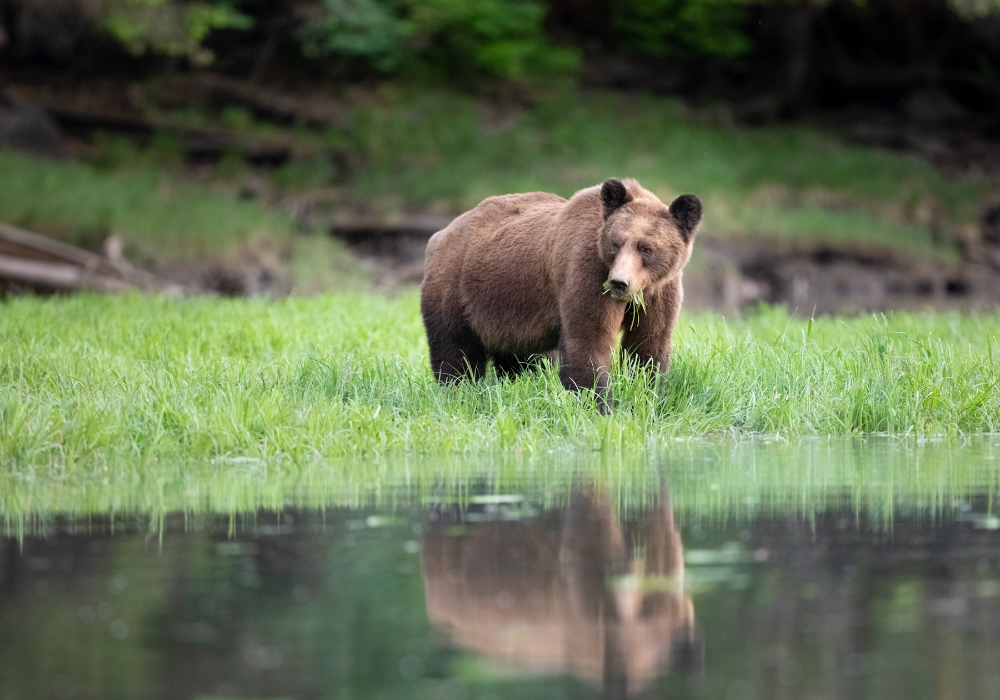
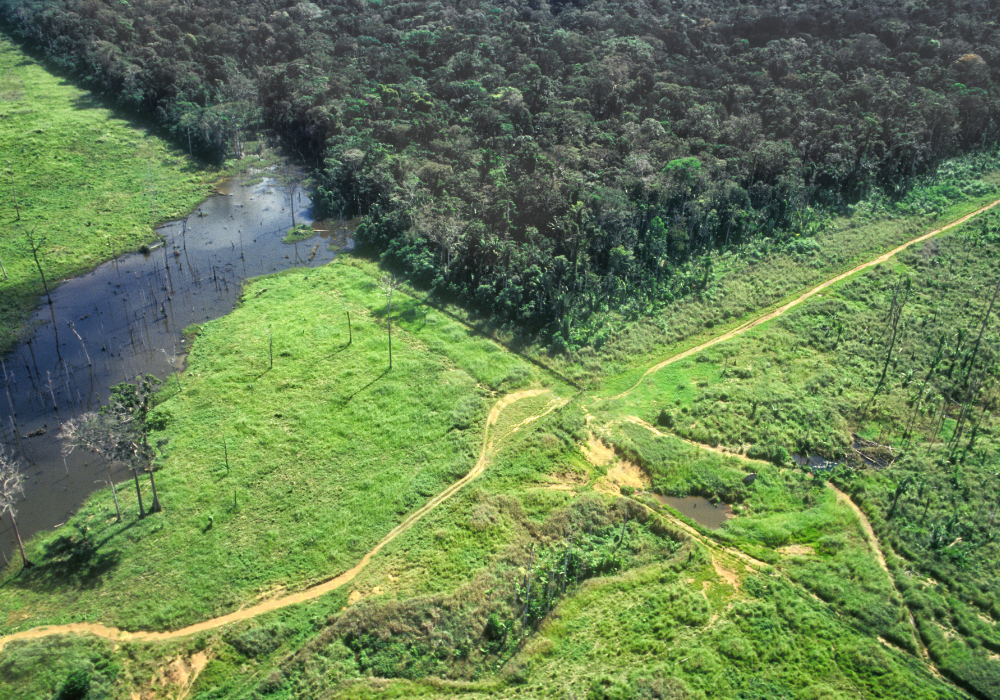
Along the Pacific coast of British Columbia, spanning 6.4 million hectares, is one of the world’s largest carbon sinks: the Great Bear Rainforest. Here, beside dramatic fjords and sprawling river systems, old- and second-growth forests store more carbon per hectare than the Amazon rainforest, according to Great Bear Carbon, an Indigenous-led carbon-offsetting project operating on the land.
The largest of its kind in Canada, Great Bear Carbon is a success story in the oft-criticized carbon-credit system. An alliance of nine Coastal First Nations generates about one million carbon credits annually, which fund conservation and community initiatives. Those credits are bought by companies, both voluntarily and through a compliance market set by the provincial government, to offset carbon emissions.
A compliance market dictates a mandatory amount of credits a large emitter needs to buy when they go beyond the cap of allowed emissions. In theory, carbon-credit programs entail a simple exchange: one credit is equal to one metric ton of carbon dioxide. In practice, this system can get muddied if governments set the caps on emissions too high, creating an oversupply of unsold credits. And when there’s too much supply, “there’s no incentive to reduce emissions,” says Dave Sawyer, principal economist at the Canadian Climate Institute.
Another factor that can erode the incentive is if projects are verified to reduce emissions when actually they don’t. But how do you know if a project actually reduces emissions? Carbon credits are verified through governments and third-party organizations, each according to their own internal methodologies. This can go wrong, such as in the case of Verra, which was the world’s largest certifier of carbon credits. In 2023, The Guardian uncovered that more than 90% of credits verified by the organization had no actual benefit and could even make global heating worse.
Beyond verification, a key component of judging a project is whether it has “additionality” – that is, would this project have happened without funding from the sale of carbon credits? “If it would have, then it’s not additional and you don’t get offsets,” explains Joseph Pallant, CEO of Great Bear Carbon. “And so in [Great Bear Carbon’s] case, the project is very additional.”
RELATED STORIES
Eyes and ears on the land
Eighty-five percent of the Great Bear Rainforest’s land, where logging was once abundant, is spared from the forestry industry, allowing the forest to act as a carbon sink instead of a carbon source. That inaction – the act of not logging – is what makes it a carbon offset. The decision to spare the majority of the land from logging came out of the landmark 2009 Great Bear Rainforest agreements, a series of conservation deals between the provincial government and Coastal First Nations that had been fighting to protect their ancestral land but whose economies were also supported by forestry. The right for the Nations to issue carbon credits based on the protected land was born out of these deals.
Now the funding that comes from the carbon market – which reached $85 million as of 2026 – goes toward the stewardship of that preserved forest, along with a host of community initiatives within the Nations, such as funding the Indigenous Guardians program. Guardians are the “eyes and ears on the landscape,” Pallant says. That can run the gamut from monitoring wildlife to search-and-rescue operations.
In Haida Gwaii, that funding has in part gone toward building a new healthcare unit, as well as research on endangered animals such as the northern goshawk, Pallant says.
Accounting for wildfire risk
But one of the biggest challenges, specifically in forest-based carbon projects, is the risk of fires or pests destroying the forest and cancelling out the offset emissions. Both Pallant and Sawyer say there are ways to account for that risk by setting aside some credits as insurance. Every year, 10% of what would have been otherwise issued as an offset is streamed to the “buffer pool” of held-back credits, Pallant explains. In the case of a forest fire, those offsets would be cancelled, or “retired.” But Pallant says that so far they’ve never had to cancel an offset in that buffer pool, which puts them in a “good position” should a destructive event occur.
Great Bear Carbon – which received several “sufficient” scores in an audit of its processes in a 2023 report from verifier Standard Carbon – seems to be more of an outlier than the standard when it comes to carbon-credit issuers. An audit into another B.C. carbon-offsetting project, BigCoast Forest Climate Initiative, found that it lacked transparency and didn’t meet additionality, giving the project a zero score.
For his part, Pallant is confident in the future of Great Bear Carbon, which is 15 years into a 25-year carbon-credit issuance agreement. “In our case, [the credits] will be protecting land through 25 years, and surely way into the future,” he says. “We haven’t run out of land to protect.”
Ayesha Habib is a Toronto-based journalist.
The Weekly Roundup
Get all our stories in one place, every Wednesday at noon EST.