
Nearly four decades ago, at the 1988 Toronto Conference on the Changing Atmosphere, I drafted what became known as the Toronto target: a global goal to reduce greenhouse gas emissions by 20% from 1988 levels by 2005.
I spent much of the next decade working with cities around the world as they established their own targets for reducing greenhouse gases and developed strategies to achieve them. Those targets mattered. They inspired action, gave governments something measurable to aim for, and helped turn an emerging scientific warning into a practical public-policy agenda.
Targets still matter, but nearly 40 years later, we need to confront what the experience since the Toronto conference has taught us. The Canadian Climate Institute has just provided a sobering measure of where we stand. Under policies currently in place, Canada would not achieve its 2030 emissions target before 2050. There is a certain loss of innocence in acknowledging that.
For decades, climate policy has been organized around reaching a numerical destination by a particular year. As 2050 draws closer, we have to recognize that the window for achieving zero emissions by 2050 has all but closed. But realism cannot become an excuse for delay. It should have the opposite effect.
The cost of waiting
Capital turns over slowly. A furnace installed today may still be operating 20 years from now. Buildings, vehicles, factories and infrastructure shape emissions for decades. The cheapest time to install a low-emission asset is usually when the asset it replaces would have been replaced anyway. Miss that opportunity and the next one may be years away.
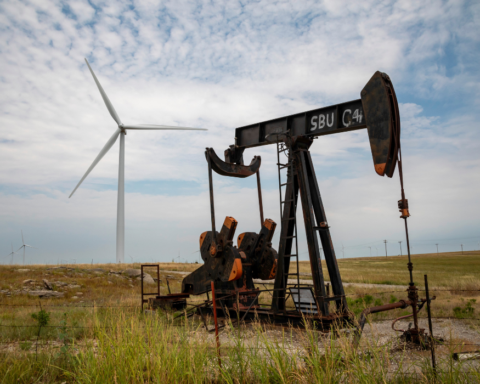
We have already used up much of the time during which gradual change might have been enough. But there is also a hopeful trend that has emerged: the principal technologies needed to achieve very deep reductions already exist. Heat pumps, electric vehicles, wind turbines, solar power, batteries, transmission and efficient electrical equipment are commercial technologies today.
Doing the math
In Canada, investing in these technologies at an average rate of $90 billion per year over the next 25 years would completely electrify buildings, road transport and some industrial production, while doubling the electricity supply using renewable sources. It adds up to $2.2 trillion over 25 years, less than a single year’s gross domestic product and many times smaller than annual capital formation in Canada, which topped $700 billion last year.
Electrification would reduce the annual expenditures on fossil fuels by $129 billion per year by 2050. That could go most of the way to paying for the capital investments the transition requires, if we make intelligent choices in how we build the new energy system, with investments in transmission, vehicle-to-grid capability, building efficiency and other choices that are both climate-conscious and budget-smart.
Financing matters almost as much as engineering. At lower financing rates, the annual cost of carrying the required investment can be largely offset by the fossil-fuel expenditures it displaces. At higher rates, the burden becomes substantially larger. So climate policy is also infrastructure policy, financial policy and institutional design.
Disruptive but not destructive
There is an elephant in the room, however: this will be a disruptive transition, and not only for oil and gas producers. Automakers must reorganize around electric drivetrains. The building industry must shift toward heat pumps, energy-efficient envelopes and electrical upgrades. Utilities must expand generation, transmission and distribution. Contractors, supply chains and financial institutions all must adapt.
At this stage in the historical transition, the disruption is inevitable, but it need not be negative. The transition to an ecologically sustainable economy will be one of the largest waves of investment and technological change of this century.
At this stage in the historical transition, the disruption is inevitable, but it need not be negative. The transition to an ecologically sustainable economy will be one of the largest waves of investment and technological change of this century.
We can already see this unfolding. China has spent decades building integrated supply chains and markets for solar power, batteries and electric vehicles and today dominates much of global clean-technology manufacturing. That position was not created by technology alone. It grew out of sustained industrial policy, finance, infrastructure, manufacturing capability and enormous domestic deployment.
The lesson is not to reproduce another country’s model. It is that climate policy and economic strategy can no longer be treated as separate files. The innovations that make heat pumps easier to finance, electricity grids faster to build, renewable projects easier for communities to own, or industrial processes cheaper to electrify may ultimately prove as economically important as the technologies themselves.
Ownership matters
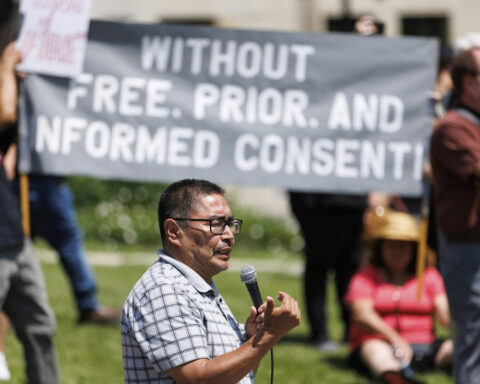
A more capital-intensive and less fuel-intensive energy system creates opportunities for community and Indigenous ownership. There is a profound difference between experiencing the transition as something happening to you and experiencing it as something you are helping to build.
The task is to build an economy capable of sustained decarbonization over generations: one that uses energy and materials much more productively, progressively reduces dependence on fossil fuels, protects ecological systems and directs capital toward assets consistent with that future.
Climate change has long since been declared an emergency even if we have failed to mount an effective emergency response. Now the same solutions that can effectively mitigate climate change have taken on a new and perhaps more compelling urgency: they are the key to economic prosperity. The companies and countries that figure out how to accelerate the deployment of the energy transition will build industries that serve markets around the world for decades to come.
Ralph Torrie is director of research at Corporate Knights.
The Weekly Roundup
Get all our stories in one place, every Wednesday at noon EST.