One thing the coverage of the U.S.-Iran War reveals is how much of the news cycle is addressed to professional investors. Since the war started, mainstream news outlets have been awash in a near-daily stream of updates about how oil prices are trending, because that’s what’s interesting to people who pick and choose where money goes. What’s most interesting to everybody else is the price of gas and groceries and clothing, and how much it costs to visit your relatives across the country or whether tourists are still travelling. Same but different.
The reason investors get special treatment by news media is that they are true news consumers: knowing the developments in markets and geopolitics confers actionable advantages. Of course, many people hold some investments passively through managed funds or pensions, and for them there’s an ambient rush from falling and rising valuations. But as only professional investors are able to participate directly in markets and hope to have success, the barrage of oil-price headlines – and most other coverage of markets – likely serves more to confuse and overwhelm the majority of people.
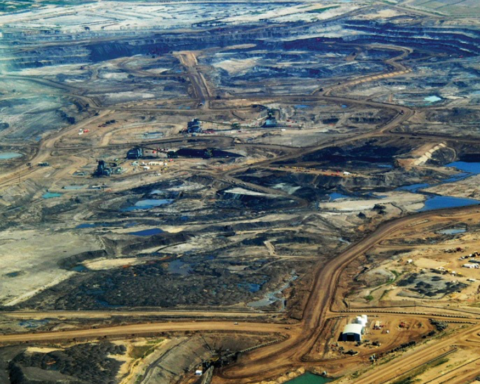
Still, business and investing stories aren’t irrelevant for the less-than-executive class; they contain subtext that doesn’t get repeated elsewhere. If you pay attention to oil prices, for example, you’ll have noticed that the real audience for those stories is pretty excited about what’s going on, because they’re making a lot of money. This is the takeaway from the U.S.-Iran War: those at the top are winning. One heavy industry is making massive gains at the expense of consumers, and the people who invest their money there are making big returns. For example, the Financial Times has reported that eight U.S. refiners are on course to reap a more than fourfold increase in profits thanks to surging diesel and petrol prices caused by the war. It’s a cash machine.
In moments like this, it becomes clear that many serious investors are working at cross-purposes from regular people. But there are many kinds of investors, and many gradations, and they all approach markets differently. The best way to distinguish between them is to look at the horizons they use. Those working on the nearest time-scales – minutes, days, fiscal quarters or the annual rebalancing of holdings – share the least common ground with wage-earners and their interests in stability and affordability. Governments and big asset-holders look much farther ahead and are most likely to make choices that reveal what they think we can expect from the future. Banks, insurers and pension funds are in between.
Eyes up
In July, Corporate Knights CEO and publisher Toby Heaps launched an initiative called Planet Motive, which aims to mobilize what he terms “long-horizon companies” to advance sustainability at a systemic level. The idea was born from the experience of watching the sustainable economy rise and fall over the past half decade.
“Between 2020 and 2023, many of the world’s largest corporations made public commitments to net-zero emissions, climate disclosure and sustainable supply chains,” Heaps writes. “For a period, it seemed as though the corporate economy was beginning to move in a coherent direction.”
Then the backlash. “Companies that had been publicly vocal on climate went quiet. Asset managers that had signed net-zero pledges walked them back. Coalitions that had looked durable dissolved.” What changed, Heaps argues, wasn’t their outlook on sustainability but the cost-benefit calculation imposed by their ownership structure.
For shareholder-owned companies, the rational response to political pressure is to step back. Look at those with other control structures – cooperative, family, foundation or state – and you find a different pattern. Publicly listed companies are constrained by short-term return pressures, but the types of companies in this initiative are more adept at changing and adapting quickly, and more likely to have validated science-based emission-reduction targets. Corporate Knights identified 17 companies that have transformed – or are demonstrably transforming – a core area of their business at billion-dollar scale in order to have a positive sustainable impact. Nearly all had alternative control structures that allowed them to pursue long-term strategies through political pressure, commercial setbacks and short-term costs.
The Planet Motive initiative represents an impulse to start organizing around this impasse and to spotlight leaders in transformation. We stakeholders can’t afford to be strapped into a short-term economy; we need more players with clout that are capable of change and wired to work on long horizons. To that end, we crafted this edition of the magazine themed on the future. The immediate future may be shrouded in confusion and unpredictability, but the long-term signals from climate change and the energy transition are loud and clear.
Mark Mann is the managing editor at Corporate Knights. He is based in Montreal.
The Weekly Roundup
Get all our stories in one place, every Wednesday at noon EST.