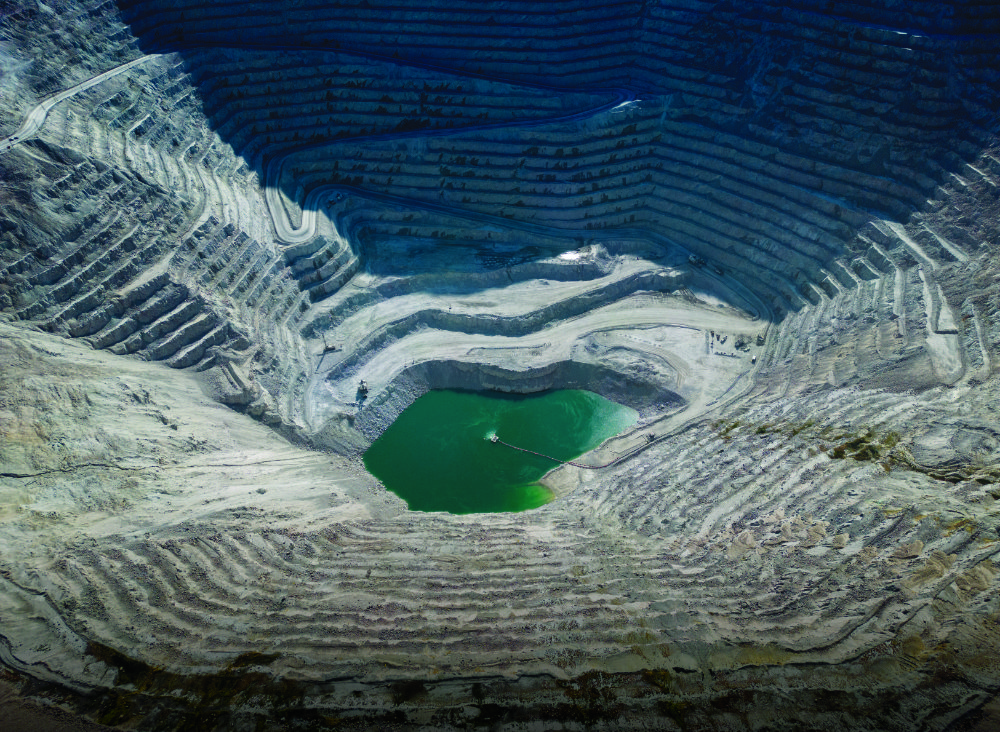
Canada is hoping to become a critical-minerals mining and processing powerhouse for Western countries seeking to diversify their supply chains away from China.
About 67 critical-minerals projects – which represent about half of all active mining proposals in Canada – are proposed, planned or under construction, according to a federal government inventory. Combined, they’ll need $72.4 billion in investment by 2034.
But as the federal government seeks capital from its allies to develop its mineral riches, some experts are advocating for a more cautious tack to working with the United States amid President Donald Trump’s continued aggressive stance toward allies and repeated musings about annexing Canada.
“From a long-term perspective . . . the best approach is to work together in development of a North American critical-minerals strategy,” says Lawrence Herman, a Toronto-based international trade lawyer and member of the Expert Group on Canada–U.S. Relations. “The challenge for Canada is the aggression of the Trump administration and its desire to control, in different ways, what happens in Canada with regard to critical minerals.”
Western countries are trying to lessen their dependence on China, which currently controls about 90% of refined production of rare-earth elements and 70% of rare-earths mining output, along with about half of the world’s reserves. Rare earths have applications in consumer electronics, advanced weapons systems and electric vehicles. China also has strong control over lithium, graphite and other niche minerals such as germanium and gallium, which have defence applications.
But a wave of new export control measures has exposed the significant vulnerabilities in Western supply chains. Amid deteriorating trade relations with the United States early last year, China instituted a special licence to export 12 rare-earth minerals and derivative products like magnets. Likewise, any product with at least 0.1% of its content coming from Chinese rare-earth metals will be restricted as of November 2026.
I think there’s a strong recognition by the U.S. that they do still need Canada for their critical minerals and mining projects.
– Photinie Koutsavlis, vice president, Mining Association of Canada
China’s dominance has also made it difficult for some Canadian mining projects to get off the ground, says Photinie Koutsavlis, vice president of economic affairs and climate change at the Mining Association of Canada. China can “flood the market with product,” depressing prices and making mine expansion or construction uneconomic.
Canada is on a deal-making spree
The G7 (Group of Seven) Critical Minerals Production Alliance, launched by Canada last summer to drum up public funding for mining and processing projects from allied countries, as well as private capital, has announced 56 investments to date. Canada and the United States have also collaborated directly on critical-minerals investments through their joint task force, established during the first Trump administration.
The United States launched its own critical-minerals buyers club, called Project Vault. The US$12-billion critical-minerals stockpile will establish price floors for various minerals and would give allied countries access to the stores in the event of shortages. To date, Washington has struck deals with more than 50 countries. Foreign Affairs Minister Anita Anand attended an initial meeting, but Canada has so far been noncommittal about its participation.
RELATED POSTS



Shaz Merwat, director of energy policy at RBC Thought Leadership, sees Project Vault as a strong potential market for Canadian critical minerals and notes that strategic deals under that umbrella would guarantee that Canadian minerals flow into U.S. rules of origin for batteries and electric vehicles. But in a February research paper, Merwat acknowledged that deeper minerals-supply-chain enmeshment with the United States could mean that “Canadian minerals face U.S. export licensing and defence procurement priorities that serve American industrial policy first.”
Herman raises the same concern about equity stakes the U.S. government took in October in two Canadian junior mining companies, Trilogy Metals and Lithium Americas. While both companies have their projects outside Canada, the deals could expose Canada to U.S. government action “that may not always be consistent with Canadian interests,” he says.
Despite tariffs and trade tensions, Koutsavlis says the United States remains an ally and Canada’s biggest trade partner. The mining sector also falls within the Canada-United States-Mexico Agreement (CUSMA), and its products haven’t been hit with any tariffs. “I think there’s a strong recognition by the U.S. that they do still need Canada for their critical minerals and mining projects,” she says.
Shoring up supplies
Canada has announced it will create its own critical-minerals stockpile for defence purposes. Elizabeth Steyn, associate dean of graduate and professional programs in the University of Calgary’s Faculty of Law, says the government could sign long-term contracts with miners to create its own public stockpile, or pay companies to keep a large stock of their commodities on site. But she says it should focus primarily on stockpiling minerals that it’s vulnerable to losing access to, including those that Canada doesn’t produce.
Federal Conservative leader Pierre Poilievre, in a February speech to the Economic Club of Canada, suggested that Canada could use a domestic stockpile of critical minerals as leverage in trade negotiations with the United States; in exchange for access to the stockpile, the United States would need to lift tariffs on Canadian goods.
Having a guaranteed government buyer would also help to de-risk projects for miners and their investors, Koutsavlis says, but stockpiling alone is not a sufficient strategy. She says the government needs to fund infrastructure to remote projects and provide more support for processing and refining. Many critical minerals are not produced at the mine but recovered as co-products through smelting and refining. But Canada’s processing capacity has declined in the past decade. Koutsavlis says a host of factors have played a role: mines with attached processing facilities reached their end of life, and declining mining output generally reduced feedstock that stand-alone smelters and refiners had access to, forcing them to seek out supply elsewhere. With China able to offer processing on the cheap, Western processors have resorted to paying for feedstock to keep their facilities operating.
Merwat says he sees the potential for Canada to create integrated “mineral corridors,” where multiple mines in a region could feed into one processing facility – such as in Sudbury’s nickel belt or the lithium deposits around Thunder Bay, Ontario – and offer economies of scale.
But that should be accompanied by price floors, similar to what the United States offers, and limits on importing feedstock from China, which would help improve the economics for Western “pure-play” refiners that are otherwise at a competitive disadvantage because, unlike larger mining and energy companies, they aren’t diversified. Otherwise, Merwat says, with public market players largely unwilling to get involved in these more risky projects, Western supply chains will remain vulnerable.
The Weekly Roundup
Get all our stories in one place, every Wednesday at noon EST.