A survey of 2026 news reveals the contradictions, and opportunities, that characterize this moment in climate change response.
Canada announced yet another expert group to finalize a taxonomy of green investing intended to facilitate the country’s net-zero transition. This has been framed as an urgent policy priority and the subject of many governmental commitments – yet to be realized – for more than a decade. At the same time, advocacy group Investors for Paris Compliance announced that it is closing its doors as climate considerations have receded on the national priority list. Meanwhile, south of the border, the U.S. Air Force pledged to spend billions to improve resilience to climate change for an Air Force base in Tyndall, Florida, despite a vow by the “secretary of war” to “not do climate crap.”
Global concerns about slowing down or preventing climate change have led to lots of talk but relatively little concrete action. A regrettable consequence has been that financing for adaptation and resilience has also lagged. Mitigation and adaptation have often been viewed as conflicting priorities vying for scarce climate finance. Of the two, mitigation – which includes reducing emissions and protecting natural carbon sinks to limit global warming – has received more attention. In the meanwhile, the business of investing in climate resilience is projected to be a US$1.3 trillion global market annually, with vast scope for innovation.
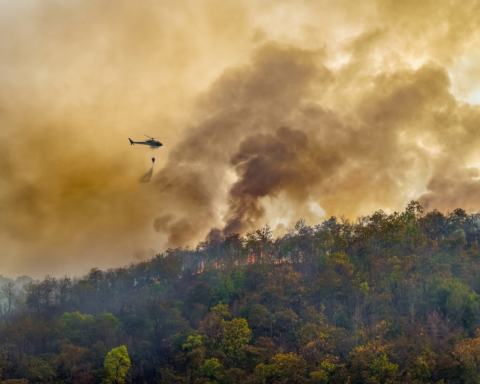
The impacts of climate change are now upon us. Communities and economies are at increasing risk from storms, floods, fires and other climate threats. As a result, Canada needs to shift from climate debates to immediate measures for improving lives – addressing the pressing need for investing in adaptation.
Part of the challenge with mitigation has been that Canada’s efforts may not count for a lot, whether globally or locally. This is largely due to global sharing of the negative consequences of carbon emissions when the largest emitters, and our neighbour, feel little urgency to reduce emissions. In contrast, resilience and adaptation initiatives tend to be more localized in terms of results, directly benefiting those who invest in them more immediately and without nearly as much leakage.
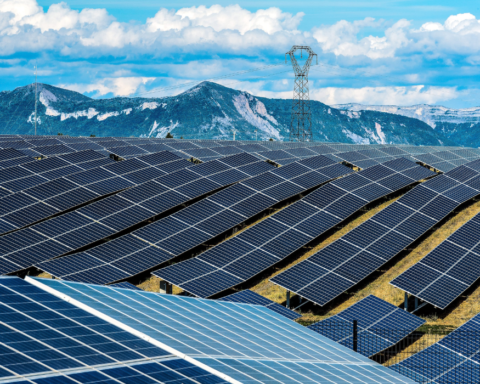
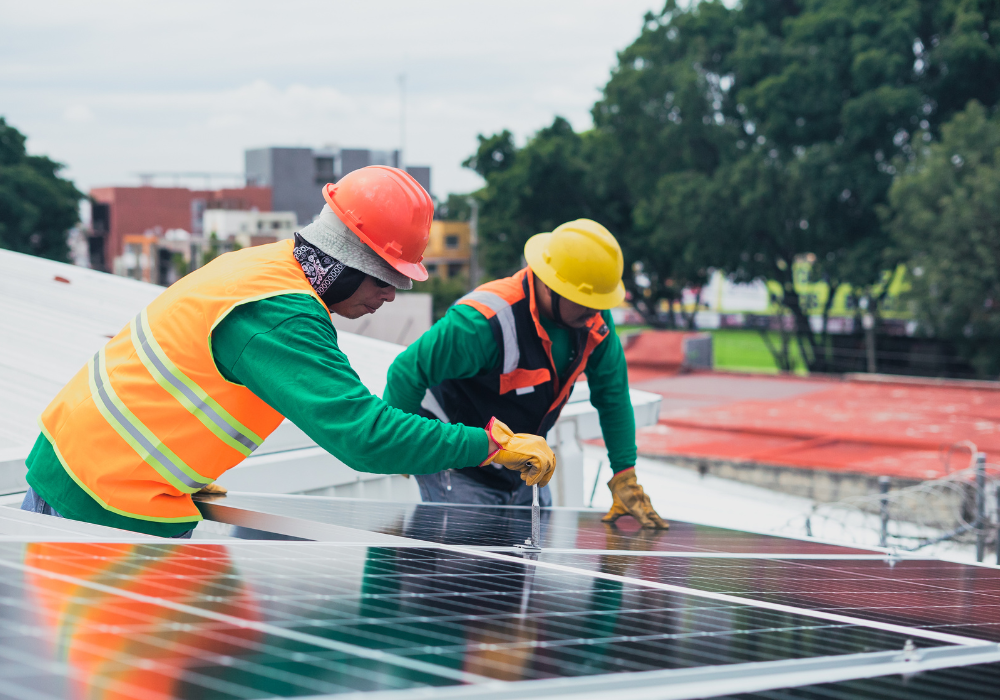
Many adaptation investments are also expected to reduce greenhouse gas emissions. Examples include investing in wildfire suppression and response; promoting sustainable agriculture and land use, climate-smart buildings and farming practices; improving mass transit; and protecting coastal wetlands. Many of these investments are ripe for innovation and should create export opportunities for Canadian companies. For example, large power plants dominate centralized electricity grids. An accident at any point in such a vast system can affect the entire network. Shifting toward more decentralized grids powered by renewables (when they can be harnessed closer to their point of consumption), even if backstopped by traditional power sources, can reduce emissions and ensure that communities can better withstand extreme weather impacts.
Concentrating on immediate, tangible benefits and on reducing cross-border leakage of climate investments should make this dual focus easier to achieve, but we will still need to overcome the institutional inertia that has characterized governments’ commitments to climate solutions to date. Hopefully, the attractive economic returns and public-sector focus on investing in infrastructure will help do so.
Nor does focusing on immediate benefits reduce the need to plan carefully, as “maladaptation” can occur within our own borders. One person’s actions can make things worse for others. For example, if someone builds a wall to stop flooding on their property, it may just send water to their neighbour’s. The good news is that this possibility cuts both ways. If someone increases green space on their property, it should also boost the resilience (and value) of nearby properties.
We should be thoughtful about how to prioritize. A recent Canadian Climate Institute report found that investments in adapting Canada’s roads, bridges, storm sewers and water treatment systems for rising heat and heavy rain could result in up to $9 billion in annual infrastructure savings. The results of such early successes should be self-reinforcing – making it easier to build strong community support for similar initiatives.
There remains the challenge of “implementation illusion” – political currency generated by reporting on new projects without being accountable for implementation success. A practical agenda will require meaningful frameworks that define, measure and communicate successful execution.
We have witnessed decades of slow progress on climate change policy in Canada. Facing the reality of actual climate impacts, we now share a growing sense of urgency for moving toward thoughtful action before events take over.
Gerry Rocchi is a corporate director with experience in climate finance.
Ed Waitzer is a senior fellow at the C. D. Howe Institute, a former chair of the Ontario Securities Commission and was a founding director of the Sustainability Accounting Standards Board.