
Jessica Green has spent the last few years calling for a reckoning in global climate governance. The Paris Agreement isn’t working and the annual Conference of the Parties to the United Nations Framework Convention on Climate Change – otherwise known as COP – is no longer effective, she argues. But there is a better way.
Last year, the University of Toronto researcher published Existential Politics: Why Global Climate Institutions Are Failing and How to Fix Them, in which she argues forcefully against the dominant approach of what she calls “managing tons”: targets, carbon pricing, cap-and-trade and offsets. Those tools keep the old system in place, she says. Instead, we need to make it riskier and more expensive to produce fossil fuels, and we need to reduce the political power of oil and gas asset owners.
As part of his reporting on overshooting 1.5 degrees of warming, managing editor Mark Mann interviewed Green about what went wrong, what she means by “radical pragmatism,” and how to think about climate policy differently.
This interview has been edited and condensed.
Mark Mann: There’s something quite gutting about saying that three decades of global climate policy have failed, especially in this terrible moment we’re in. How did that land?
Jessica Green: I think a lot of people who work on climate are very sympathetic, because we’ve all been doing this or watching it for a long time, and we see that it’s not working.
I’ve written a lot about carbon pricing and carbon offsets, and I’ve had decades of pushback from economists: “But we need to do this.” So I’m pretty used to that.
MM: You say there’s a need for a reckoning. Is the type of reckoning you invoke actually happening?
JG: My best guess is that this is all becoming trade and security issues. In political science, we used to say climate was “low politics.” Nobody studied the environment because it wasn’t seen as important; you sent a bunch of environment ministers, and who really cared that much? Obviously, climate is now at the top of the list, even if it’s not called climate. It’s securing minerals and technology for energy security and resilience. It’s about supply chains and economic statecraft.
In that sense, the reckoning is already happening. Maybe not deliberately, and probably not in the most efficient or productive way, but things are shifting, for better or worse.
WATCH THE FULL CONVERSATION
MM: Mark Carney removed the consumer carbon price, and that’s the type of policy you’ve critiqued.
JG: It was a little complicated for me when that happened, because I absolutely think it was the right thing to do. But I didn’t want to align myself with conservative folks who think we shouldn’t have any climate policy at all. Climate policy became a referendum on carbon pricing, which is precisely the problem.
I think removing it was good, but only if it is replaced by other measures, which is an ongoing question.
MM: I’ve been trying to wrap my head around the industrial carbon price, and I find it very complex. I find it sad that this is such an essential component of our response to climate change, yet it’s so alienating for regular people. I wonder whether there is a political consequence of having these types of policies.
JG: Climate policy is pretty intractable for regular people, plus we are not reducing emissions quickly enough. What does that mean for how we think about this problem? It’s easy to get overwhelmed and hopeless. A lot of people write about not giving in to despair, and I think that’s important. But it speaks to the need to think about climate policy differently.
To answer a big question with a big answer: in some ways, we’re going through a world-historical moment, and the energy transition is part of it. We’re reorganizing multiple economic, social and political structures, and that is reorganizing the world’s great powers. It’s hard to connect the dots because so many things are changing, and that’s frightening to people.
It is not pragmatic or practical to think of the end of capitalism as the solution to climate change, even if that may be the case. We don’t have time for that.
– Jessica Green, author of Existential Politics
If you read coverage of almost anything in Canada, there’s the existential dread of the middle class: Am I going to have my pension? How will my kids get into the real-estate market? Should people be having kids? These are huge questions. I think that reflects this enormous shift, of which the energy transition is part.
To talk about it in a very narrow, highly complicated way is not helping, because it doesn’t connect the dots.
MM: One of your proposals is about removing privileges and protections for fossil fuels. Is that easier to communicate?
JG: Part of the liberal fantasy was that if you build it, they will come. If you make EVs or solar cheap enough, then it will just happen. But it doesn’t work that way. The testimony to that fact is that we know how to have free electricity, and yet we don’t have it. It’s not a technical problem; it’s an economic and political problem.
The reality is that we have to think about reducing the supply of fossil fuels and addressing the institutions we created after the Second World War to facilitate fossil-fuel extraction and diffusion.
Activists have been banging drums about this for a long time, but policy has not really talked about it in the same way. It’s why everybody has pretty much given up on reducing fossil-fuel subsidies. The G7’s first communiqué on reducing fossil-fuel subsidies, I think, was in 2005.
This is an attempt to think about what levers we can pull to make fossil fuels a less profitable endeavour.
MM: Is there a distinction between the failure you attribute to the Paris Agreement and the failure of carbon pricing and carbon offsets? Are they essentially intertwined, or is something else going on?
JG: That’s a good question. Offsets now have a life of their own. The idea of market offsets came from Kyoto and took off from there. They are intertwined to some extent because offsets had the imprimatur of UN legitimacy, even though people were screaming from the beginning that this was not going to work. It is not a surprise to anyone who has been doing climate policy for 20 years.
MM: Really?
JG: One hundred percent. Because the complexity of the calculations made it very easy to fudge the numbers. And there would always be incentives to fudge the numbers.
Before the Paris Agreement, a lot of economists said, “If we just have carbon pricing in all these countries and link the carbon markets together, then we don’t need a multilateral agreement because we’ll have a global carbon price.” That sounds great, but there are 10 million political reasons it won’t work.
MM: We don’t even have one carbon market in Canada.
JG: Exactly. They are interrelated to some extent, but some failures of the Paris Agreement are separate. If you think about it, the climate regime has never been on solid footing since the Framework Convention on Climate Change in 1992. Countries said, “Yes, this is a problem. We should address it, and we’ll start having national communications.” The Kyoto Protocol was kind of doomed from the beginning. The U.S. never signed on. The first commitment period was okay; by the second, a whole bunch of countries had pulled out, including Canada.
The Paris Agreement is the next version of something that has never really gotten off the ground because it has never addressed the underlying issues. Those are domestic political issues about distribution – big questions about what we will do with all of these assets and asset owners. We have to answer those hard questions. You can’t paper over them, and I think that’s what we have tried to do.
RELATED STORIES

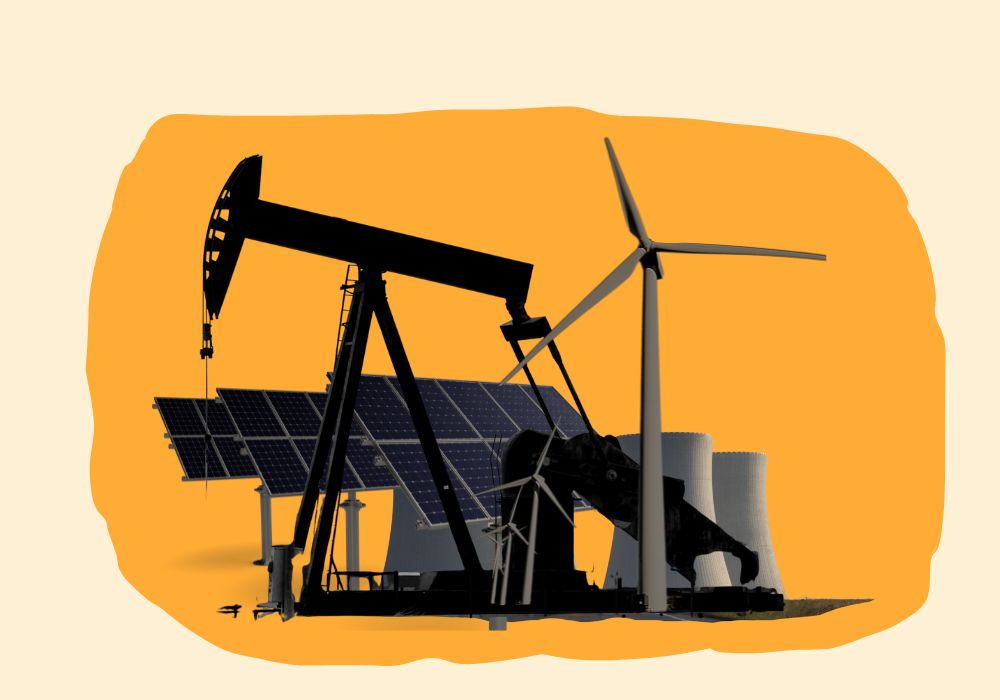

MM: The parties to COP were supposed to submit their nationally determined contributions early last year. Most were late and some still haven’t submitted. That is the legally binding part of the agreement – they are actually supposed to do that. How much of a signal is that about the state of things?
JG: It is a signal. The appetite for this process has really waned. The COP has grown and grown, with subcommittees, groups and all kinds of things. It is collapsing under its own weight. There are so many moving parts that meaningful participation is very difficult. Even knowing all the things that are happening is challenging for a country with a huge delegation.
MM: Is target-setting part of this broken climate-governance system? From the popular perception of climate change, we had this incredible wave of goals and targets, and then it turned out few were made in good faith. That has caused massive disillusionment. Where do transition planning and target-setting fit in the pantheon of broken international governance?
JG: That is hard to answer because you need targets, but you cannot just have targets. You need targets, plans, pathways and policies. A generous reading is that it is hard to figure out how to do it, and it takes time. You set a target, figure out the plan, benchmark and revise. There is a real learning process involved for some actors. For other actors, it just becomes an exercise in obfuscation, greenwashing or massaging the numbers.
It would be too simplistic to say target-setting is useless. It can be useful, and it can serve a political purpose: we set this goal, so now we have to figure out how to get there. It can also mobilize coalitions of support.
MM: The situation that mesmerizes me is that, now that we’re crossing 1.5°C, we have to get back there. The legal position is that 1.5°C is still legally binding even if we have transgressed it. From a climate-risk perspective, we have to turn around and go the other way.
That has renewed the conversation about carbon removal. I think people are nervous to talk about carbon removal because it is frequently characterized as a false solution, greenwashing, or something owned by the fossil-fuel industry.
You are basically saying we cannot work with the fossil-fuel industry; somehow, we have to disempower it. But is it possible to do what we need to do without it, including scaling carbon removal?
JG: Christiana Figueres, who was executive secretary of the UNFCCC for perhaps a decade and was executive secretary at the time of the Paris Agreement, has said that working with the fossil-fuel industry is a recipe for failure and that we cannot work with it.
There is a broader question about the extent to which we can expect private capital to provide solutions. We will need some kind of carbon-dioxide removal. It could be rock weathering, sequestration or direct-air capture. The question is who should be expected to pay for and implement those technologies.
As with healthcare, if private-sector actors are making a profit from providing a public good, they have an incentive to do it in ways that benefit them at the expense of others. We are seeing this with deep-sea mining, which I work on. We do not need to mine the deep sea; we have enough material on land. But some companies, particularly Canadian ones, are pushing very hard because they say there is scarcity.
I worry about that with different forms of geoengineering. We are going to need removal; you are absolutely right. The Intergovernmental Panel on Climate Change says it. Residual emissions are huge. In Canada, I think about 20% of emissions are considered residual. What are we going to do about that? I do not know, but I’m not sure I want Suncor to decide.
MM: In your book, you talk about radical pragmatism. Pragmatism is an interesting word. A lot of people want to use it right now, and there seems to be some competition over what it means. How do you position your pragmatism in this contest over the word?
JG: To me, it is pragmatic in the sense that we need to rein in capital, but it is not pragmatic or practical to think of the end of capitalism as the solution to climate change, even if that may be the case. We don’t have time for that.
It is also pragmatic in the sense that we have existing institutions. We don’t need to reinvent the wheel. We have tools that we can rejigger to help solve the problem.
The key is to think of those words together. It is radical in the sense that it gets to the root of the problem: the political entrenchment of fossil-asset owners and fossil capital. We have institutions to manage and regulate those in different ways.
MM: Is giving them the option to purchase carbon offsets – does that entrench power?
JG: It’s just stupid. It’s not helping anyone. There are some benefits for developing countries that develop these projects, but they are limited. It is not enough money to actually decarbonize.
That was the whole idea of the Clean Development Mechanism: to provide climate finance. But if you are paying $5 a tonne, that is not what is happening. It is a waste of time. It is not providing the finance developing countries really need. It gives big emitters political cover to say, “We’re doing our part,” and a bunch of people in the middle get rich by managing and developing these projects.
MM: We know that economists have mispriced climate risks. Do you think it will help produce a reset if risks are better priced and more actuaries are realistic about climate impacts?
JG: There is no such thing as simply getting the number right. That said, if we do a better job reflecting the true costs, markets and investors may start to make different decisions with their capital. I hope.
There is a time-horizon problem. Some firms care only about quarterly earnings and they’ll make risky investments because they’re not in it for the long haul, while others, for any number of reasons, take a longer-term view.
Many people who study the politics of climate change understood that the number associated with a tonne of carbon was hiding a lot of information. Everyone said the problem with carbon pricing was that the price was not high enough. The price is never high enough because politics do not allow it to be that high. If the social cost of carbon is $1,000 a tonne, which in some countries it is, we are never getting to that price because it would be crippling.
MM: Are you heartened by the pace of the energy transition despite all this? Do you take some consolation from it?
JG: Some days, yes. Some days, no. There are good things happening, but at the end of the day, we will need real government intervention to develop these technologies and scale their implementation. As someone who has been doing this a long time, you have to measure your intake. You cannot take in all the bad information all the time or you go nuts.
MM: Totally. There is good news too.
JG: There is good news. I have been telling my students that technology adoption is up. If you take political-science and sociotechnical theories seriously, this transition is not going to be linear. We are seeing linear improvements right now, but there will be tipping points – good tipping points and bad tipping points.
Mark Mann is the managing editor at Corporate Knights. He is based in Montreal.
The Weekly Roundup
Get all our stories in one place, every Wednesday at noon EST.