It’s an audacious goal driven by New York–sized ambition. Earlier this year, Mayor Zohran Mamdani launched an effort to capture and then recycle the waste heat trapped in the Big Apple’s sweltering subway tunnels and the station near City Hall – no small feat for a transit agency with 22 lines, 472 stations and the kinds of endemic service headaches that come from operating hundreds of kilometres of aging infrastructure.
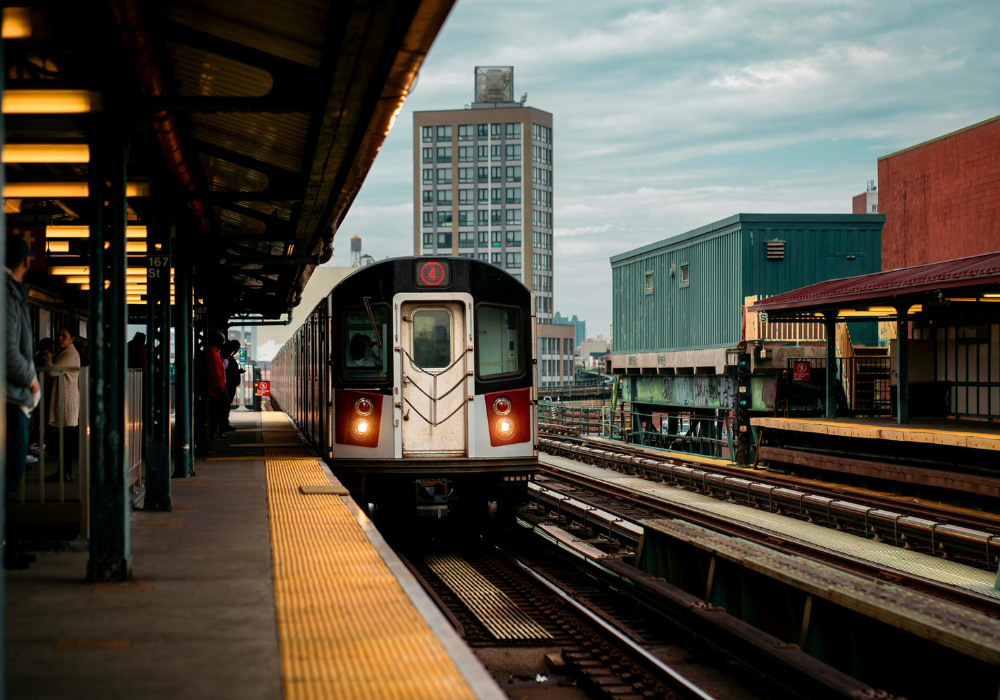
“Anyone who has stood on a subway platform in August knows that our stations do not just get hot; they turn into underground saunas,” Mamdani said at a press conference on a sultry summer day. “And if you, like me, do not know what a summer suit is and choose instead to commute in a wool one, let me tell you, it is far from a therapeutic experience.”
The idea, Mamdani explained, is to store that infernal heat in deep bore holes fitted out with circulating pumps and pipes that will upcycle all that energy “to warm the offices where our municipal workers are hard at work.” The project – to be jointly funded by the state government, which actually owns the Metropolitan Transportation Authority (MTA) – will be known as the “Thermal Energy Network.”
A second life for subway heat
For generations, big cities like New York and Toronto have operated district heating systems powered by fossil fuel. In the past two decades, some cities have also built district cooling utilities powered by cold water drawn from the depths of adjacent lakes.
This concept has been deployed in many places, particularly in residential buildings around the world.
—Eric Wilson, senior vice president, Metropolitan Transportation Authority
Recent advances in technology are now enabling newer and less carbon-intensive solutions to recycling and upgrading the heat cast off by infrastructure such as sanitary sewers, supermarket refrigerators, data centres and wastewater treatment plants. “Urban heat sources from urban infrastructure and buildings could meet approximately 10% of the European building heating demand,” a pair of Swedish researchers observed in a 2022 study about recovering and utilizing urban waste heat. “There is, however, limited information on how to use them.”
In that respect, New York’s project will be worth watching, especially for older and poorly ventilated subway systems like London’s.
The waste heat, according to Eric Wilson, MTA’s senior vice president of climate and land-use strategy, comes from a range of sources. These include modern subway cars, whose air-conditioning equipment radiate warmth, especially in terminal stations where the trains tend to linger. “Our subway system,” he says, “was designed in the 1910s to passively evacuate heat from the system using the piston effect, where we have a ventilation system and the movement of trains pushing and pulling fresh air in and out.” But, Wilson adds, “it’s not a sufficient way of moving large amounts of heat that tend to accumulate onto the subway platform.”
The project, which Wilson’s team will oversee and begins with a feasibility study, has a dual objective. “We are looking to expand tools to mitigate extreme heat and potentially put that heat to a beneficial use [in] adjacent buildings or to other kinds of off-takers that we could ultimately work with.”
The City of Toronto and a private partner have built a similar system, trapping and upgrading waste heat from a major downtown sewer main to help warm a nearby hospital. In New York, meanwhile, Mamdani’s plan dovetails with a Bill de Blasio–era law requiring large landlords to reduce emissions. The subway heat-recovery project initially targets City Hall, but Wilson says there’s potential to scale by connecting adjacent buildings that need to comply with the law.
A blueprint for other cities
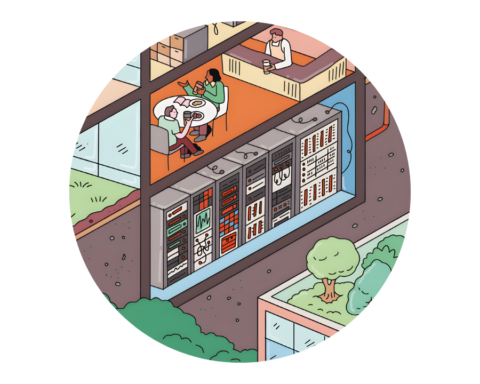
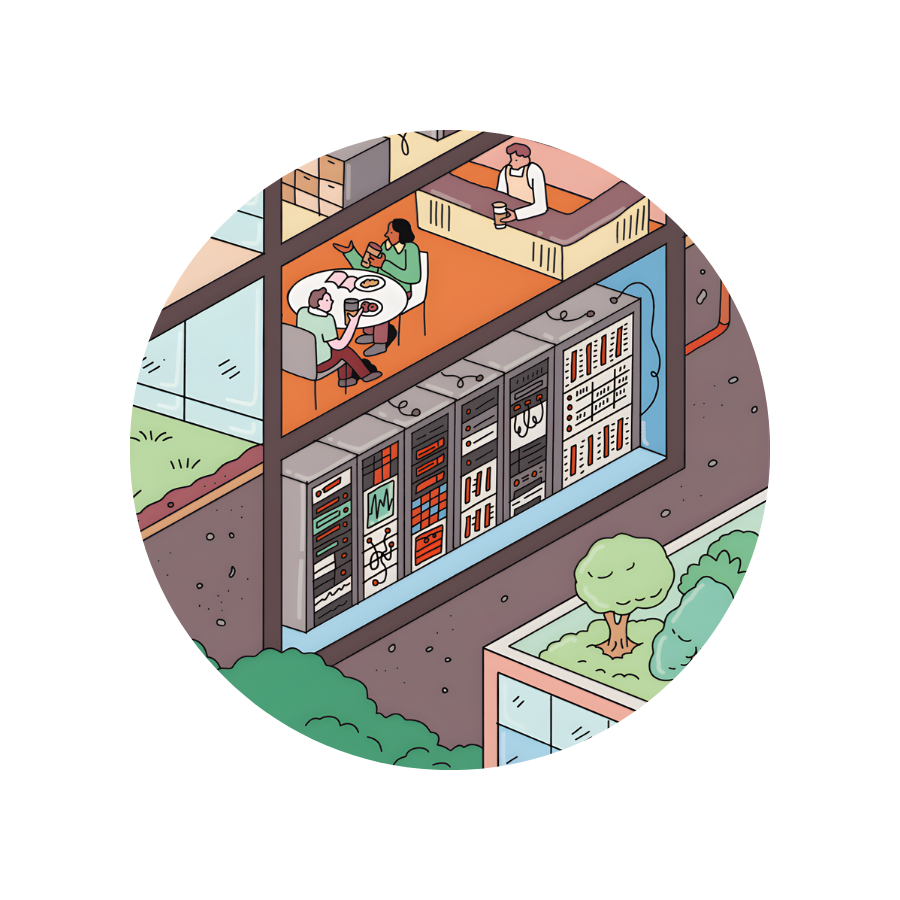
The devil, of course, lurks in the technical details and the budget. Wilson says the MTA is exploring the use of a “cassette system” – networks of pipes and coils affixed to the interior of stations that contain water or a refrigerant. These serve as a heat exchange medium, absorbing warmth from the air, which is then shunted into a geothermal network below. The principle, he adds, is to create a “thermal battery” that can draw off and store heat in the summer, then dispatch it into nearby buildings in the winter.
RELATED STORIES
“This concept has been deployed in many places, particularly in residential buildings around the world,” Wilson says, adding that New York will “be hopefully the first transit system in North America to really deploy this.”
If the technology works with the subway station next to City Hall, it could be scaled up as a network linking multiple stations and nearby structures. “We think that there’s a lot of opportunity for us to work with hospitals and university systems,” Wilson says, “and [will] be able to offtake some of the heat that we collect from subway infrastructure.”
Such a system would displace some of the gas-fired power and replace it with upcycled heat harvested from a heavily used subway system that already offsets an enormous amount of carbon by displacing car use. In short, a circular economy play nestled inside one of the world’s largest transit networks. Only in New York.
John Lorinc is a journalist and author specializing in urban issues, business and culture.
The Weekly Roundup
Get all our stories in one place, every Wednesday at noon EST.