On August 9 and 10, a massive storm over southeastern Wisconsin dropped up to 33 centimetres of rain in just a few hours, sending floodwater gushing downriver and destroying more than 1,800 homes in Milwaukee. The disaster was the second-worst two-day rain event in the United States since 1871.
“For years, scientists have warned about what can happen when climate change supercharges extreme weather events. This is exactly what they meant,” the Milwaukee Sentinel Journal reported, describing the disaster as a 1,000-year flood.
Now, more than a dozen youth from Wisconsin, including Indigenous youth, are filing a lawsuit against the state’s utility regulator to force it to consider climate change when evaluating new fossil fuel projects.
Currently, Wisconsin law blocks the Public Service Commission from taking air pollution – including carbon dioxide emissions – into consideration during the permitting process. Fifteen children and teenagers, ages eight to 17, filed a lawsuit Friday against the utility regulator alleging that the law violates their constitutional rights to life and liberty.
The case is part of a growing climate litigation movement led in part by Indigenous youth. Twelve-year-old Miahlin B., who goes by her tribal name Waazakone, and her three siblings joined the lawsuit because climate change is eroding their traditional ways of life. The children harvest wild rice, which is sacred to their communities, but warming temperatures are making it harder to grow rice successfully. They tap sugar maple trees to make maple sugar, but last year came up dry in part because of a shorter winter season. They fish for walleye and sturgeon, but both fish populations are shrinking as waters warm.
Waazakone told Grist she wants to protect her community for future generations. She describes herself as a water protector, explaining that caring for water is part of her responsibility as a female member of the Little Traverse Bay Band of Odawa Indians. “We need the government to understand that clean water and air is a human right and our most valuable resource,” she said.
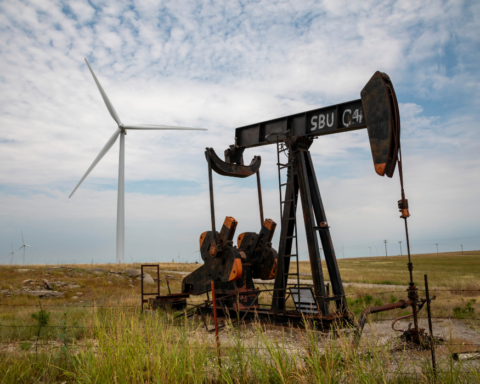
The youth plaintiffs are also challenging a Wisconsin law that prohibits the Public Service Commission from mandating more renewable energy from local utilities. Right now, about three-quarters of the state’s electricity generation comes from fossil fuels like oil and gas. That’s on par with the national average but lags far behind states like South Dakota, where more than 75% of its state energy production comes from renewables.
The plaintiffs are represented by Midwest Environmental Advocates, a Madison-based environmental non-profit law centre, and Our Children’s Trust, an Oregon-based non-profit dedicated to advancing youth-led climate litigation. The latter is perhaps best known for its successful litigation against the state of Montana in Held v. Montana. In December, the state’s Supreme Court affirmed that Montana youth have a constitutional right to “a clean and healthful environment” and concluded that the state should take greenhouse gas emissions into account when considering new fossil fuel projects. The state hasn’t considered any new oil and gas projects since then, so it remains to be seen what that will look like in practice.
“Wisconsin doesnʻt have any fossil fuel extraction like Montana, but they do continue to have an electricity sector that’s dominated by fossil fuels. Itʻs the largest source of greenhouse gas emissions in the state,” said Our Children’s Trust attorney Nate Bellinger, who is representing the Wisconsin plaintiffs.
The non-profit has filed dozens of lawsuits in the United States over the last decade and a half, including one against the Trump administrationʻs reversal of former president Joe Bidenʻs climate policies. Last year, they helped secure a landmark settlement in Hawaii with the case Navahine v. Hawaiʻi Department of Transportation, where youth plaintiffs contended that the state’s commitment to expanding infrastructure to support gas-powered cars and disregard for cleaner options violated their constitutional right to “a clean and healthful environment.” There, the state agreed to develop a plan to zero out carbon emissions from its transportation sector by 2045.
RELATED:
Juliana vs. United States: No ordinary climate lawsuit
Slate of lawsuits open new avenues of hope for climate campaigners
As the legal fight against climate action heats up, here are five cases to watch
In Wisconsin, the constitutional right to a clean environment isn’t as explicit as in Montana or Hawaii, where there is language in the state constitution spelling out that right. Wisconsin Democrats tried unsuccessfully earlier this year to add that language to the state constitution. But the attorneys in this new case are arguing that a stable climate system is necessary to achieve the constitutional rights to life, liberty and the pursuit of happiness.
Maria Antonia Tigre, director of global climate change litigation at the Sabin Center for Climate Change Law at Columbia University, says lawsuits like this take on new salience in light of the Trump administration’s rollback of climate action. “It’s even more important to bring these cases now given the current state of the United States’ stance on climate change in general,” she says.
A spokesman from the Wisconsin Public Service Commission declined to comment on pending litigation.
As state leaders grapple with mounting costs of flood recovery and plead for federal assistance, Waazakone hopes that her lawsuit forces them to take climate change seriously. “I want the state of Wisconsin to realize that you cannot allow businesses and people to continue to erode our futures,” she says.
This article originally appeared in Grist. It has been edited to conform with Corporate Knights style. Grist is a non-profit, independent media organization dedicated to telling stories of climate solutions and a just future.