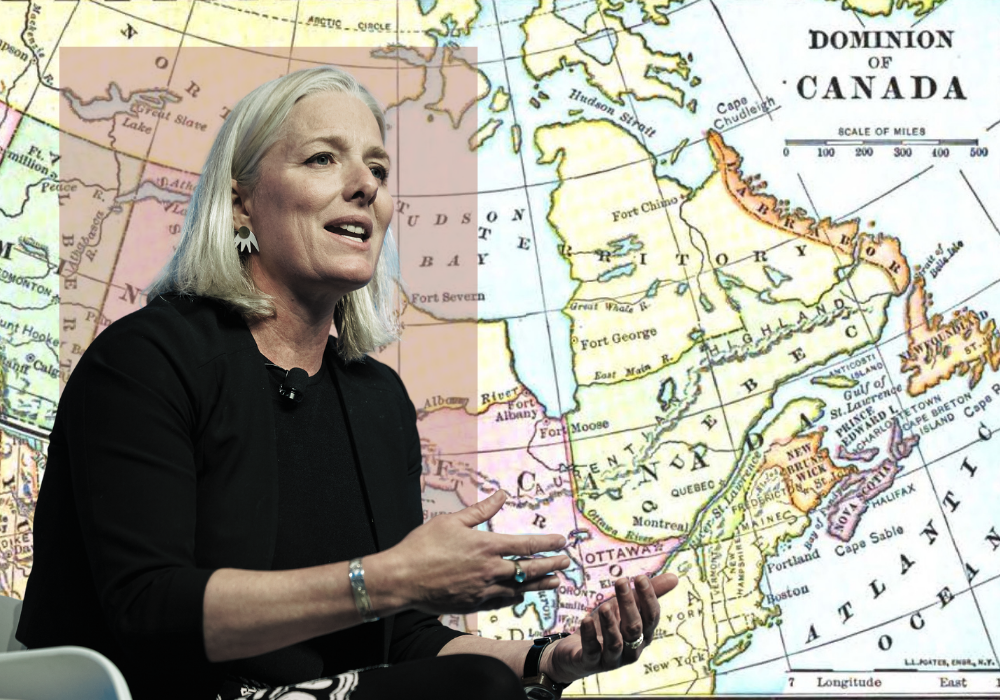
Since leaving Justin Trudeau’s cabinet in 2021, Catherine McKenna has spent a lot of time abroad. In her roles as founder and CEO of Climate and Nature Solutions, chair of the UN Secretary-General’s High-Level Expert Group on Net-Zero Commitments, and through the growth of her Women Leading on Climate network, McKenna has seen firsthand how countries in Europe and Asia are approaching electrification. But in Canada, she argues, gas influence – and the political turbulence of the Trump era in the United States – is distorting Canadians’ understanding of the energy transition. It is time, she says, to reset our horizons, catch up on climate realism and seize the opportunities afforded by the shift away from fossil fuels.
Earlier this summer, managing editor Mark Mann caught up with McKenna to find out what she thinks about Canada’s current trajectory for climate policy and the energy transition.
This conversation has been edited and condensed for publication.
Mark Mann: I want to get a pulse check with you on where you think Canadians are at with climate change and climate policy.
Catherine McKenna: Look, 80% of people around the world actually care about climate. But when you’re faced with Trump, there’s one issue and it’s Trump. The thing we need more from leaders right now is to make the direct link between affordability and climate. Right now, regular people go to the pump and it’s terrible, and this is directly linked to the fact that their vehicle relies on gas. They are directly impacted. That is the affordability crisis. It’s housing, too, and other things, but a lot of it is our dependency on gas to fuel our cars and oil and gas to heat our homes. So those prices fluctuate and people are the ones who are hurt. Meanwhile, oil and gas companies are making massive profits, apparently, because of the Iran war. Affordability is an oil and gas issue, and the energy transition is the best way to protect Canadians and to lower their costs with solutions that are cheaper and better. We need to see policies that actually support getting people off oil and gas. Heat pumps are better. EVs are better, but we need cheaper EVs. We need to be able to have solar we can put on the grid, and we need to push our utilities to allow this. It’s time for leaders to make the connections so that Canadians understand the opportunity in the short, medium and long term to make the transition.
MM: Yeah, there’s the energy transition and then there’s emissions reductions. And Carney’s whole strategy has been that we should run, not walk, to the oil and gas industry to find emissions reductions. What do you think of that approach?
CM: I mean, the problem with the oil and gas industry is that all they’ve done is increase emissions. They made all these promises when I was minister and they broke all of them. Our emissions now continue to rise, and they continue to demand subsidies. They give their profits back to their fat-cat CEOs and their largely U.S.-based shareholders. We’re not winning, we’re subsidizing the problem, and we’re not helping people. We should not be beholden to large oil and gas companies, because it’s not helping regular people.
MM: Are you worried that there’s going to be a big fossil-fuel infrastructure investment that is going to be shoehorned into the nation-building agenda, and that we’re going to be locked in with the risk of a major stranded asset?
CM: I think the stranded asset risk is real. We also have unfunded liabilities that are massive: tailings, abandoned wells. I work globally. No one is saying, “I can’t wait for Canadian LNG.” That is a myth. I approved [a liquefied natural gas] project that didn’t go ahead a long time ago because of the risk associated.
I think there is no one in their right mind who would invest in a pipeline, given the projections for fossil fuels. Mark Carney knows this. But I think a lot of folks on Bay Street, when I talk to them — I’m not sure that they’re having the same conversation that people are globally. I don’t think they understand how transformative it has been. The uptake of EVs is huge and you have countries now saying they are only going to sell EVs, or they’re not going to allow, you know, new gas hookups in homes because it’s too much of a risk. We are diluted in a way because we’re a fossil-fuels-producing country. Other countries are starting to leapfrog because there are better solutions. If we could get basic EVs here in Canada, people would choose them because it would be cheaper both in terms of the purchase price but also in terms of maintenance and you’re not using gas.
I want Canada always to win, and I worry that we’re not going to win. We make it seem like we can’t do things because of the affordability crisis or we can’t care about climate. The energy transition is happening. Do we want to get with the program and lead? We’re very fortunate in Canada to have a lot of clean electricity. We’re very fortunate to have a talented workforce, to have critical minerals. But you’ve got to make the investment now and recognize that Donald Trump at one point will not be around as president. But the climate process is accelerating and the solutions are better, and we’re pulling ourselves back.
RELATED STORIES
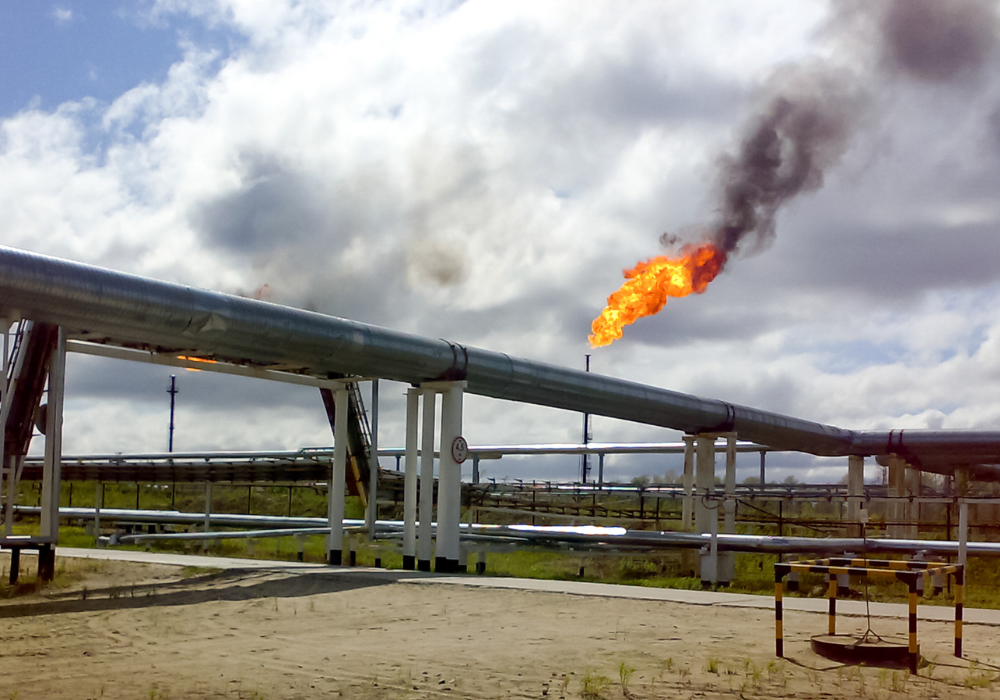
MM: We’re now gearing up for a new struggle over whether LNG should qualify as a transition fuel. What’s your take?
CM: New natural gas should not be considered green in a green taxonomy. If you look globally, that’s not a thing. We won’t be taken seriously. I get that oil and gas companies would really love that. It doesn’t mean, by the way, that you can’t invest in natural gas. It just means it doesn’t fit under the category of green.
MM: So you wouldn’t say an investment in LNG should be completely off the table?
CM: If you want to invest in LNG, you’d better be looking at the markets and the projections. If you had LNG now, sure, but in the future you’re going to have a stranded asset. The problem is they get to privatize the profits and socialize the risks. Right now, we already know that unfunded liabilities in Alberta around the oil sands is bonkers. And then layered on that, we’re going to have unfunded liabilities if we continue building new fossil-fuel infrastructure.
The oil and gas companies have to clean up their act if they want a hope of continuing. These are the richest companies, largely U.S.-owned. Why should Canadians give their hard-earned tax dollars to these folks when they have massive profits that they could be reinvesting? I have called for a windfall tax like we’ve seen in the U.K. and other places because they are making so much off of this war, while Canadians can’t pay for gas. For Canadians, the heating costs of their homes have gone up exponentially. There’s not that much the government can do unless they’re actually going to take money for these windfall profits off of the Iran war. These companies are making money off of an illegal war against Ukraine and now the Iran war; those profits should be reinvested in a way that supports Canadians, not given back to your largely U.S.-based shareholders.
MM: What role should China have in Canada’s energy transition?
CM: That’s kind of weird. I don’t want China to have a role in Canada’s energy transition. I think that we have to figure out trade, and how trade and climate can go together. These are not easy decisions. We’ve seen Mark Carney open up the market to a small percentage of Chinese EVs. The reality is that people are going to decide based on price. That’s how it works. The EVs they’re producing are just a lot cheaper. Yes, there’s been some subsidies, but they’re also producing some of the models that are really basic. If our auto manufacturers want to compete, then they should be producing EVs that are really basic, not expensive EVs. I’m not an auto manufacturer, but it seems pretty clear this is where it’s going.
MM: You built a global network of women leading on climate. How is that network bringing its influence to bear on Canadian climate policy?
CM: These are women that are sitting at the table, whether they’re at the boardroom table or they’re at the negotiating table or in the council chambers or they’re in universities or they’re young women who are activists who are on the streets. These are women who are often speaking up, and it is hard. What I realized when I was minister is that sometimes I was the only person at the table raising climate change, and I knew some people would be like, “Oh, is that woman going to bring up climate again?” Of course, every time I talked about climate, I was actually talking about the economy. I’d be like, “Yeah, damn right I’m going to talk about climate.” Once I knew that other women in similar positions in Canada and around the world were talking to climate, it made me feel stronger and better able to just stand up for the right thing.
Women are two and a half times more likely to talk about climate change. They are two and a half times more likely to act on climate change. If you have a woman on board, it’s more likely to disclose emissions. That is a theory of change that has real evidence behind it. So we need to empower those women.
We bring an agenda. In Canada, we wrote a letter that was signed by hundreds of women to security regulators, saying you need to require disclosure of climate risks. That’s a basic principle. We need to be more sophisticated in how we understand this. I am on the board of the Singapore sovereign wealth fund. I work with financial institutions in Europe. They’re working on this. They understand there’s a risk and an opportunity and an obligation to shareholders. Women are pushing the envelope, and we’re trying to bring that voice and make it stronger.
MM: Are you going to go back into politics?
CM: Nope. But I will help other people.
Mark Mann is the managing editor at Corporate Knights.
The Weekly Roundup
Get all our stories in one place, every Wednesday at noon EST.