The climate “is more out of balance than at any time in observed history,” the United Nations’ World Meteorological Organization (WMO) warned in March. The same could be said on a whole host of other fronts, as war, economic upheaval and geopolitical standoffs threaten to further undermine a fragile coexistence.
The Pacific Ocean has become a particularly important backdrop. For months now, the United States Coast Guard has been aggressively tracking and intercepting high-speed boats allegedly carrying thousands of pounds of cocaine across choppy international waters. One operation alone nabbed US$133-million worth of illicit drugs in January. Further afield, near the Philippines and Japan, China has deployed various aircraft carrier strike groups, testing the geopolitically sensitive region. Not to be outdone (or outgunned), the United States has significantly increased military exercises in the region, including large-scale drills in the Philippines and Japan that involve thousands of troops from various nations, along with air and maritime exercises.
But arguably the most disruptive force in the Pacific is just pulling up. Forces of nature are gathering to create what some are predicting will be another “Super El Niño” season. In April, a typhoon flipped a U.S.-flagged cargo ship in the Pacific, near Guam, killing at least one crewmember and another five are still missing.
El Niño and La Niña are two sides of the same meteorological coin, known as ENSO – or the El Niño-Southern Oscillation. The WMO says its impact on rainfall, drought and extreme events give it the ability to “reshape global weather.”
El Niño comprises warm sea-surface temperatures in the central Pacific that extend all the way to South America. Super El Niño, a more extreme weather pattern, increases the chances of drought and damage to food crops in various parts of the world. For nations most dependent on agriculture, it can have a serious impact on livelihoods. The WMO does not use the “Super” moniker because it is not part of standardized classification. The term emerged in 2003 when Australia’s national science agency, the Commonwealth Scientific and Industrial Research Organisation, used it to describe events where the Niño 3.4 index – a measure of sea-surface temperature anomalies in the central equatorial Pacific – exceeded 3°C. Yale Climate Connections notes that the term has been used more liberally, and informally, by the media and commentators.
La Niña operates in an opposite way, pushing warm water toward Asia and cooler water toward the Americas. This can still lead to drought in places like the southern United States and heavy rains and flooding in the Pacific Northwest. Winter is warmer than normal in the south during La Niña and cooler than normal in the north.

According to the WMO, forecasts point to above-normal temperatures across nearly the entire world this summer. There is an 82% chance of El Niño taking shape in May through July, according to a May 14 outlook from the National Weather Service Prediction Center. Scientists have found that the combination of ENSO and a warming climate make for more extreme weather events.
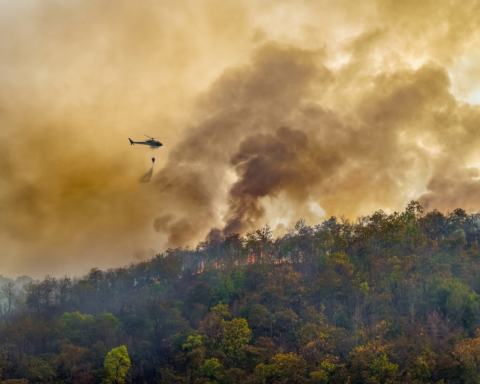
So far, 2026 paints a grim picture. The World Weather Attribution, a global climate research collaboration, compiled a long list of already worrisome events, including record-low levels of Arctic sea ice, the hottest winters ever for a number of U.S. states, record rain in Spain (just a few years after record dry spells), and temperatures as high as 46°C in India. Combined with El Niño, the planet could be headed toward “an unprecedented year of global fire and record-breaking weather events,” the organization said in a statement.
Countries are bracing. International organizations such as the WMO have been pushing for vital early-warning systems to help nations and communities plan. The UN Economic and Social Commission for Asia and the Pacific (ESCAP) notes that El Niño effects will feel harshest in places with preexisting structural vulnerabilities. The U.S.–Israel war in Iran and its impact on the Strait of Hormuz have triggered “the most severe energy crisis in history,” according to Fatih Birol, head of the International Energy Agency – one that will have wide-reaching effects beyond the shipment of goods.
“Together, these pressures leave governments and households less able to absorb climate shocks than during previous El Niño cycles,” ESCAP said.
The Weekly Roundup
Get all our stories in one place, every Wednesday at noon EST.