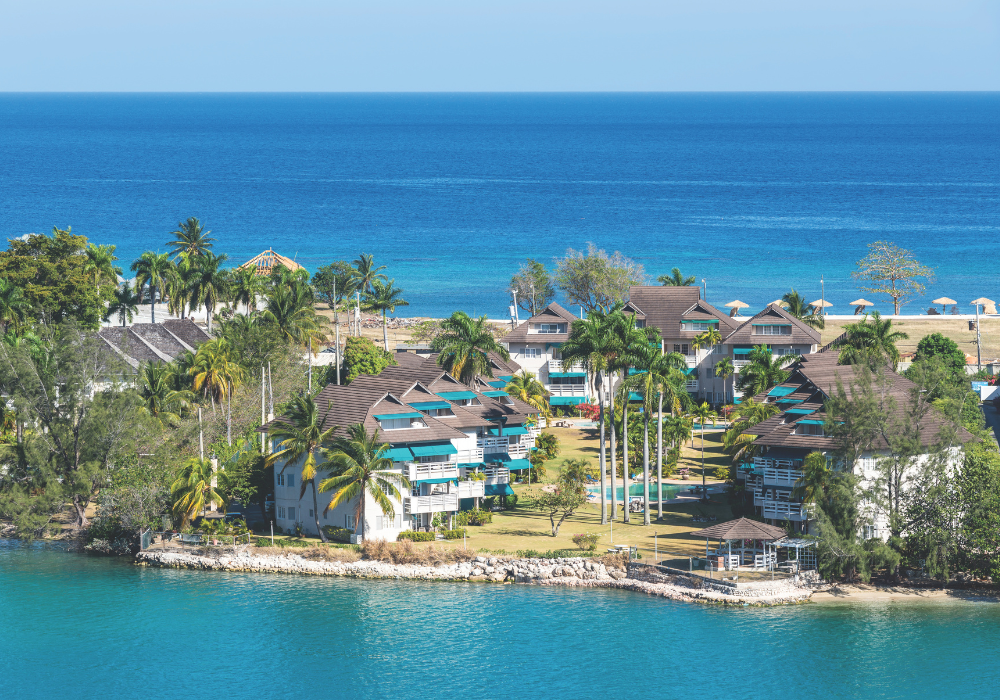
Last October 16, meteorologists at the National Hurricane Center in Miami, Florida, observed a tropical wave forming off the coast of West Africa. Over the next five days, they watched it cross the Atlantic Ocean and enter the warmer waters of the Caribbean Sea, where it developed into a tropical storm that they named Melissa. By the time Melissa made landfall on Jamaica on October 28, she was a Category 5 hurricane, the most powerful storm on Jamaican record and the third most intense in the history of Atlantic hurricanes.
With sustained winds of nearly 300 kilometres per hour, storm surges of four metres, and half a metre of rain, Hurricane Melissa flattened much of western Jamaica, doing somewhere between US$8 and $15 billion in damage. But even as roofs were still flying off churches and palms were bending like stalks of grass, Edmund Bartlett, Jamaica’s minister of tourism, was already giving interviews to international media, encouraging travellers to visit and to visit soon.
The almost manic push to have all the island’s hotels operational by mid-December, when the peak season begins, threw into sharp relief a contradiction that underlies the Caribbean as a whole: it depends on an industry that, in some respects, is also responsible for its undoing.
The Caribbean is the most tourism-dependent region in the world. It is also one of the most vulnerable to the impacts of climate change. Warming oceans, rising sea levels and increasingly frequent extreme weather events represent existential threats to the region: not only to residents but also to the tourism industry on which they depend. Sustainability, in this context, is not a nice add-on, but a necessity. If tourism is to remain a mainstay of Caribbean economies, it has to be resilient to the impacts of climate change, protective of increasingly fragile ecosystems and beneficial to local economies as a whole.
It’s asking a lot of an industry that, as Antiguan author Jamaica Kincaid argued in her 1988 book A Small Place, exhibits a similarly extractive quality to the slave-based plantation economies of the 17th and 18th centuries. Kincaid draws a direct line from Caribbean sugar to sand: resources that have been exploited by foreign powers with little to no regard for the well-being of locals.
“Tourism is both a lifeline and a liability,” says Therez Walker, who grew up in Antigua and is now a lecturer on sustainable tourism at NHL Stenden University of Applied Sciences in the Netherlands. “It’s a very uncomfortable reality that a lot of people don’t want to face.”
Half a century ago, when the imperial powers that colonized the Caribbean dropped preferential trade arrangements for their agricultural exports – primarily bananas, sugar and rum – these tropical islands, with World Bank support, set their sights on the postwar middle class’s growing appetite for beach vacations. Tourism ministries were established and tax incentives were offered to foreign developers. In 1970, some four million international guests visited the Caribbean. Since then, the figure has increased almost 10-fold.
Tourism now accounts for an average of 11% of the gross domestic product of the 33 political entities – sovereign states, dependencies and overseas territories – that make up the Caribbean. But in some countries, the sector constitutes a virtual monoculture. In Antigua, for instance, tourism generates 88% of the country’s GDP and provides 91% of all jobs, according to the World Travel and Tourism Council.
Such dependency on a single industry creates vulnerability, particularly when only a fraction of its economic benefits flow back to the country. The vast majority of revenue generated by Caribbean tourism lands with the foreign operators who control it: airlines, cruise companies and hotel chains. The United Nations World Tourism Organization puts the level of economic “leakage” from Caribbean tourism at about 80%. At the same time, local governments have to contend with 100% of the waste that the industry generates.
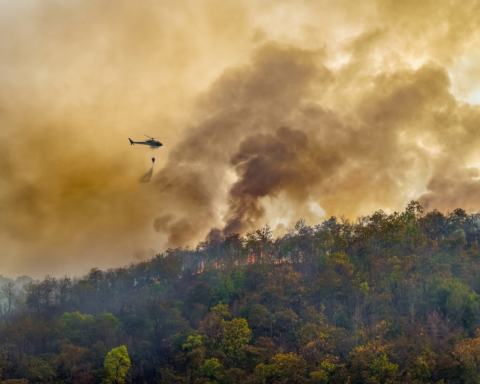
Climate change is only amplifying this vulnerability. Over the last five decades, rising sea temperatures have cost the Caribbean almost half of its hard coral cover: a blow to the marine life that coral sustains as well as the huge revenues generated by snorkelling and diving. At current rates, sea level rise is expected to reduce the Caribbean’s sandy beaches by half and to force the closure of a third of existing hotels by the end of this century. Likewise, extreme heat and storm events like Hurricane Melissa are becoming more intense and frequent.
When Walker, who has been based in the Netherlands since 2022, returns home to Antigua, she feels both frustration and sadness. The beach she went to as a child is barely recognizable. The water is higher, the shore depleted. Gone are the mangrove swamps and the thriving fish populations they once hosted. In her community, water is in chronically short supply: many households have running water only twice a week. When she drives past water trucks parked outside the island’s all-inclusive resorts, she is resentful – not of the guests inside, but of decision-makers who have failed to protect domestic and environmental interests.
The needs of tourists and residents are often not aligned. Drought for locals translates into a sun-filled vacation for visitors. The mangroves that serve as natural barriers against erosion and storms are the enemy of the pristine sand beach. The protected coastline that hosts animal, plant and marine life is an obstacle to shoreline resorts.
“Our policymakers go to UN climate conventions and talk about our vulnerability,” Walker says. “And then they come home and approve another huge development on an ecologically sensitive coastline.”
According to Beienetch “Bennie” Watson, who teaches tourism policy and planning at the University of the West Indies in Mona, Jamaica, the problem with Caribbean tourism is its foundation in a “colonial logic” that is top-down and externally driven. “Those seated around the table haven’t reflected the voice of ‘the people,’” she says. “The people’s vision of tourism hasn’t been heard.”
But in recent years, Watson has seen a shift, prompted in part by the COVID-19 pandemic, when Caribbean hotels stood empty and tourism revenue dropped by half. Some islands took the opportunity to promote homestays and longer-term accommodation options. Others directed visitors to more tailored experiences in eco-, adventure, and rural tourism. Watson is encouraged by a younger generation of traveller that, often prompted by social media, wants to explore outside resort walls.
A 2025 World Bank report on the future of Caribbean tourism emphasized the importance of moving beyond “sea, sun and sand,” pointing out how the short-term economic benefits of volume tourism – all-inclusive resorts and cruise tourism – have overshadowed their high environmental, energy, water-consumption and emissions costs.
Three months after Melissa, Jamaican Tourism Minister Bartlett went on an international marketing blitz to boost investor and traveller confidence in his island. At a luncheon in New York City, he announced that 70% of Jamaica’s hotels were up and running: a remarkable accomplishment.
But Watson, who lives in Kingston, has witnessed recovery on another level. Members of her church go out every Thursday to help communities that are rebuilding. She says the hurricane has proven something important to Jamaicans: that the island is close-knit, solidarity is strong, and residents’ needs matter.
Therez Walker agrees that change has to come from below. “We need to demand more of tourism,” she says. “This is an ‘us’ problem.”
Naomi Buck is a Toronto-based writer.
The Weekly Roundup
Get all our stories in one place, every Wednesday at noon EST.