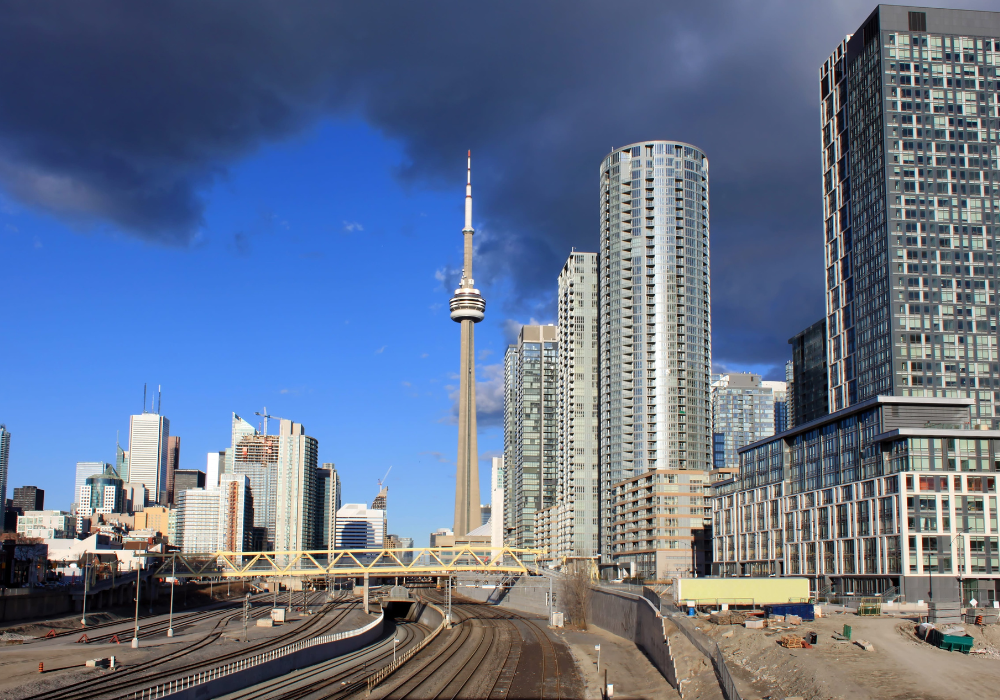
The second annual Toronto Climate Week kicked off yesterday with an eight-hour conference on “the Canadian climate advantage.” Intended as a city-wide community-building event to inspire new collaboration on climate solutions, the opening-day talkfest arguably served more to expose the ironies and contradictions in the Canadian climate fight.
In her keynote speech at the flagship event, Diana Fox Carney called climate change “the biggest challenge of our lifetime” and said the movement’s task is to convince people “that a more climate-friendly future is not only possible, it’s the one everyone wants” – safer, more inclusive and more just. But subsequent speakers charged that Canada is backsliding on climate performance, weakening standards and putting its own zero-emission targets beyond reach.
Fox Carney is a well-known economist, policy expert and adviser on climate issues to global investors – and her husband is Prime Minister Mark Carney, who has faced criticism from environmental groups on his climate agenda thus far. The former central banker has been a powerful proponent of sustainable finance, but his response to growing global protectionism has been, in part, to unleash Canada’s fossil-fuel industries, roll back emissions caps and support new pipelines.
In her opening remarks, Fox Carney did note that economic concerns such as “security and affordability” have been edging out climate concerns. Nonetheless, she added, “we need a shared sense of purpose around these issues.” Climate champions need to act fast, she said, and offer “solutions that are affordable, practical and able to improve people’s lives now.”
“It’s hard to overthrow legacy systems,” Fox Carney observed. Even so, “the question is not ‘Is change coming?’ The question is ‘Will Canada lead this change?’” she concluded, to loud applause.
Canada’s climate crawl
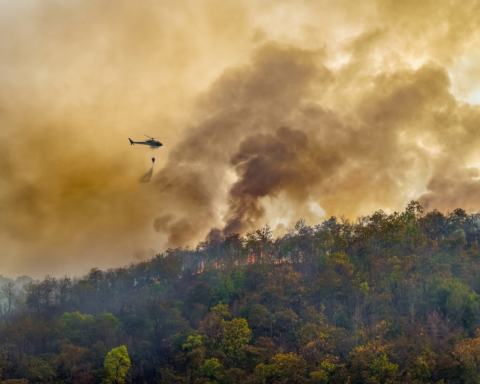
Rick Smith, president of the Canadian Climate Institute, received even more applause for calling out Canadian complacency. Why, he asked, is Canada ignoring the climate threat? Forget the United Nations’ 1.5°C target for global warming, he said: Canada has already warmed by 2.5°C over previous levels, and the wildfire summers of 2023 and 2025 demonstrated the urgent need to prevent even greater destruction.
Smith noted that only one-third of recent media stories about flooding in Canada refer to the longer-term climate trends. He also challenged the country’s overarching focus on the costs of climate action, rather than the true costs of inaction. In the past decade, forest fires have caused $37 billion in insured damage, two and a half times more than in the previous 10-year period. And uninsured losses, Smith said, are usually double those of insured properties.

Canadians are also falling behind on electric vehicles, Smith said. “Globally, 30% of cars being sold today are EVs. But the story of gasoline-car decline is not something we absorb as Canadians.” In the last quarter of 2025, just 11% of the cars sold in Canada were electric.
Between the past and the future
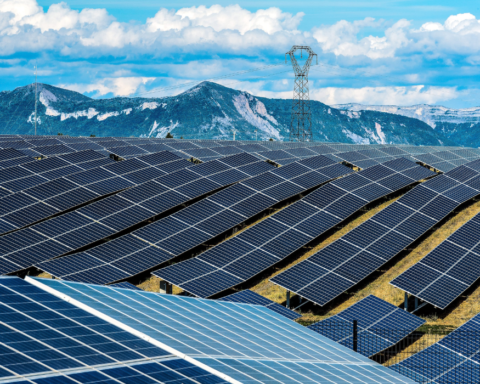
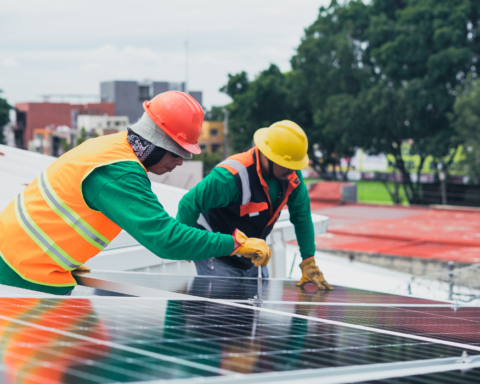
While Canadians line up at the gas pumps, the electric future is already here. According to Smith, 75% of new demand for electricity last year was met by solar sources. Battery storage in 2025 grew faster than ever. Last year, China exported $22 billion in green and solar technologies.
With the United States’ energy transition struggling under Trump, Canadian innovators have a chance to stand out on world markets. But that advantage may not last long. Smith predicted that a Democratic win in the midterm elections in November will rekindle the U.S. sustainability economy: “The North American focus on climate change is about to kick into gear, again.”
But some speakers pointed out that climate inaction is not an incidental failure of Canadians not paying attention, but a deliberate result of lobbying campaigns run by the resource-extraction industries. “Fossil-fuel disinformation is driving a lot of these rollbacks,” said Laura Tozer, a professor of environmental studies at the University of Toronto. While many other countries are racing ahead on climate issues, she said, in Canada and the United States, “fossil-fuel owners are using these times of turmoil to double down.”
Signs of progress
How to get beyond this impasse? One of the most effective messages came from Joannah Lawson, a principal of the Brian + Joannah Lawson Family Foundation, the platinum sponsor of Toronto Climate Week. A former business consultant, Lawson’s opening remarks offered clarity. Beneath an image of the earth hanging alone in space, she said, “The atmosphere is the only thing keeping us alive.” But now, she says, “we’re putting too much carbon into the atmosphere.”
In response to this crisis, Lawson offered four reasons why she remains hopeful:
1) Climate change is caused by humans, which means humans can also fix it.
2) The transition to clean energy is well underway. (In fact, she said, renewables production has tripled in the last 20 years.)
3) Regenerative agriculture, or holistic farming that focuses on soil health, is a powerful lever to reverse climate change by capturing carbon from the atmosphere.
4) Canada has huge nature resources to preserve – and we’re doing it! Last month, for instance, the Carney government released Canada’s first national strategy for protecting nature, which came with $3.8 billion for conservation and protection.
Transforming climate change from existential crisis to solvable problem could be key to creating consensus and investing in the future. With Canada falling behind, Fox Carney noted, “We must stop arguing amongst ourselves.” The current struggle, she said, “will shape the economic prospects of our country for years to come.”
The Weekly Roundup
Get all our stories in one place, every Wednesday at noon EST.