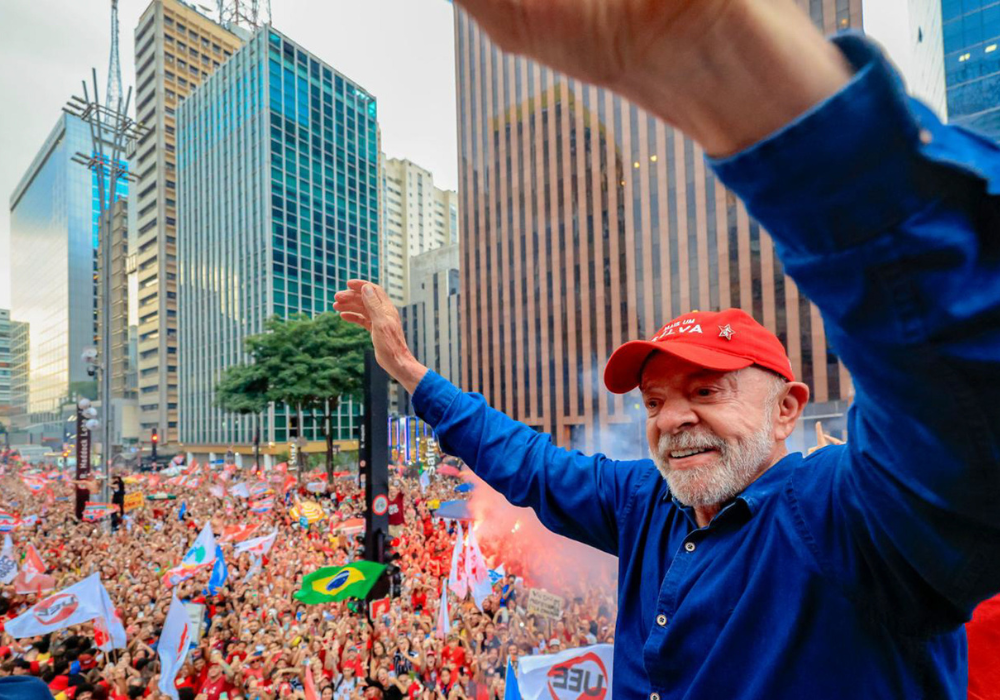
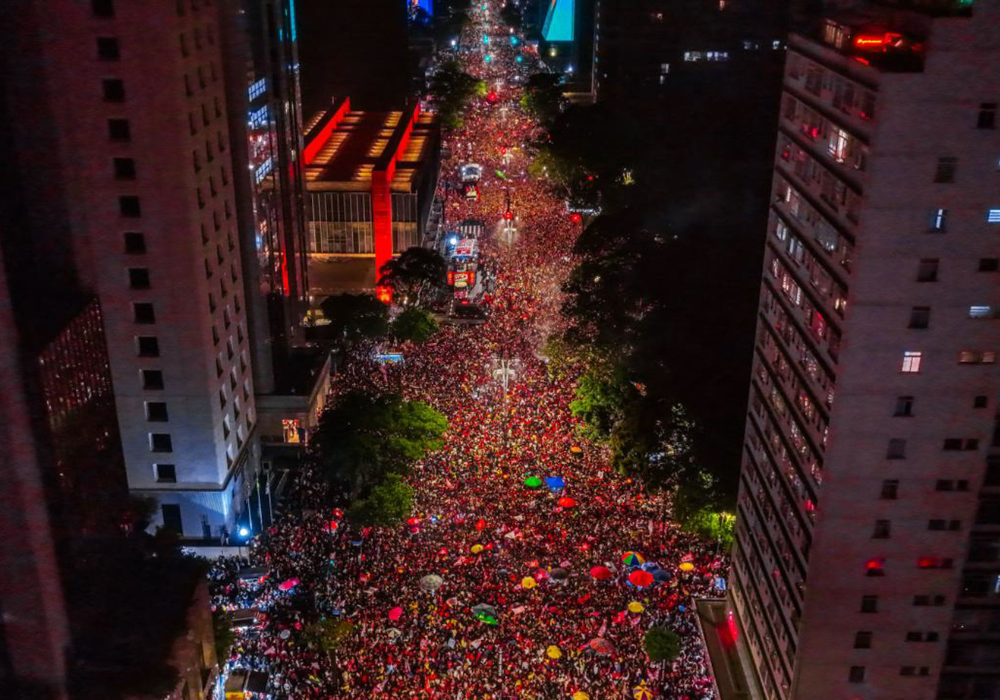
Environmentalists exhaled with relief Sunday night after Luiz Inácio “Lula” da Silva clinched his fourth term as president in Brazil after a shocking come-from-behind win against Senator Flávio Bolsonaro.
Da Silva, commonly known as Lula, had lost the first round of voting earlier this month to Bolsonaro, the eldest son of the far-right former president Jair Bolsonaro and leader of a surging right-wing movement that includes the powerful agricultural sector and evangelicals. Sunday’s results marked the first time since the return of democracy in Brazil that a presidential candidate who lost the first round was able to turn the results around in the second.
Da Silva’s victory cements him as one of the most iconic leaders of Latin America’s left. His welfare, housing and education policies have been instrumental in lifting millions of people out of poverty in Brazil, a country with 214 million people, in particular during his first two terms from 2003 to 2010.
In his most recent term, from 2022 to 2026, he made environmental programs a cornerstone of his administration, driving down deforestation of the Amazon rainforest that had skyrocketed under Jair Bolsonaro and playing host to the COP30 climate conference in 2025. His government has also recognized and granted legal protection to at least 13 Indigenous territories.
“We’re going to show the world how climate policy is done in this country,” Lula said during his victory speech Sunday night.
Disaster avoided
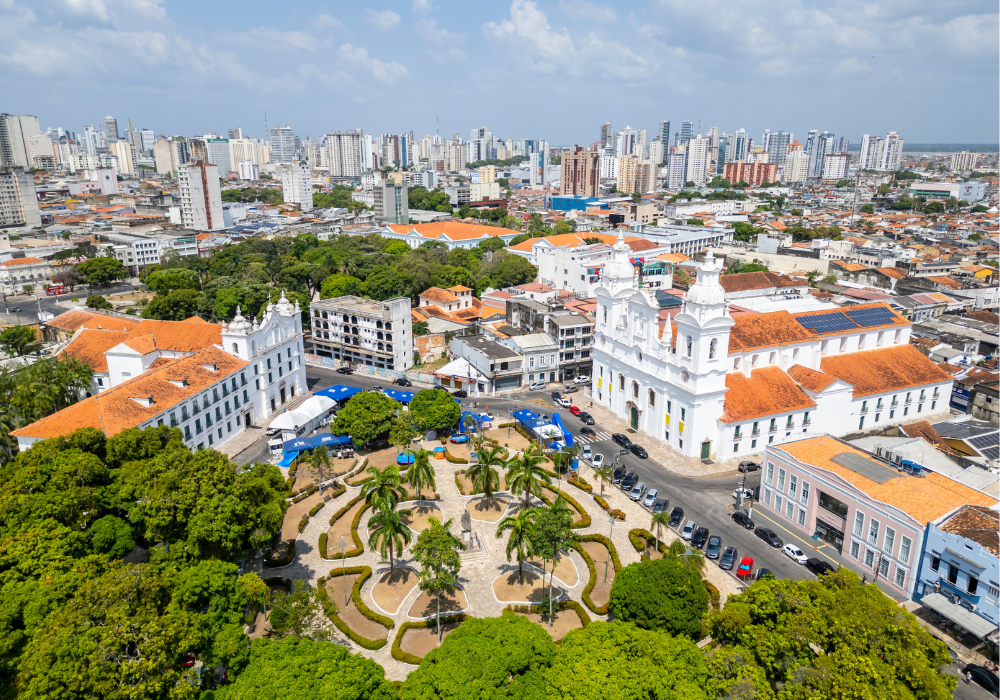
The prospect of a return to power for a Bolsonaro had set off alarm bells among environmental circles, with local and international groups warning of the danger he posed to the ecosystem known as “the lungs of the earth.” At a campaign stop in the northern Brazilian state of Pará during the last week of the race, Bolsonaro vowed to end “environmental obstacles” so that farmers can “do whatever they want on their land.”
“The potential election of Flávio Bolsonaro would represent the collapse of the Amazon, the end of protection for our biomes, and the abandonment of all the progress the country has made on the climate agenda in recent years,” said Observatório do Clima, a Brazilian environmental group, in a press release following the first-round vote on October 5. “He is a disciple of the ecocidal playbook of his father, Jair, who bequeathed us the greatest set of socio-environmental and humanitarian setbacks in history.” Jair Bolsonaro’s presidency also saw record invasions of Indigenous lands and frozen financing mechanisms such as the Climate Fund and the Amazon Fund, the observatory said.
Observatório do Clima has been critical of some Lula policies, such as his administration’s support of an offshore oil-drilling project by Petrobras, the majority state-owned oil company, in the mouth of the Amazon basin. But in the waning days of the campaign, the climate policy watchdog has highlighted key environmental wins.
RELATED STORIES
Agriculture’s impact
Brazil’s emissions fell 6% in 2025, after a 13% drop in 2024, reaching their lowest level since 2018. The reduction in emissions is largely due to ongoing drops in deforestation in the Amazon and Cerrado biomes. Net emissions dropped 81% during Lula’s third term, compared to 2022, the last year of Jair Bolsonaro’s government, the observatory said. “Over the past four years, Brazil has caught up and cut its gross emissions by a quarter. This is a noteworthy achievement, given that in the previous 13 years, since publishing its National Policy on Climate Change in 2009, the country saw its emissions grow by two-thirds,” stated David Tsai, a coordinator and researcher at Brazil’s Institute for Energy and Environment.
The fact that the decrease occurred so quickly after an increase in deforestation shows that policies implemented by the government are working, Tsai said. “However, it is concerning that our climate performance still depends so much on a single sector, land use. It is essential to make progress in other sectors so that the next targets, for 2030 and 2035, are met.”
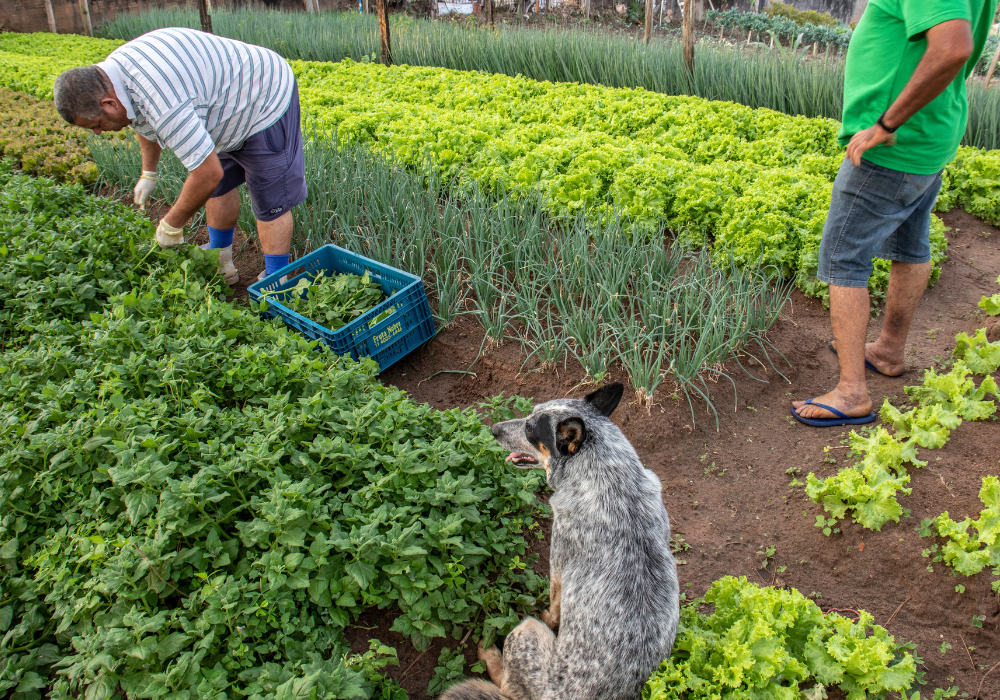
Agriculture is the most carbon-emitting economic activity in Brazil, accounting for 70% of gross emissions, when taking into account emissions directly from the sector and those from deforestation.
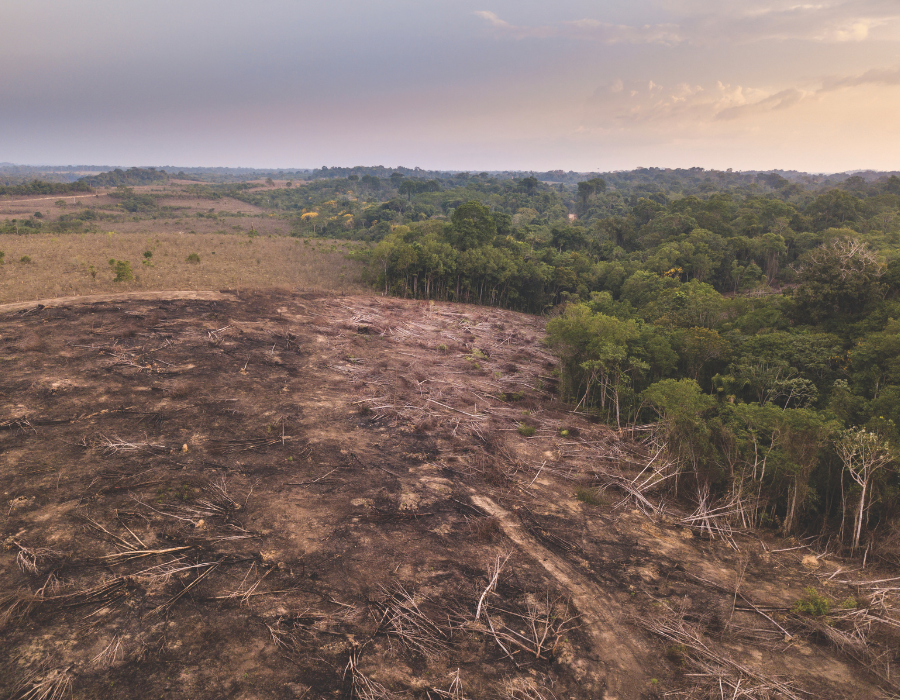
The Amazon recorded a historic low in deforestation in 2026, which amounts to a 71% decline over the past four years, Observatório do Clima said. Deforestation also dropped in the Cerrado by 48%. “In the four years of Luiz Inácio Lula da Silva’s third term, the Amazon lost 24.648 km² of forest, 46% less than the total deforested under the Jair Bolsonaro administration (45,586 km²),” it said. It credited a “clear and sustained commitment to environmental protection” by the Lula government, which has made targeting environmental crimes a priority and used tools such as remote satellite monitoring and collective embargoes on deforested areas.
The results show that “ending deforestation is possible” but that “political will is essential to make this happen,” the observatory said.
The Weekly Roundup
Get all our stories in one place, every Wednesday at noon EST.