Approximately eight kilometres off the coast of Dongying, China, is the world’s largest floating solar farm. Spanning 1,223 hectares, about the size of 1,600 football fields, it generates one gigawatt of power and is operated by the company CHN Energy.
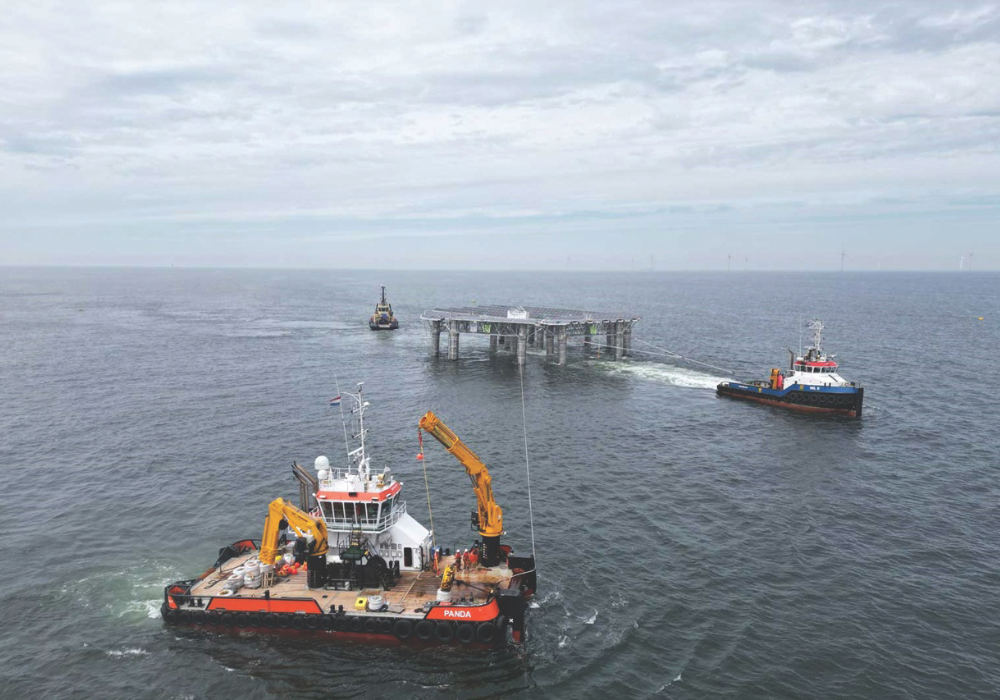
While the size is currently in a league of its own, it’s far from the only company eyeing open water as a vast expanse for solar power. In Taiwan, Hexa Renewables operates a floating solar plant that spans 347 hectares and can deliver 373 megawatts of power to the grid. In the North Sea, SolarDuck is working on a floating solar park integrated with an offshore wind farm and is expected to generate five megawatts of power once it fully goes online.
Floating solar power in ocean environments is an industry that’s growing fast but is far from mature. Between 2013 and 2022, floating solar panel installations grew more than 2,000%, despite being only 1% of all solar panels installed in 2022, according to Bloomberg News. And while sea-based solar removes land-use competition from the equation, it introduces new ecological questions beneath the waves. “If, in a theoretical sense, [we] pave the ocean, that would be very bad,” says Steven Benjamins, senior lecturer in marine vertebrate ecology at the Scottish Association for Marine Science.
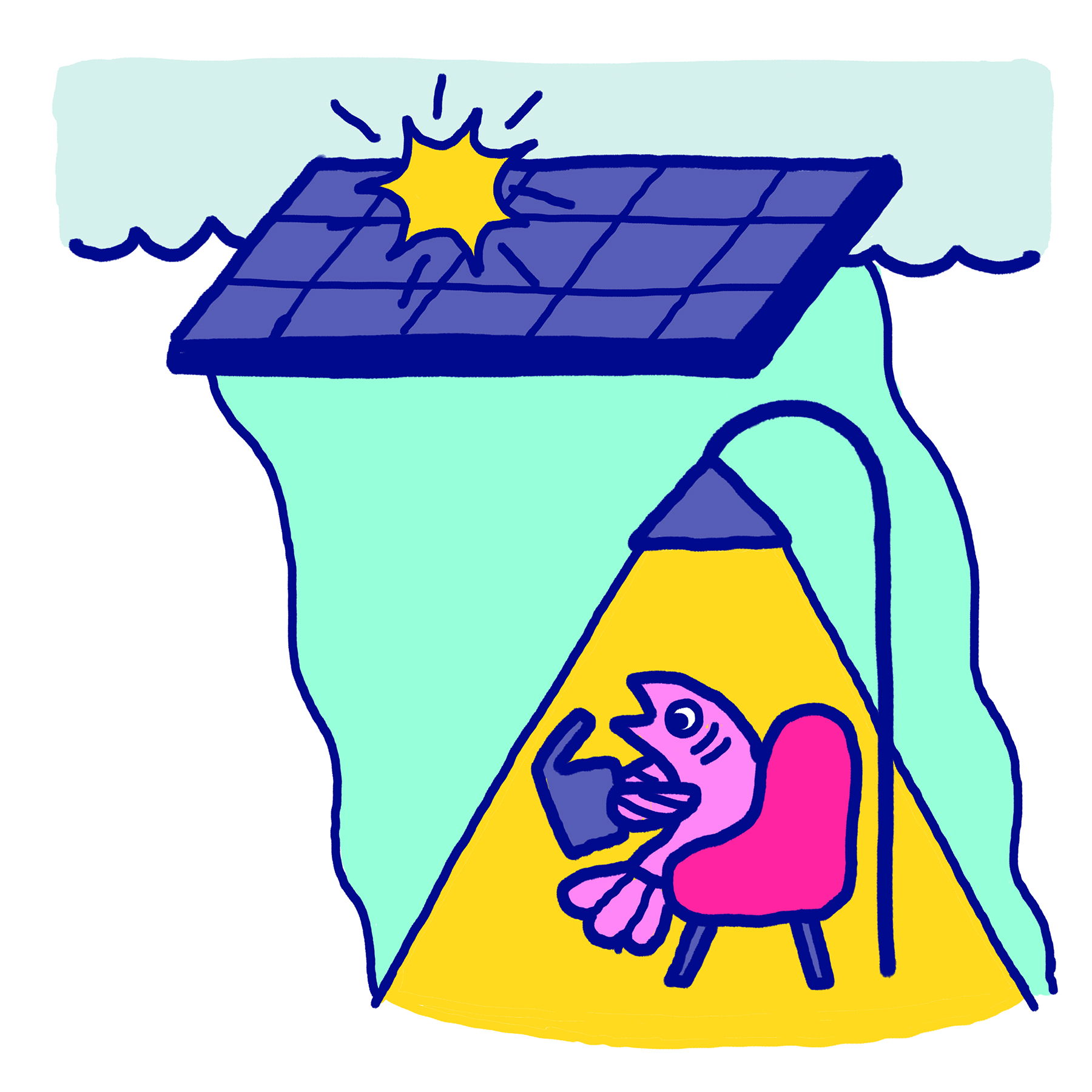 For floating solar, shading from the panels is an ecosystem consideration for companies building large parks. Scientists have found that shading can affect phytoplankton and other oxygen-making primary producers below the panels, though the wider impacts seem to depend on how much of the water body’s surface area is covered. According to one North Sea case study, if the surface area covered was smaller than 20%, there wasn’t much of an impact – less than 10% change to the primary productivity. However, above 40% of surface coverage, researchers saw serious ecosystem distress that could ultimately lead to a full collapse.
Further up the food chain, “there are certain species and communities that would definitely suffer if a solar PV farm were placed on top of them,” Benjamins says, such as seagrass beds, seaweed and kelp, and other communities and habitats.
A very complicated question
Introducing any hard surface to a marine environment attracts certain species, such as mussels. In some cases, such as in the North Sea, this led to increased biodiversity, including species that were non-indigenous to the area. “Whether this is good or not is a very, very complicated question, and it can be seen from many different [angles],” says Ninon Mavraki, marine ecologist at Wageningen University in the Netherlands. “I think the best answer is to say we do not know yet.”
When it comes to cross-industry efforts, pairing offshore solar with wind could help keep energy generation more consistent by capturing sun when there’s less wind and vice versa. There’s also potential to pair the technology with aquaculture businesses, such as harvesting the mussels that colonize the panels. In addition, floating solar parks, like other offshore infrastructure, make it difficult for commercial fisheries to operate nearby. By default, entire floating solar parks could end up functioning like marine protected areas.
Currently, however, much of the research exploring the effects of floating solar on biodiversity is theoretical. “There are always going to be winners and losers,” Benjamins says. What will define the floating solar industry’s relationship to the ocean environment will depend on how companies roll out projects. “It’s all about scale, careful planning and long-term ecosystem considerations.”
Ashley Perl is a Canadian freelance journalist based in Stockholm.
The Weekly Roundup
Get all our stories in one place, every Wednesday at noon EST.