This story was originally published by Canary Media. It has been edited to conform with Corporate Knights style.
Developers and utilities are building tons of gas generation to power the data centre boom. It’s an expansion that could cost them and the rest of us dearly, both in terms of climate change and money that may end up wasted if computing demand fails to materialize.
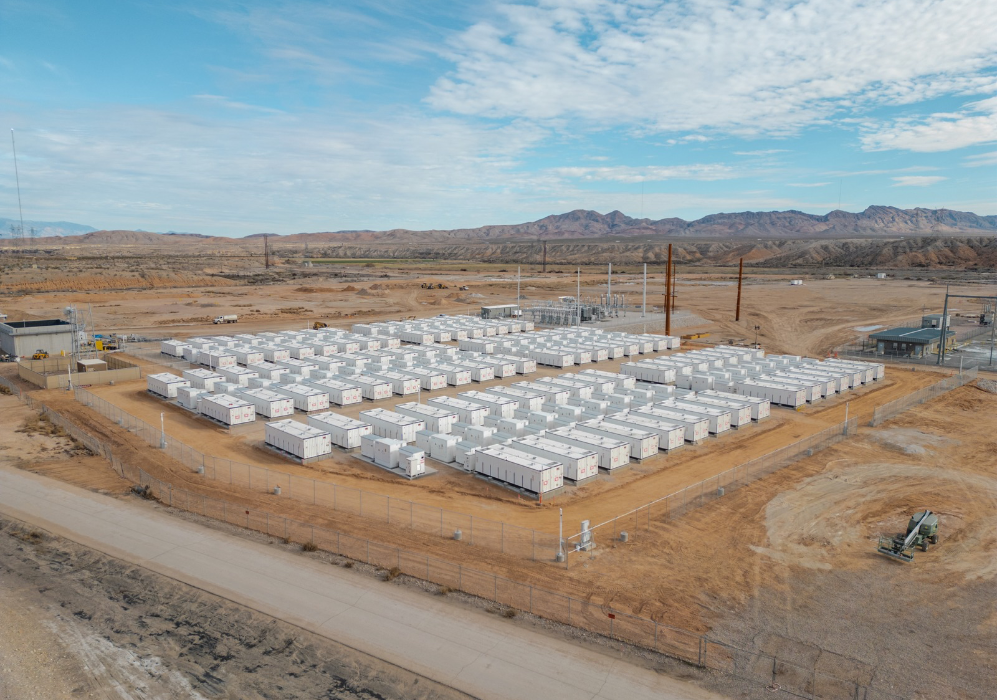
But there’s a cleaner, cheaper and faster-to-deploy alternative: batteries.
That’s the conclusion of a new report from researchers at Georgetown and Duke universities, which lays out the ways states can push utilities and tech firms to opt for energy storage over fossil fuels whenever possible.
Fossil fuel power – whether in the form of giant utility-scale plants or generators installed behind the meter at data centres – has become the go-to for many in the AI industry. That’s because gas generation offers round-the-clock power in a single package. Overall, U.S. utilities are planning more than 60 gigawatts of new gas plants to serve data centre demand, and around 90 GW of behind-the-meter gas generators for data centres have been proposed nationwide.
“At the moment, there’s a lot of inertia and status quo pressure for much of the behind-the-meter resources being natural gas,” said Ian Hitchcock, report co-author and senior program coordinator at the Duke Initiative for Science and Society.
A safer alternative
Moving ahead with those gas power plans does more than spell climate disaster. If data centre proposals fall through or shut down early, other utility customers could be on the hook for the cost of overbuilding gas. That’s called “stranded asset” risk – and states have only begun to tackle it, even amid mounting fears that the AI sector is a bubble about to pop.
Batteries “can act as a hedge against that risk,” last week’s report explains. Batteries are much cheaper than round-the-clock gas generation in situations where hours of stored energy can solve near-term needs. They’re also inherently modular and flexible in ways that gas power plants are not, which allows planners to increase or cut back on deployment if data centre demand shifts sharply.
Plus, batteries can help avoid the need for costly grid buildouts that would otherwise be used to serve increasing electricity demand, and can act as shock absorbers to cushion the grid against data centres’ massive and fast-changing computing loads.
While lithium-ion batteries can’t provide round-the-clock power, they can meet large portions of data centre electricity needs, said Jackson Ewing, director of energy and climate policy at Duke University’s Nicholas Institute of Energy, Environment & Sustainability. And unlike more future-forward solutions – such as advanced geothermal, next-generation nuclear, and novel long-duration energy storage technologies – “batteries are already showing serious momentum in terms of their deployment trajectory.”
Developers like it
In fact, utilities and data centre developers are increasingly embracing batteries, even as they pursue gas. A new forecast from BloombergNEF sees U.S. energy storage deployment surpassing 11,000 gigawatt-hours by 2036, a 30% increase from its 10-year forecast from just six months ago. Data centre demand is pushing much of that growth.
So, what can state decision-makers do to further encourage data centres to opt for batteries?
States that directly regulate utility investments can craft “bring your own new clean energy” tariff structures. These regulations can set minimum requirements for data centres to procure or pay for enough carbon-free generation and energy storage to cover some or all of their electricity needs. Certain jurisdictions are already moving ahead with this approach; Google, for example, has signed onto such tariffs with regulators in Nevada and Minnesota.
Things get more complicated in states with “restructured” energy markets. In these places, regulators have limited authority over the independent power producers that build big generation and battery projects and sell power into wholesale electricity markets. Still, the report highlights several ways that these states can encourage battery development to serve data centres, including via state energy storage mandates like those launched in Illinois, Maryland and New Jersey, and engaging in state energy planning in conjunction with regional grid operators.
“There is not a jurisdiction that has no potential action items if they’re serious about trying to deploy this,” Hitchcock said.
Jeff St. John is chief reporter and policy specialist at Canary Media.
The Weekly Roundup
Get all our stories in one place, every Wednesday at noon EST.