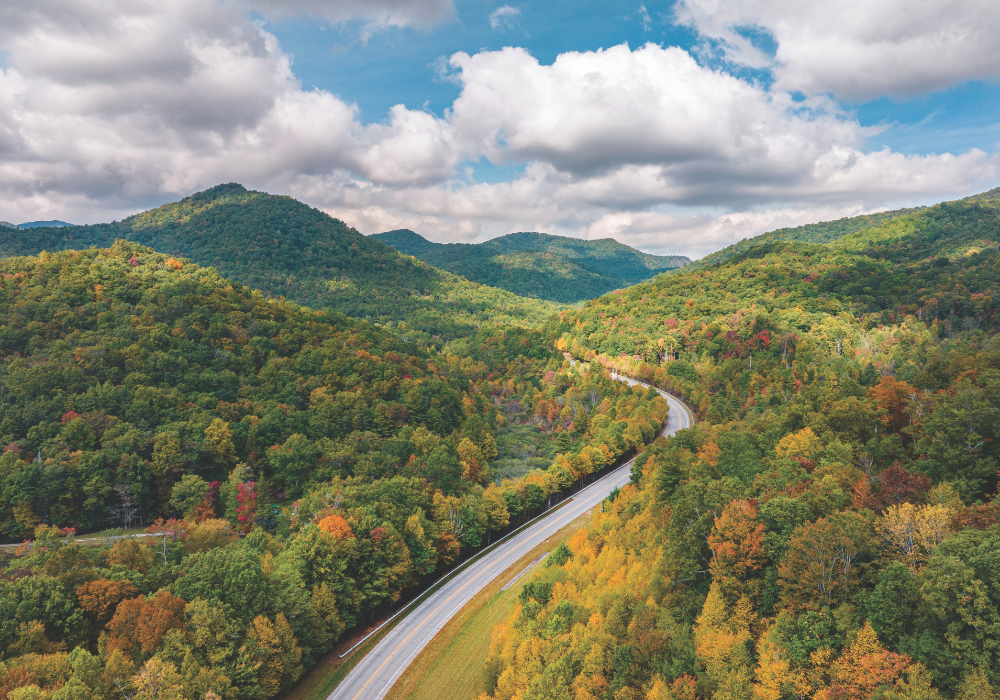
Humans aren’t the only ones changing their travel patterns. Trees are on the move, too. In a phenomenon known among scientists as “range migration,” trees are heading north, into cooler climates, as a direct response to climate change.
While it’s tempting to imagine the majestic Ents stalking Middle Earth in The Lord of the Rings, this migration is the more subtle result of seeds dispersing by way of wind, animals and water. Indeed, the movement of tree species echoes other migratory patterns that are also influenced by a warming planet.
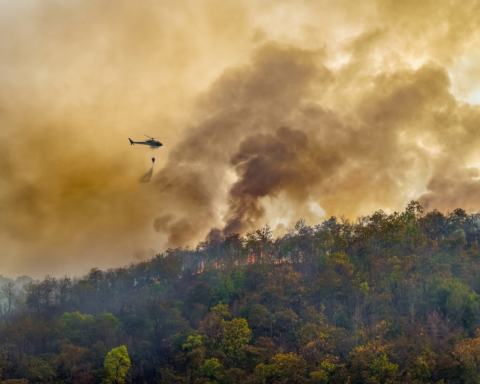
The movement of trees is not new. Scientists have long tracked how these shifts occur, describing them as proof of the resilience of species. But they are happening more quickly because of temperature changes in the planet. One pattern observed is the move away from heat. Some move to higher altitudes, others to areas with more moisture. A new study published in the International Journal of Applied Earth Observation and Geoinformation paints a more nuanced picture, finding that both climate and anthropogenic factors have to do with tree movement. Between 2000 and 2020, 42% of treelines shifted upslope, while 25% shifted downslope. “The rate of treeline shifts was strongly influenced by anthropogenic disturbances,” the study found, in particular from fires.
Unsurprisingly, trees are short on speed. They simply may not be able to migrate quickly enough to keep up with the pace of environmental changes. Some scientists are calling for “assisted migration” as a way to help smooth out the adaptation process. In Canada, the practice is taking root. The provinces of British Columbia and Alberta have extended seed transfer zones 200 metres higher for most species, and in B.C., planting of the western larch is now permitted outside of its previous range.
Assisted migration is not without risks or controversy, and some scientists consider it another example of human meddling. New species may become invasive in a new ecosystem, or they may be ill-equipped to adapt to local soil conditions and sun exposure. “The idea that humans can help fill the gap between the ability of species to migrate and the rate of change in climate conditions is increasingly being considered and debated as a possible management option,” Canada’s Ministry of Natural Resources stated in a 2025 briefing note.
The Weekly Roundup
Get all our stories in one place, every Wednesday at noon EST.