Energy markets may be in turmoil in most of the world, but in Quebec, renewable-energy companies are booming. For Longueuil-based Innergex, which tops this year’s ranking, diversifying its outputs and looking beyond Quebec has been key to its success.
This is the second time Innergex, a renewables developer, operator and owner, has been ranked number one by the Corporate Knights Best 50 index. Previously holding the position in 2023, this is the first time it leads the list under the newly revamped scoring methodology, which focus more squarely on sustainable revenue and sustainable investment, as well as – crucially – the compound annual growth rate of sustainable revenue.
Innergex’s financial footing is now stronger than ever, thanks to its July 2025 acquisition by Quebec pension fund manager La Caisse (formerly the CDPQ) in a deal valued at nearly $10 billion, of which La Caisse paid $2 billion. The Quebec investment fund bought Hydro-Québec’s shares and allocated up to 20% of its investment to other long-term investors, to help Innergex defend against market shocks and focus on its long-term objectives. These investors include Investissement Québec (which invested $500 million), Quebec-based Desjardins Global Asset Management, and union-based fund manager Fondaction Asset Management, along with 14 Swiss institutional investors. Innergex has now been privatized as a result of the investment.
Gaining access to so much “patient capital” is critical for a company like Innergex, whose core business is building long-term infrastructure, CEO Jean Trudel says. “Building energy projects, whether it’s hydro, wind or solar, is a long-time investment,” he says. The slow-return capital deployed by La Caisse is essential for making these kinds of projects work, and the bank is “ready to deploy more capital to help us go further,” Trudel says.
Diversification and consolidation
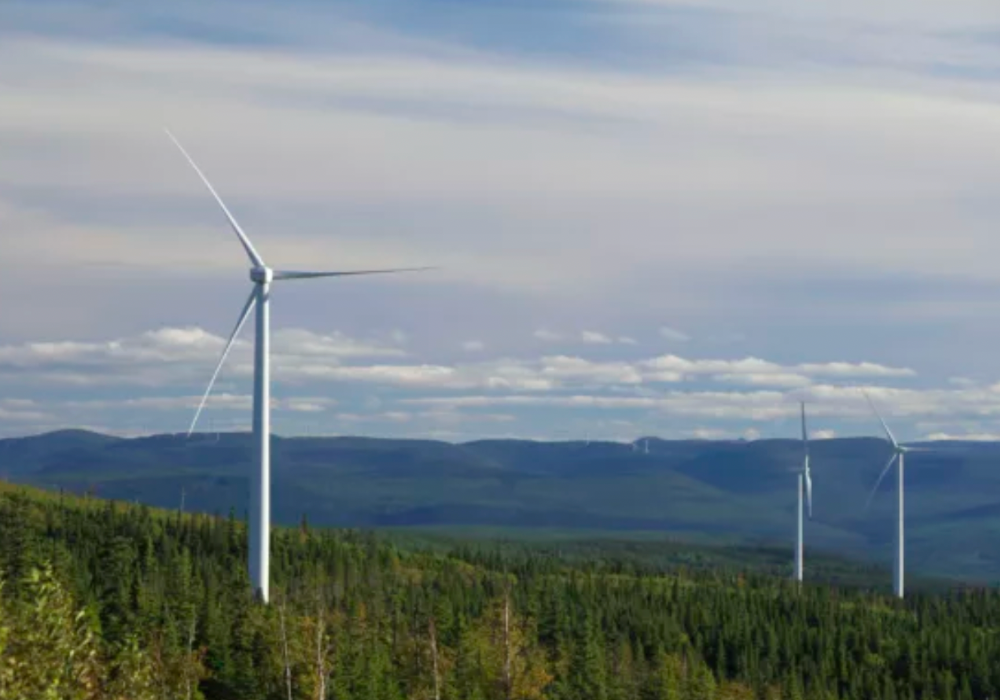
Innergex currently produces 4,424 megawatts of clean energy, with another 12,000 megawatts in the ready-to-bid stage. “Innergex is planning to grow,” Trudel says, pointing to the company’s mission to decarbonize grids as a way to fight climate change.
The company now operates in four markets: Canada, the United States, France and Chile. It has also diversified beyond its roots in hydropower to focus now on hydro, wind, solar and battery storage, while bringing its expertise and technologies to foreign markets.
In 2025, Innergex switched on its Hale Kuawehi solar and battery storage plant in Hawaii. The project integrates 30 megawatts of solar photovoltaic capacity with four hours of battery storage. Innergex has since sold this project but remains active in battery projects elsewhere, like in France, where it is working with the Réseau de transport d’électricité to balance the country’s electricity system, using its Tonnerre nine megawatt-hour battery energy storage system.
Innergex is developing relationships with industries that also benefit from decarbonization, such as in Chile. Businesses are now open to having conversations about renewable sources powering their operations, Trudel says, including mining companies BHP and Codelco. “It’s very valuable for an industry to be able to say it’s 100% renewable,” he says.
Innergex is also prepared to meet Hydro-Québec’s new focus on expanding solar energy generation through Quebec. In April, it announced in its first solar farm tender call for 60 projects.
Trudel dismisses claims that La Caisse plans to merge Innergex with another Quebec renewable powerhouse, Boralex. “We have no anticipation of being merged,” he says, acknowledging that it is a common question given that both companies are based in Quebec. La Caisse’s main mission is to stimulate the Quebec economy and protect Quebec-based businesses. “It’s not necessarily contradictory that the Caisse would support both.”
While Innergex has developed its offerings among multiple forms of renewable generation, there’s one arena it has decided to exit: geothermal. “As much as geothermal is a great energy source, it’s very different from the [energy] sources we have at the moment,” Trudel says. “It’s a lot more akin to mining, where you have to drill holes to get to the resource underground.”
Overall, the future for sustainable energy and for Innergex is bright, Trudel says. “The demand is strong, our positioning is good, and we have a strong owner with patient capital and deep pockets.”
Jax Jacobsen is a Montreal-based journalist who specializes in mining, business and climate.