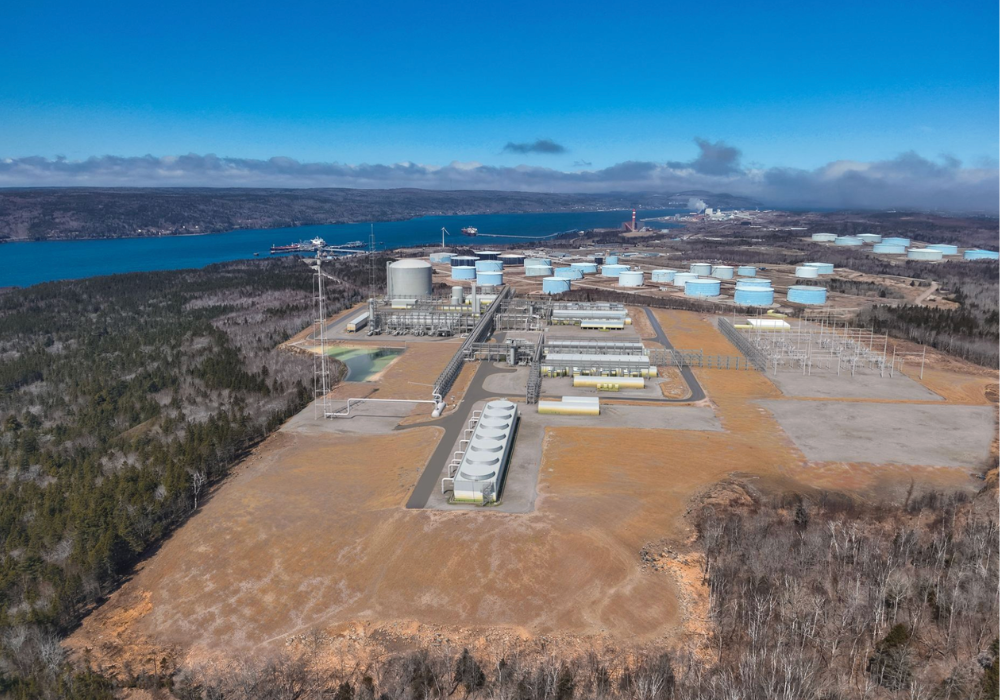
In January, Maritime businessman John Risley pivoted from funding a wind-powered green hydrogen plant in Atlantic Canada to investing in a transmission network connecting Newfoundland wind farms to Quebec. Though Risley still thinks green hydrogen has a role to play, the news was accompanied by pronouncements that the “hype is dead” for this low-carbon technology.
Green hydrogen skeptics correctly observe that the sector has shifted, but they misread what that shift represents. Green hydrogen is moving from early-stage hype to disciplined execution, as capital markets and policymakers concentrate on projects with bankable fundamentals and credible buyers. That winnowing process is not evidence of collapse; it is how clean-energy sectors mature.
Pointing to the cancellation or redesign of a single wind-to-hydrogen project as proof the sector was a fad misses how large infrastructure markets evolve. Projects routinely shift as financing conditions, regulation and demand signals mature, while other proponents continue advancing through permitting, engineering and offtake negotiations. It also overlooks the policy architecture Canada and its trading partners have built to integrate renewable hydrogen into industrial decarbonization, heavy transport and export value chains.
As the sector moves from headlines to creditworthy grid-integrated projects, simplistic narratives risk misleading communities and investors.
Momentum across Canada
Across Atlantic Canada, green hydrogen projects are progressing in a more measured, credible way than early hype suggested. These initiatives are grounded in strong wind resources, proximity to export markets, and provincial strategies that explicitly tie hydrogen to industrial decarbonization and rural economic development.
Nova Scotia’s Department of Environment and Climate Change has already approved two large‑scale green hydrogen and ammonia projects along the Strait of Canso, designed to use onshore wind power for exports to Europe. EverWind and Membertou are also advancing Nova Scotia’s largest wind buildout (more than 650 megawatts) and a multibillion‑dollar export complex, supported by Germany’s interest in Atlantic Canadian green ammonia. These developments signal that serious international buyers still see this region as strategically important.
Newfoundland and Labrador has selected multiple proponents – including EverWind, Abraxas Power, Toqlukuti’k Wind and Hydrogen, and North Atlantic Refining Limited (NARL) – for multi‑phase green hydrogen and ammonia export projects, underpinned by a dedicated Hydrogen Development Action Plan that positions the province as a “clean energy centre of excellence.”
Most recently, EverWind secured a major strategic investment of $240 million to advance its Nova Scotia wind portfolio and green fuels platform, reinforcing that capital is still flowing to credible Atlantic Canadian projects.
Quebec alone has mobilized nearly $10 billion in public and private investment over the coming decade, with major projects including TES Canada’s multibillion-dollar green hydrogen facility, Air Liquide’s 20-megawatt PEM (proton exchange membrane) electrolyzer in Bécancour, StormFisher’s Varennes e-methanol plant, and Enbridge’s 20-megawatt Gatineau project injecting hydrogen into the gas grid. The province’s hydrogen road map and “Vallée de la transition énergétique” are anchoring multiple industrial deployments in existing clean-power assets.
Elsewhere, Ontario’s Niagara Hydrogen Centre (Atura Power) will link a 20-megawatt electrolyzer to the Sir Adam Beck hydro station, while federally supported projects – such as Air Products’ net-zero hydrogen energy complex in Edmonton and AVL Fuel Cell Canada’s research and development facility in Burnaby – underscore that hydrogen development is advancing across multiple provinces under coordinated strategies.
International market signals
Globally, the sector’s trajectory is clear: low-carbon hydrogen production is up roughly 60% since 2021, installed electrolyzer capacity has grown ninefold, and investment in electrolyzers and carbon capture has expanded from about $500 million in 2021 to nearly $8 billion in 2025.
At the same time, the European Hydrogen Bank is translating policy into real demand: its first auction awarded roughly €720 million in production-linked support to projects in Spain, Portugal, Finland and Norway, while its second round was four times oversubscribed – 61 bids seeking €4.8 billion against a €1.2 billion budget – supporting plans for 6.3 gigawatts of electrolyzers and 7.3 million tonnes of renewable hydrogen over 10 years.
Moreover, in January 2026, the European Commission approved €200 million in German state aid for Canadian-produced renewable hydrogen exports to the EU: a clear demand signal for Canadian green hydrogen.
Together, these successes make clear that global hydrogen markets are not retreating; they are institutionalizing long-term demand through scaled capital deployment and binding policy frameworks, creating tangible export opportunities for credible Canadian projects.
What serious hydrogen development looks like
Yes, interest in green hydrogen has cooled since the early-2020s hype, and some capital has pulled back. But policy frameworks, climate mandates and declining technology costs continue to underpin long-term demand growth toward 2030 and beyond. To be clear: Canada’s approach is built on that multi-decade horizon – not a short boom cycle.
Green hydrogen will not succeed everywhere, nor should it. Project cancellations are a sign of market discipline, not collapse. What’s actually happening in the green hydrogen sector is a shift from hype-driven, “anywhere, at any cost” projects toward fewer, better-sited hubs that align cheap renewables, strong grids and real customers. Countries that move early in this more disciplined phase will shape future clean-energy trade. Canada has the assets to compete – if it stays the course.
David Billedeau is president and CEO of the Canadian Hydrogen Association. Derek Estabrook is executive director of the Atlantic Hydrogen Alliance. Michèle Landry is directrice générale of Hydrogène Québec.