
Sharing Indigenous Elders’ lived experiences through oral Nêhiyaw (Cree) history is at the top of Kevin Lewis’s daily to-do list. Lewis is the founder of the non-profit kâniyâsihk Culture Camps, where land-based teachings on foraging, birch-bark-canoe building and other bushcraft in northeast Saskatchewan’s boreal forest are passed down.
Lewis’s kokum (grandmother) used to tell him that the water was once so pure their ancestors could simply fill their pots and make tea. Now, in the lagoon where he and his kokum would take walks, the water is so polluted “you’ll poison yourself if you take one sip,” he says. The Culture Camps are working to change that.
People start to take on a new responsibility to the land and “become stewards in their own way” once the camp is over, says Lewis, an assistant professor at the University of Saskatchewan with an iyiniw pimatisiwin kiskeyihtamowin – a doctorate in Indigenous Ways of Knowing.
Lewis employs 10 people full-time in a community of 1,600 people. Depending on the season, he can employ another 10 or more. Initiatives like kâniyâsihk preserve Indigenous culture, traditions and languages while boosting local Indigenous economies. Indigenous-owned businesses and projects also tend to protect the lands and waters that they operate on.
Growing the Indigenous-led conservation economy is one of the goals that Canada’s political leaders emphasized at the UN COP15 biodiversity summit in Montreal in December. Canada, along with more than 190 countries, committed to protecting 30% of its lands and waters by 2030 (known as the 30×30 target).
“Canada’s biodiversity goals can only be met with the partnership of First Nations, Inuit, and Métis people across the country,” said Environment and Climate Change Minister Steven Guilbeault in a statement.
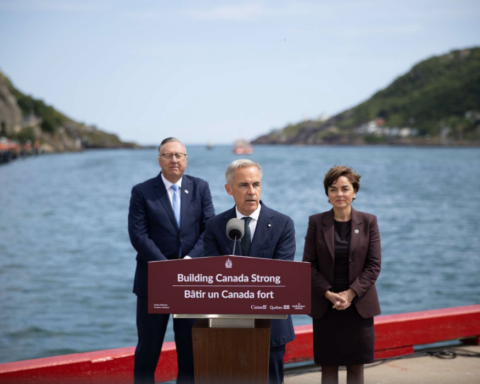
On the opening day of COP15, Prime Minister Justin Trudeau announced that $800 million will be invested over seven years to support four Indigenous-led conservation initiatives. After the projects are completed, up to one million square kilometres of land and water will be protected in northern B.C., Nunavut, Ontario and the Northwest Territories. The funding is meant to be a step forward with Indigenous Nations to “deliver a vision of conservation that has partnership and reconciliation at its core,” Trudeau said.
Indigenous communities are already leading the way. Globally, 80% of biodiversity is stewarded by Indigenous Peoples, according to the UN. In Canada, 90% of protection areas established in the last two decades have been the result of Indigenous leadership, according to the Indigenous Leadership Initiative (ILI).
First Nation, Inuit and Métis leaders in Canada are creating Indigenous Protected and Conserved Areas as large as Costa Rica monitored by Indigenous Guardians, while smaller-scale projects and businesses (ranging from eco-lodges to sustainable fisheries and small-scale forestry) generate good-paying jobs that help unleash investment in regional economies, as the ILI notes.
It’s all part of the Indigenous-led conservation and stewardship economy that’s gaining momentum.
With these investments, Canada is offering a model for supporting Indigenous-led stewardship.
—Valérie Courtois, Indigenous Leadership Initiative
One of those people paving the way is Robert Brown, a Haida Fisheries Guardian. He says that Guardians go through weeks of training so they are able to collect data, patrol, and monitor waterways while actively working with the Department of Fisheries and Oceans. Guardians also monitor their own people to ensure that they are not overfishing or overharvesting.
“We need to keep our stock going for future generations, so that my granddaughter could one day go out and fish and harvest where I was,” Brown says. This is Brown’s eighth season being a Guardian, and during this time he has seen drastic changes in the environment that he patrols. “Our beaches have changed dramatically with the bigger tides, and then our fish stocks have dropped, as well as our clam beds,” he says.
Since 2018, there have been 170 Indigenous Guardian programs working to conserve and manage their lands across Canada. With the recent launch of the First Nations National Guardians Network (and $5.8 million in new funding from the feds), those conservation jobs are rapidly multiplying.
“This is the first [network] of its kind in the world,” said ILI director Valérie Courtois in a statement. “With these investments, Canada is offering a model for respecting and supporting the Indigenous-led stewardship – a model we hope spreads around the world.”
Indigenous ecotourism
Kylik Kisoun Taylor is Inuit from the Northwest Territories. He runs a tourism company on the outskirts of Yellowknife. Taylor thinks it is important for settlers and Indigenous Peoples alike to experience Indigenous ecotourism adventures, such as the ones he offers in which participants make their own igloos. “The people that book our trips are investing with my people as opposed to just examining them,” he says.
“We offer a way to immerse people into the cultural way of life in the Arctic.”
Ecotourism businesses are another pathway to upholding Indigenous cultures, traditions, spirituality and values while also boosting the local Indigenous economy and land conservation, says Keith Henry, president and CEO of the Indigenous Tourism Association of Canada (ITAC).
“There are a number of businesses that are doing that now today that couldn’t [before]. It wasn’t very marketable, or as competitive, or as sustainable 10 to 15 years ago.”
Henry says the most profitable businesses that Indigenous communities own are multifaceted. They offer cultural centres, culinary experiences, storytelling, powwow performances, ceremonies, Elder teachings and on-the-land experiences.
And the industry is in high demand. ITAC represents around 1,900 Indigenous-owned businesses across Canada. Henry says that these businesses generated roughly $1.9 billion in revenue and employed 39,000 people in 2019 – ITAC’s best year yet. That is, until the COVID-19 pandemic.
“Tourism was the first hit, and it’s the last to recover,” Henry explains. Indigenous enterprises lost between 75% and 80% of their staff across the country, and they still have not returned to 2019 levels. But Henry is hopeful. “By 2030, we expect to [represent] at least 4.4 or more billion dollars in direct GDP.” He says there is a renewed interest in authentic Indigenous eco-tourism experiences and teachings after the recent findings of unmarked residential school gravesites. “That has really awoken, especially domestically in Canada, a renewed interest in the large majority of Canadians that realize that we have to correct past history.”
“One of the ways they can do that is to just try to be better partners going forward.”