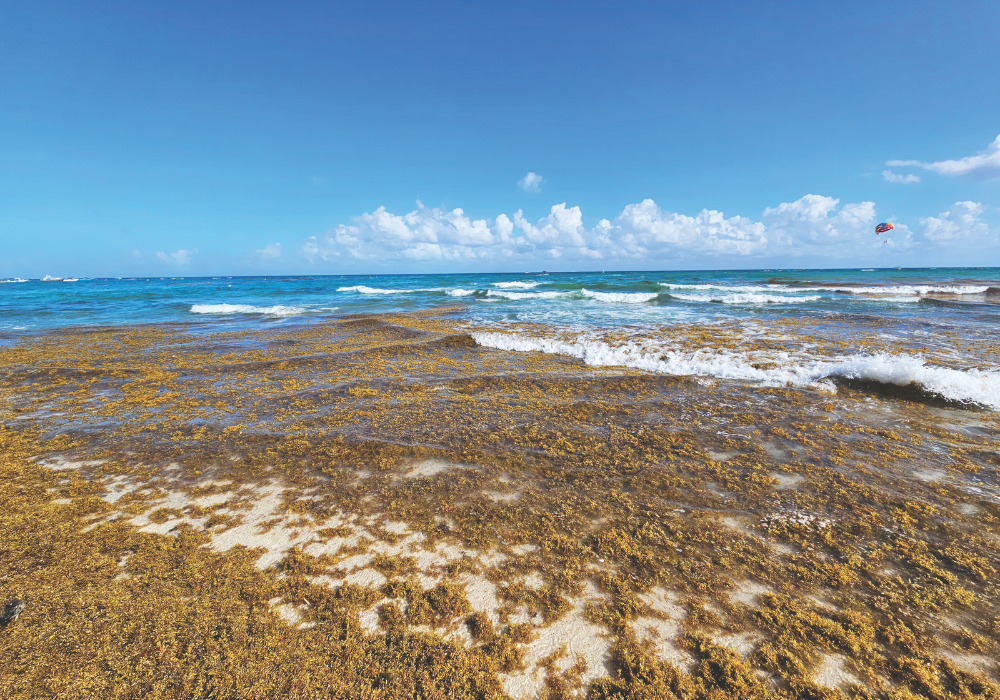
Context is everything. Out in the open ocean, a transient belt of seaweed known as sargassum is considered a “floating rainforest,” providing nutrients and habitat for marine life. But when it drifts to shore, the massive knot of macroalgae has its downsides. Beaches in Mexico, the Caribbean and Florida have been struggling with thick, smelly mats of seaweed, damaging tourism and local ecosystems. The president of the Dominican Republic said last year that his country faced a “regional emergency” over it.
And now there’s a new element in the mix: the seaweed belt is changing shape. The most significant patch, known as the Great Atlantic Sargassum Belt, was first detected in 2011 and now measures as much as 8,800 kilometres long. It can be found from West Africa to the Caribbean Sea and the Gulf of Mexico. By the end of last year, it weighed 38 million metric tons, a 40% increase from its last record in 2022.
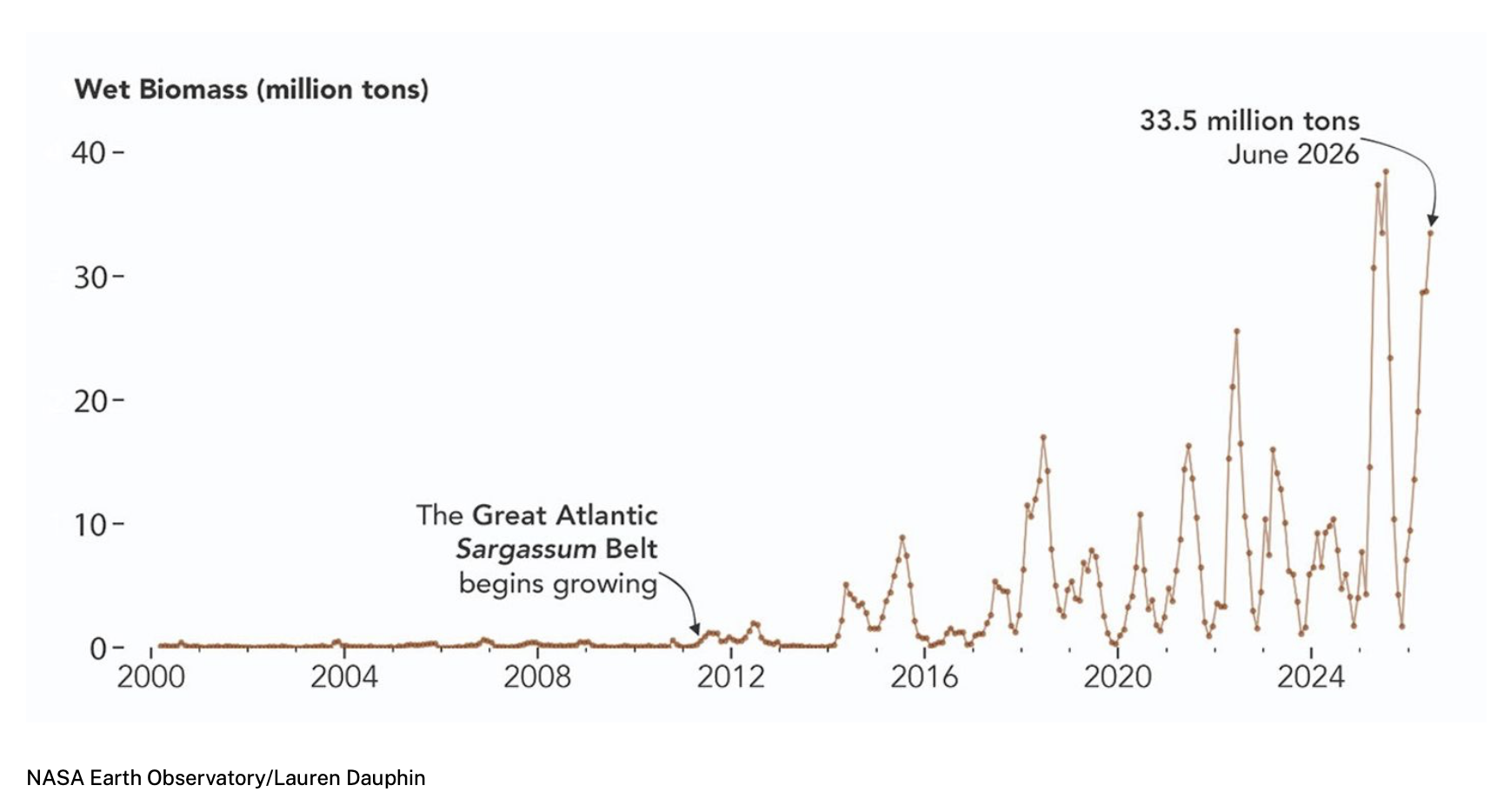 Why so much seaweed? There isn’t a single reason that scientists can point to, but rather a variety of shifting factors. “The climate is having a very significant effect on this bloom, but there are many underlying drivers of climate change,” Brian Lapointe, principal investigator at Harbor Branch Oceanographic Institute at Florida Atlantic University, told The New York Times in 2025: “everything from high temperature, extreme rainfall, droughts and rainfall events, and winds.” Meanwhile, a northern patch located in the Sargasso Sea, in the North Atlantic between Nova Scotia and Bermuda, has dwindled by some 90% since 2015, because of warmer water.
The Atlantic seaweed situation is evolving so rapidly that scientists have enlisted NASA to track the bloom from space. The sensitive instruments on their satellites can detect the sargassum signature as it moves across oceans, helping to predict where it is headed and which ecosystems might be more at risk of being overwhelmed by the vegetation.
Natalie Alcoba is a Buenos Aires-based journalist and senior editor at Corporate Knights.