
The global banking industry provided $906 billion in financing to oil, gas and coal companies in 2025, nearly 8% higher than in 2024, and the second consecutive year in which the world’s banks upped their support for the rapidly expanding fossil-fuel sector.
The support, which included both direct lending and underwriting of bonds, shares and loans, was provided by 65 large banks worldwide, according to the annual Banking on Climate Chaos (BOCC) report published June 9. The report is considered the world’s most comprehensive annual assessment of publicly available data on fossil-fuel bank financing.
The report estimates that since 2016 – a year after the Paris Agreement on climate change was adopted – $8.7 trillion in fossil fuel financing has been extended by the banks (all figures in U.S. dollars). The report states if these trillions had been used to finance the renewable sector instead, the world energy system of today would be “more affordable, more resilient, more secure and more climate-proof.”
More than half the 2025 total – $508 billion – was for expansion projects, primarily in the United States. These included new oil and gas pipelines, liquefied natural gas facilities for gas exports to Europe and Asia, and gas-fired power plants for a flood of new data centres. Coal-fired power infrastructure was also expanded, largely in China. Expansion financing grew by 27% in 2025 compared with a year earlier.
While overall financing increased, it has also become more concentrated, with a larger share of financing coming from the top 12 banks. In 2025, they provided $474.3 billion to oil, gas and coal companies, nearly 40% of the global total.
In addition to locking in decades of new carbon dioxide emissions, this rapid expansion is having a ripple effect through the global economy. Growing levels of debt by natural gas distributors and pipeline companies are contributing to growing gas-fired power utility costs. These are being passed on to electricity customers, many of whom are low-income people least able to afford higher prices.
“The more debt these fossil-fuel firms have, the more profit they need to service that debt,” says Niko Lusiani, climate and energy research director for Rainforest Action Network, the lead organizer of the report. “This creates constant pressure for short-term returns to shareholders, which has impact on price volatility but also inflation in gas prices and utility prices.”
The report, now in its 17th edition, is compiled by Rainforest Action Network; BankTrack; the Center for Energy, Ecology, and Development; the Indigenous Environmental Network; Oil Change International; Reclaim Finance; the Sierra Club; and Urgewald.
Back to peak financing
The $906 billion in bank fossil-fuel financing in 2025 marks the second year it has increased since reaching a low of $727 billion in 2023. (Organizers restated estimates from last year’s report after adjusting some of the financing criteria last year.)
The 2025 figure is equal to the previous peak in 2021, which was triggered by the post-COVID energy demand recovery. Financing declined in 2022 and 2023, then rebounded in response to the continuing wars in Ukraine and the Middle East. Combined with the recent invasion of Iran and the oil bottleneck caused by the closure of the Strait of Hormuz, the world is now in the largest energy supply disruption in history, according to the International Energy Agency.
“We’re facing a new reality,” Lusiani says in an interview. “Relying on fossil fuels for our primary energy source globally is no longer reliable, it’s no longer affordable, and it’s no longer actually secure.”
Clean-energy investment is growing faster than fossil fuels despite the rapid expansion in gas infrastructure. The International Energy Agency estimates that clean-energy investment will be $2.2 trillion in 2026, primarily for grids, renewables, storage, nuclear, low-emission fuels, energy efficiency and electrification. Investment in oil, gas and coal is forecast at half that, $1.2 trillion.
Twenty-six out of the 65 banks in the BOCC report appear to agree that fossil fuels are not as attractive as they once were and reduced their oil, gas and coal financing in 2025. These are primarily European banks, led by La Caixa Group, Commerzbank, Groupe BPCE, UBS and BNP Paribas. Canadian-based CIBC, Bank of Montreal and Toronto-Dominion Bank also reduced their oil and gas financing last year. La Banque Postale of France was notable for having zero fossil-fuel financing in 2025.
But the remaining 39 banks ramped up their financing last year. “When you have more of the decision-making happening in smaller circles, it is more prone to group think [and] continuing models that have long surpassed their usefulness,” Lusiani says.
JPMorganChase is top lender
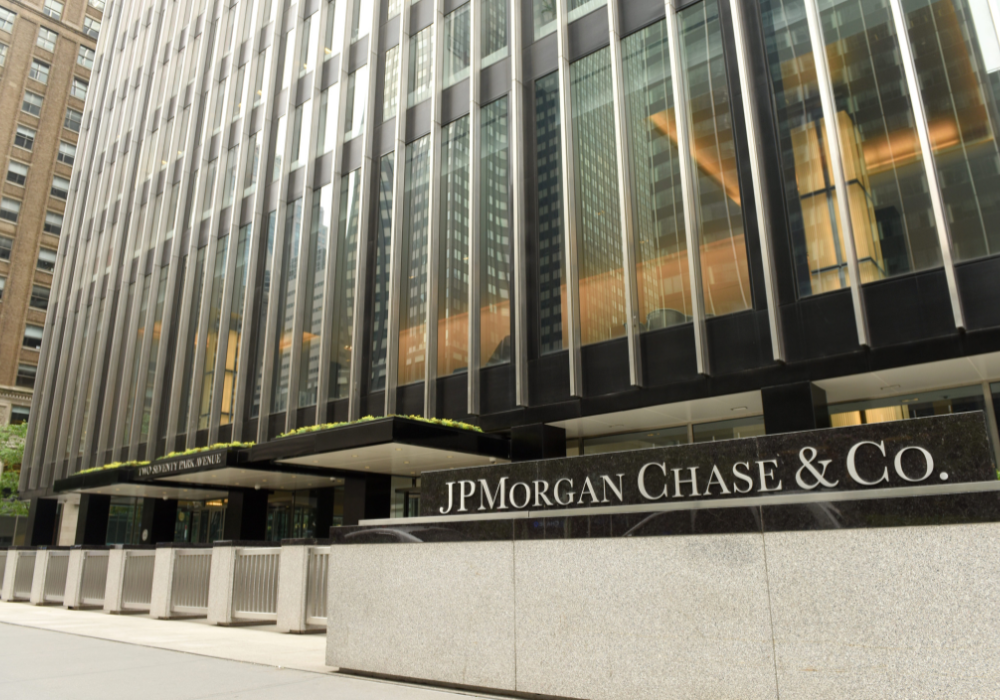
The top fossil-fuel lender and underwriter in 2025 was JPMorganChase, the largest bank in the United States and the world’s largest non-Chinese-owned bank. The New York–based bank extended $58.2 billion in fossil-fuel financing in 2025, a 12.5% increase from 2024. The report estimates that last year JP MorganChase was responsible for 4.7% of global fossil-fuel bank financing, as tallied from about 2,000 banks around the world.
The bank maintains that fossil fuels will be a necessary part of the global energy mix for many years to come and that it has a responsibility to finance both fossil fuels and clean energy. “As one of the world’s largest financiers of energy, we support the full range of energy solutions and technologies, with a focus on reliability, affordability, security and long-term resilience,” a JPMorganChase spokesperson said in an email response to the BOCC report. “We believe our data reflects our activities more comprehensively and accurately than estimates by third parties.”
The bank has committed to financing $1 trillion by 2030 in climate initiatives and sustainable resource management, including low-carbon energy solutions. It issued $309 billion toward this goal between 2021 and 2024. JPMorganChase is also one of the few banks to agree, under pressure from shareholders, to publish its annual energy-supply financing ratio. As of 2024, that ratio was 1.13:1, meaning that for every $1 of fossil fuel financing it provided in 2025, it financed $1.13 in clean energy.
Still, Lusiani argues that JPMorganChase is at the heart of a relatively small number of banks – mostly based in the United States – that are at odds with the energy transition. “Over 4% of global bank fossil-fuel financing is done by JPMorganChase, so they’re the kingpin of what you would call a new oligopoly of fossil-fuel financing.”
The other major U.S. players in this oligopoly are No. 2-ranked Bank of America ($47.3 billion in 2025), No. 5-ranked Citigroup ($45.3 billion) and No. 6-ranked Wells Fargo ($42.5 billion). Japanese banks Mitsubishi UFJ Financial and Mizuho Financial came in at No. 3 ($47.0 billion) and No. 4 ($46.5 billion), respectively. The Royal Bank of Canada stood at No. 7, at $36.6 billion.
Are bailouts coming?
The expansion of fossil-fuel financing in 2025 came as the Net-Zero Banking Alliance closed its doors last year, shutting down the global coalition of banks working toward the industry’s net-zero transition. The BOCC report argues that the NZBA collapse and continued expansion of fossil-fuel financing in 2025 show the limitations of voluntary commitments as a route to meaningful climate action.
The report calls for bank regulators to require comprehensive disclosures and robust testing of climate risks, increased capital requirements for banks extending high-carbon-footprint loans and mandatory climate transition plans.
The banks are entering a period of rising risk, as high oil and gas prices push individuals, companies and countries to seek out cheaper renewable-energy alternatives. This poses a growing risk that the billions of dollars in oil, gas and coal infrastructure now being financed could become stranded assets.
For Lusiani, policymakers need to jump in, even if it seems to cut against the grain of current thinking in the United States and around the world to loosen climate regulation. The alternative could mean multibillion-dollar government bailouts of energy companies in the future, he says.
“The question is going to be: Where are all these massively indebted LNG and pipeline companies going to go, and how are they going to pay back that debt? I worry about public bailouts of some of these companies. They are so over their skis.”
Eugene Ellmen writes on sustainable business and finance. He is a former executive director of the Canadian Social Investment Organization (now the Responsible Investment Association).
The Weekly Roundup
Get all our stories in one place, every Wednesday at noon EST.