This story was originally published by Canary Media. It has been edited to conform with Corporate Knights style.
In its efforts to block U.S. offshore wind development, the Trump administration has halted project construction, rolled back tax credits and spread misinformation. Now, in the latest manoeuvre, the administration is paying a global energy giant nearly US$1 billion to walk away from its plans to install turbines off the east coast.
On Monday, the Interior Department said it had struck a deal with France’s TotalEnergies, which agreed to forfeit its leases for offshore wind areas near North Carolina and New York. In exchange, the Trump administration will “reimburse” the company dollar for dollar for the lease fees – and that money will be plowed into new fossil fuel projects.
In announcing the payout, TotalEnergies struck a very different note on offshore wind than it had originally. The oil major had previously said its planned one-gigawatt Carolina Long Bay wind farm would “generate abundant energy and significant economic growth for the communities of the Southeast.” Its massive three-gigawatt project in New York was expected to deliver “attractive returns” while supplying “green electricity to New York City.”
But today, TotalEnergies CEO Patrick Pouyanné reversed course. “Considering that the development of offshore wind projects is not in the country’s interest, we have decided to renounce offshore wind development in the United States,” he said, adding that investing in U.S. oil and gas “is a more efficient use of capital.”
The company still has about seven gigawatts of offshore wind projects in development or production in Europe and Asia.
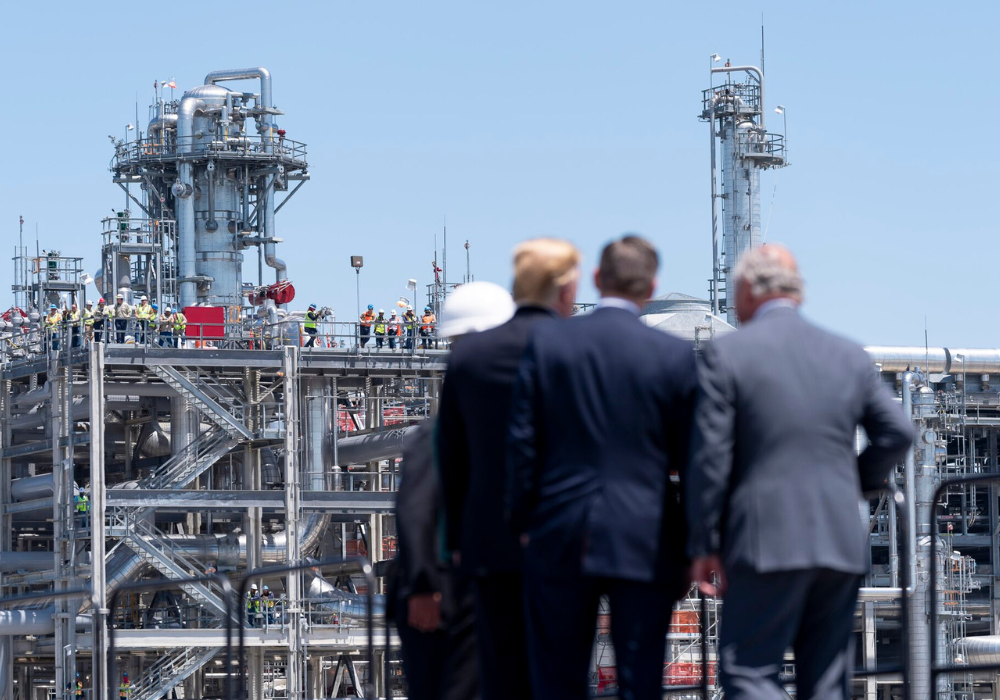
Under the new agreement, TotalEnergies will invest some of the $928 million in reimbursed funds to develop a liquefied natural gas export terminal along the Texas Gulf Coast. That project, called Rio Grande LNG, has faced yearslong opposition from local community groups, tribal leaders and environmentalists who worry the massive development will destroy ecosystems and exacerbate the climate crisis.
Pouyanné said the Texas terminal and other new oil and gas projects “will contribute to supplying Europe with much-needed LNG from the U.S.” and also provide gas for the United States’ growing crop of data centres.
The deal to defund new U.S. offshore wind farms is occurring against the backdrop of a swelling energy crisis, the direct result of the U.S. and Israeli strikes on Iran. Energy experts have argued that the ongoing conflict and disruption to shipping in the Strait of Hormuz underscore the need to shift toward renewable-energy sources, which are less vulnerable to geopolitical shocks.
Previously, the Interior Department has targeted in-progress offshore wind farms by filing suspension orders, citing unspecified “national security” concerns. Developers of those projects were forced to pause construction last year, but work resumed in January and early February after federal judges ruled in the developers’ favour.
Earlier this month, the 704-megawatt Revolution Wind near Rhode Island began delivering electricity to New England’s electric grid. The 800-megawatt Vineyard Wind near Martha’s Vineyard, Massachusetts, also installed the final blade on its 62-turbine installation. Three other offshore wind farms remain under construction along the eastern coast – including Dominion Energy’s Coastal Virginia Offshore Wind, which sent power to the grid for the first time on Monday.
Already, Vineyard Wind and the completed South Fork Wind project near New York have proved to be a crucial resource for grid operators during a brutal cold stretch earlier this year. And utilities say the forthcoming projects will be key to meeting the rising electricity demand from data centres, factory expansions, and electrified cars and buildings.
Offshore wind advocates decried the Trump administration’s decision to pay TotalEnergies to abandon its ambitions.
“After failing to shut down offshore wind through strong-arm tactics and litigation losses, the administration is now spending $1 billion in taxpayer dollars to force developers out of the market,” Sam Salustro, senior vice president of policy and market affairs for Oceantic Network, said in a statement. “This political theater is meant to obscure the fact that offshore wind capacity is being pulled out of the pipeline when energy prices are skyrocketing, even as other offshore wind projects continue delivering reliable and affordable power to the grid.”
Lena Moffitt, executive director of Evergreen Action, noted that continuing to bolster the United States’ LNG exports threatens to raise costs for consumers at home. “Working families will pay the price in their heating bills, their electricity bills, and at the pump,” she said in a statement.
Even before today’s deal with TotalEnergies, analysts didn’t expect the U.S. offshore wind sector to expand any further while Trump remains in office.
“Major policy changes and signals under a future administration will be needed if any offshore wind projects are to come online by 2035, in our view,” Harrison Sholler, U.S. wind analyst for BloombergNEF, says in an email. “TotalEnergies handing back their leases doesn’t change that, although it slightly reduces the pipeline of projects that could come online if positive policy changes do occur.”
Maria Gallucci is a senior reporter at Canary Media. She covers emerging clean-energy technologies and efforts to electrify transportation and decarbonize heavy industry.
The Weekly Roundup
Get all our stories in one place, every Wednesday at noon EST.