The history of nuclear fusion power is littered with disappointments. Since 1952, scientists have been conducting fusion reactions in attempts to recreate the way the sun generates energy. Time and again, the massive reactors consumed more energy than was produced. “We’ve been saying fusion is 30 years away for 60 years,” says Jason Donev, physics professor and associate director of the new energy-science major at the University of Calgary.
But in 2022, a controlled fusion reaction conducted in a California laboratory produced – for a fraction of a second – net-positive energy, thus turning the dream of endless, carbon-free energy into a possibility. A handful of start-ups intend to capitalize on that possibility, including B.C.-based General Fusion. After more than two decades of research, General Fusion says its “first of a kind” fusion power plant will be generating electricity by 2035.
Venture capital has responded enthusiastically to the new arrivals, with money surging into the space. In 2025, fusion start-ups raised $2.6 billion (all values in U.S. dollars unless otherwise noted) according to the Fusion Industry Association.
Earlier this year, General Fusion announced that it will go public as part of an intended merger with Spring Valley Acquisition Corp. III, headquartered in Dallas, Texas. The B.C. company has raised more than $400 million to date, including support from governments in Canada, the United States and Britain. General Fusion was valued at $600 million prior to the transaction; the deal with Spring Valley would provide it with up to $335 million in additional funding.
Fusion is the most exciting form of energy because it is abundant and would mean that everyone would have access to affordable electricity. However, fusion is monumentally difficult to do at a commercial scale.
– Jason Donev, physics professor, University of Calgary
Founded in 2002 by physicist Michel Laberge, the 117-person firm is in the process of developing a commercially viable fusion energy system. Currently, there are no operating commercial-scale nuclear fusion reactors. General Fusion’s chief strategy officer, Megan Wilson, is pumped. “Right now, the market is seeing interest in clean energy, and this has dovetailed with major advancements in fusion,” she says. “This is an exciting time for us.”
Donev echoes Wilson’s observation that there is a heightened sense of urgency in the energy market. Electricity consumption, he notes, had been levelling off worldwide until the introduction of AI and data centres, which have driven a surge in energy demand. The International Energy Agency’s World Energy Outlook for 2025 confirms that anticipated spike, estimating that demand for electricity will grow between 40% and 50% in less than 10 years. The U.S. Department of Energy has predicted that the total energy use from data centres alone will double or even triple by 2028.
The market heats up
Even Trump Media & Technology Group, whose core business until now has been the president’s social media platform Truth Social, is embracing fusion. Last December, the firm revealed it was merging with TAE Technologies, an energy company with plans to begin construction on the first utility-scale fusion power plant this year. The transaction values TAE at approximately $3 billion.
Likewise, Microsoft and Google, billionaires Bill Gates and Jeff Bezos, and the oil company Chevron have all started investing heavily in fusion energy companies, including TAE.
In France, a multinational coalition is building an enormous fusion reactor called ITER (the International Thermonuclear Experimental Reactor) at an estimated cost of €13 billion ($21 billion Canadian). ITER will use 50 megawatts of heating power to generate 500 megawatts of electricity – theoretically enough to power some 250,000 homes. ITER is tracking to be operational in the late 2030s, although for demonstration purposes only.
RELATED STORIES
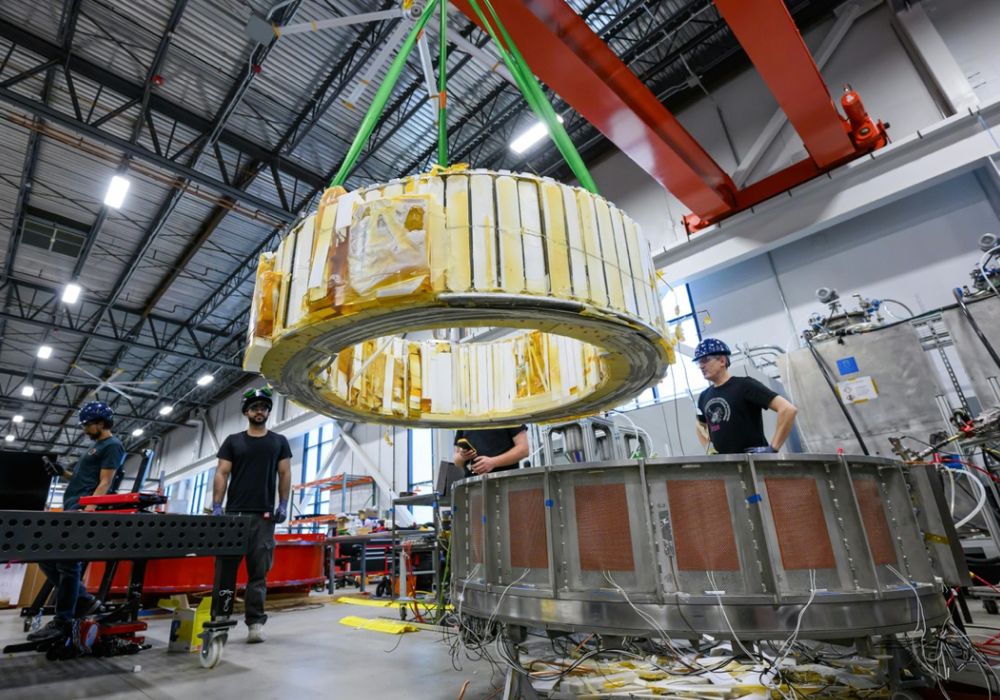
The biggest player in the United States is Commonwealth Fusion Systems, which has raised more than $2 billion since its founding in 2018, more than any other fusion start-up. Upon completion of its demonstration machine, SPARC, Commonwealth says its next machine will generate electricity for paying customers as soon as the early 2030s.
The provincial government of Ontario is getting in on the action as well with a new Centre for Fusion Energy, announced late last year. The federal government and Crown corporation Atomic Energy of Canada Ltd. have committed CAD$33 million to the centre, with an additional $19.5 million from the Ontario government and $39 million from fusion start-up Stellarex Group Ltd.
What is nuclear fusion?
For all the buzz, there are more than a few skeptics. And it’s not hard to understand why when you consider the cost and complexity of trying to create a star here on Earth.
Fusion energy is different from the nuclear energy that was developed in the 1940s in which energy is generated by splitting atoms. Fusion energy creates energy by forcing atoms together, specifically very light hydrogen atoms. When hydrogen atoms fuse, they form helium and, in the process, release an immense amount of energy. The sun and stars are essentially giant balls of hydrogen and helium gases. As the atoms merge, they enter a different state of matter: plasma. The high-energy particles that blast out of the plasma are turbulent and highly unstable. “Holding plasma in place is kind of like juggling jello with elastic bands,” Donev says.
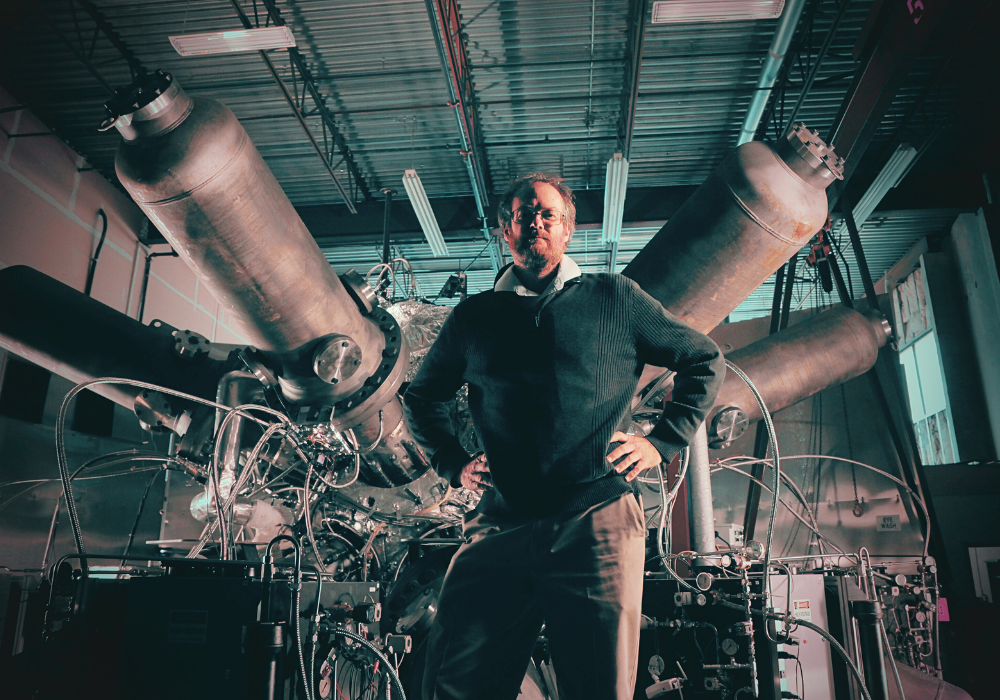
Inside the sun, gravity holds the plasma together. In most reactors, immensely powerful magnets or lasers do the work. Lately, fusion power start-ups have been experimenting with cheaper, easier approaches. General Fusion, for instance, uses pistons to hold plasma together, not unlike the pistons in a car engine.
Speaking to The New York Times in 2024, Earl Marmar, a physicist at the Massachusetts Institute of Technology, said that the latest reactors have yet to generate more energy (in a commercially relevant way) than they consume. “But, you know, good luck. I hope something works soon, for sure.”
Even a giant reactor like ITER has encountered setbacks. Construction on ITER began in 2007 amid lofty declarations that net-positive energy would be produced by about 2020. Since then, ITER has suffered repeated delays, while the estimated cost of $5.45 billion has quadrupled.
“Fusion is the most exciting form of energy because it is abundant and would mean that everyone would have access to affordable electricity,” Donev says. “However, fusion is monumentally difficult to do at a commercial scale. The problem is [that] it takes so much energy to produce, you can’t get energy back – yet.”
So, is fusion the future?
Wilson with General Fusion predicts that fusion energy will be a trillion-dollar market by 2050, and her optimism is shared. Future Markets reports that the fusion energy sector could reach $40 to $80 billion by 2036 and possibly exceed $350 billion by 2050 “if technological milestones are achieved.”
General Fusion is bullish on its practical and cost-effective methods and confident in its timelines.
While Donev doubts that a fusion energy plant will be dispatching energy to consumers within the next 10 years, he espouses the critical role this power source will likely play in the transition to a clean-energy economy. “It’s such a careful balance with fusion, because it is a good-news story,” he says. “But it’s a very long story. Investors who want to do this need to recognize they’re in for a very long game, albeit a potentially very lucrative one.”
Victoria Foote is a writer and editorwho specializes in clean energy and climate.
The Weekly Roundup
Get all our stories in one place, every Wednesday at noon EST.