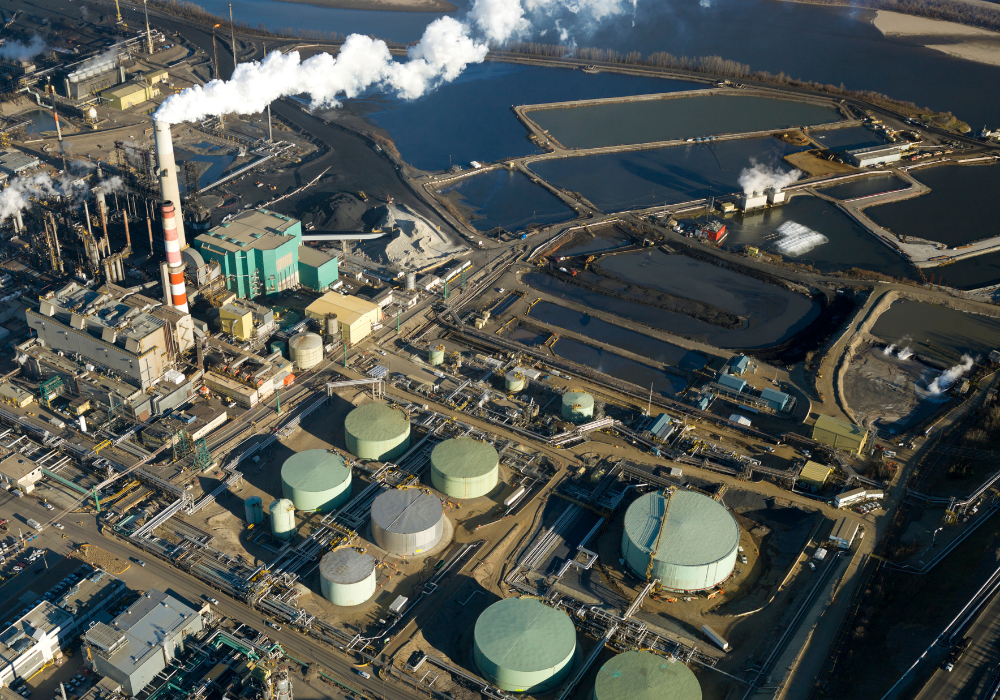
Alberta’s oil-sands facilities on average will pay less than $2 per barrel under an updated carbon-pricing schedule, effectively making the much-maligned “carbon tax” a marginal cost for producers, a new report finds.
The research is “relevant now because of renewed interest in carbon pricing following both the release of the implementation agreement for the Alberta-Federal memorandum of understanding on energy policy, and last year’s repeal of the consumer facing carbon price,” report author G. Kent Fellows, a fellow-in-residence for the C.D. Howe Institute, told The Energy Mix.
Fellows’s report analyzes how oil-sands companies will be affected by changes to Alberta’s Technology Innovation and Emissions Reduction (TIER) system following the province’s memorandum of understanding with the federal government signed last year. Climate groups, like the Canadian Climate Institute, say the deal significantly weakened the industrial carbon price, which had survived the consumer carbon price’s nationwide removal in 2025. Conservative leader Pierre Poilievre had campaigned to fully remove the industrial carbon price during that year’s federal election.
The report notes that Alberta hosted North America’s first carbon-pricing system in 2007; in 2020, it was modified to the TIER system. TIER charges facilities that emit 100,000 tonnes or more of carbon dioxide per year with a fee per tonne set to increase over time until 2040, but it also allows companies to purchase carbon credits instead. The MOU reduces the rate at which the price per tonne increases over time – as well as lowering the overall top price from $170 per tonne of carbon dioxide by 2030, to $115 per tonne in 2030 and $140 per tonne by 2040 – though it also sets a minimum price for carbon credits in a bid to prevent carbon markets from collapsing.
According to Fellows, the updated pricing effectively alleviates the burden for oil-sands companies to comply with the TIER system, since the resulting prices are so low. “Given that the operating costs for 99% of operators are between $21 and $65 per barrel, the carbon price represents a small portion of overall marginal costs in the oil sands,” he says.
Fellows notes that the industrial carbon price in 2023 added an average of less than $1.12 per barrel, with high-emitting producers paying $4.05 per barrel and producers with low emissions facing costs of $1.09 – or even negative prices that effectively acted as a subsidy. Prices are projected now to remain below $5 per barrel through 2050 for all facilities, with oil-sands facilities overall paying less than $2 per barrel over that time.
Even a hypothetical projection of payments under the pre-MOU scheme found that no facility would pay more than $10 per barrel.
The outcomes of Fellows’s analysis are important for anticipating how the updated carbon-pricing scheme will create incentives for companies to reduce emissions. A “rational profit-maximizing firm” will invest in carbon reductions only if the cost of doing so is less than the cost of paying the carbon price or for buying carbon credits, he writes. “The current low prices in the TIER emissions credit market and the low overall costs for the oil sands (even under the conservative assumption that facilities face the higher fund credit price) suggest that current decarbonizing price signals are weaker at the margin than often assumed.”
This story was first published by The Energy Mix. It is part of The Energy Mix’s partnership with Small Change Fund.