As the polar ice melts, Arctic shipping is undergoing a not-so-quiet shift.
Historically considered a theoretical shortcut across the top of the world, the geopolitically charged Northern Sea Route is gaining prominence, in particular as part of China’s “Polar Silk Road” initiative, which seeks to develop Arctic shipping routes and energy projects as an extension of the Belt and Road infrastructure diplomacy drive.
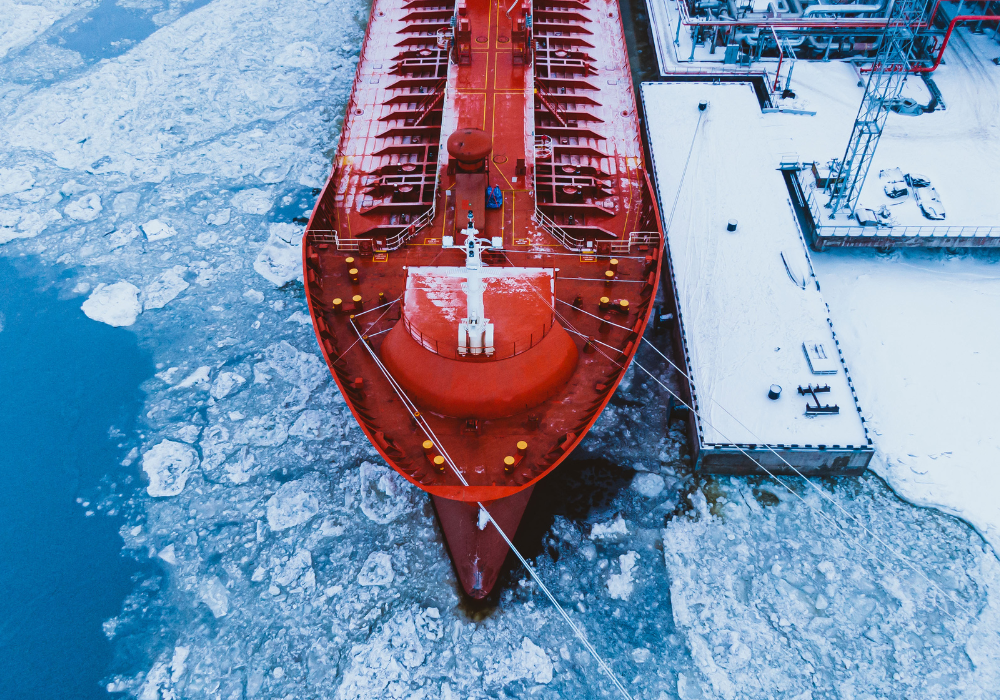
In December, China achieved a key milestone with the maiden voyage of the China-Europe Arctic Express, a commercial liner service that travels the Northern Sea Route along Russia’s Arctic coast. The vessel Istanbul Bridge was the largest container ship to ever complete the journey, which took two months on the water and three years of preparation.
China has long sought to establish a stronger economic and political presence in the Arctic, describing itself as a “near-Arctic state” in an official 2018 policy paper that identified warming in the region as a key incentive for deeper involvement. That paper launched China’s ambitions for a northern corridor and encouraged Chinese firms to invest in Arctic shipping infrastructure.
But the momentum has caused concern among some big shipping players, who say the new route is still too dangerous. “Safe navigation cannot be assured,” Søren Toft, chief executive of the Geneva-based Mediterranean Shipping Company, warned in a LinkedIn post earlier this year. “Sending container ships across the Arctic raises a lot of red flags,” Sian Prior, lead adviser for the Clean Arctic Alliance, said in response to the inaugural China-Europe Arctic Express journey. Andrew Dumbrille, the organization’s North American adviser, said the industry is ill-equipped to deal with accidents such as oil spills in the region because it doesn’t have emergency-response equipment nearby. “That means any spills will stay in the water for longer, wreaking more damage,” he said.
RELATED STORIES


Some observers suggest that China’s systematic push into the Northern Sea Route does much more than undermine Arctic safety and threaten fragile natural systems. An important yet little-noticed 2025 report, Vessels on the Northern Sea Route, was published by the Bellona Environmental Transparency Center, which is part of the Bellona Foundation, an Oslo-based non-profit that fights oil and gas pollution. Established by staff who fled Russia in 2022, the group monitors Russia’s environmental impact, nuclear safety and Arctic pollution. They found that China’s growing maritime role in the region is deeply entangled with Russian geopolitical ambitions, Western sanctions evasion and environmental risk.
The Northern Sea Route stretches 5,600 kilometres along the Russian Arctic coast, from the Kara Gate in the west to the Bering Strait in the east. Russia asserts extensive control along the route, regulating passage through a permit-based system that requires ships to use Russian pilotage services and icebreaker escorts in ice-covered conditions. Vessels transiting the Northern Sea Route are subject to Russian tariffs for these services, and those fees are collected by a subsidiary of Russia’s state nuclear company, Rosatom, which is closely integrated with the country’s military-industrial complex and linked to its invasion of Ukraine.
Russia’s shadow fleet in the north
The scale of traffic along the Northern Sea Route is steadily growing, and oil represents a large share of what’s making the trip. The 2025 summer–autumn season saw 103 transit voyages along the corridor, up from 97 in 2024. Thirty-four of the vessels last year were tankers, transporting about 1.9 million tons of crude oil. Fifteen container ships made the journey, including the Istanbul Bridge, up from 11 the previous year, and altogether they carried around 400,000 tons of containers.
China is positioning to take a bigger piece of the pie. In September, China’s NewNew Shipping Line signed agreements to invest up to five billion rubles to build a logistics complex in Provideniya Bay, to service vessels travelling along the Northern Sea Route. The company also has plans signed to develop container shipping through Murmansk’s ice-free port.
Bellona found that most non-Russian-flagged vessels permitted onto the Northern Sea Route in 2024 transported Russian oil to China and India, violating sanctions. This “shadow fleet,” deployed in some of the world’s most hazardous waters, comprises poorly insured aging tankers, often without appropriate ice-class certification.
The risks are severe. In 2024, Rosatom issued 1,312 permits to 975 vessels to enter the Northern Sea Route, of which 100 sailed under non-Russian flags, including 33 tankers carrying liquefied natural gas and 22 oil tankers. About one-third of them were not ice-class vessels, and more than half of these oil tankers were more than 15 years old.
While China’s Polar Silk Road is building an important trade link with Europe, it’s also a sign of how commercial ambition could outrun governance in one of the world’s most fragile seas.
Gordon Feller is a Global Fellow at the Smithsonian Institution.
The Weekly Roundup
Get all our stories in one place, every Wednesday at noon EST.