“Decarbonized oil” has become the latest rage-bait in the climate debate. It doesn’t need to be. In fact, it could be just the kind of pragmatic solution we all desperately need – but only if both sides are willing to accept what they probably see as a less-than-perfect outcome.
For environmentalists, it means acknowledging that end-of-pipe solutions like carbon dioxide capture and storage (CCS) do have a role after all. And for the fossil fuel industry, it means accepting that they need to decarbonize not just their own processes, but also the products they sell – and without expecting the Canadian taxpayer to foot the bill. In the short term, this might make those products less profitable – although it might also give them a more secure, if less exciting, long-term future.
Dismissing the notion of “decarbonized oil” as a myth is equivalent to saying that stopping climate change is a myth: but it has to mean genuinely decarbonized oil. Safe and permanent disposal of all – yes, all – the carbon dioxide they generate is the only way to stop fossil fuels from causing further global warming before the world stops using fossil fuels. And if anyone believes the world will stop using fossil fuels altogether in time to prevent dangerous climate change, we suggest that they look at recent events in Venezuela and think again.
A matter of timing
Make no mistake, we need to reduce our dependence on fossil fuels as far and as fast as possible. But every year that goes by makes it clearer that won’t be far or fast enough. Carbon dioxide accumulates in the climate system like lead in the bloodstream. We can slow warming by emitting less, but it won’t stop until we stop emissions entirely, or balance any residual emissions with active carbon dioxide removal.
It’s conceivable, albeit unlikely, that renewable or nuclear energy are about to become so cheap that everyone, everywhere, will lose all interest in using fossil fuels, even in “hard to abate” sectors like aviation, within the next few decades. It is also conceivable, albeit even more unlikely, that everyone, everywhere, will agree on carbon prices so high that they amount to a de facto worldwide ban on continued fossil fuel extraction and use. But it would be folly to bet the future on either of these things happening.
Everyone talking about “decarbonized oil” needs to level with Canadians about what it means. Capturing the carbon dioxide generated in the production and refining of fossil fuels is the obvious place to start – but it is only a start.
In the absence of that worldwide ban, or fossil-free energy that is cheaper than natural gas in Qatar, the only other way to stop fossil fuels from causing further global warming is to capture every tonne of carbon dioxide they generate and pump it back underground. This means capturing as much as possible at source, with CCS, and taking the rest back out of the atmosphere, through active carbon dioxide removal (CDR). The industry is already doing both: the challenges are not technical, but economic. CDR is still very expensive, and lots of CCS projects run over budget – often because operators have no incentive to control costs as someone else is footing the bill.
There are other, potentially equally permanent, disposal options, like reacting carbon dioxide with rocks or storing it in the oceans, but geological disposal is the only one proven on a multi-million-tonnes-per-year scale. And even that needs scaling up by at least a factor of 100 to have any hope of balancing all remaining fossil fuel use even in the most optimistic scenarios for renewable-energy deployment.
A pragmatic solution
Environmentalists should be actively promoting CCS, not trying to block it.
This balance, between ongoing production of carbon dioxide from geological sources with disposal of carbon dioxide into geological sinks, is what we called “geological net-zero” in a paper published last year involving all the authors of the six papers that established, back in 2009, what it would take to stop carbon dioxide from causing global warming.
Mark Carney trades climate allies for controversial oil-patch solutions
The carbon dioxide we are emitting today was locked away in fossil fuel reserves formed from ancient forests, marine organisms and plant material that accumulated over tens to hundreds of millions of years. In just a few decades, we are reversing that geological process, returning carbon to the atmosphere at a pace without precedent in the recent history of the Earth system. Atmospheric greenhouse gas concentrations are heading toward levels last seen in the Jurassic period. And while it is sometimes said that “the dinosaurs lived with that much carbon dioxide,” it is worth remembering that they are no longer around.
The geological record reminds us that high-carbon worlds are not hypothetical, but neither are they environments in which human civilization has ever existed. The question is not whether the planet endures – it will – but whether the climatic conditions that allowed our societies, economies and food systems to develop can be maintained as we unleash, in decades, what nature took millions of years to put safely away.
Every hundred billion tonnes of carbon dioxide we release from the “geosphere,” or solid Earth, ratchets up global temperatures by one-twentieth of a degree – and we are currently releasing 400 billion tonnes per decade, so our carbon dioxide emissions alone are causing roughly a degree of warming every 50 years. That’s well-understood climate physics.
Can Mark Carney fight climate change while supporting oil and gas?
We can delay that warming for a decade or two by planting trees or cutting methane emissions, but once carbon is released from the geosphere, it’s out, propping up global temperatures until we, or our long-suffering descendants, can pump it back out of the atmosphere and into the geosphere again. And if there was a chance that we would stop using fossil fuels in time to meet our climate goals back in 2015, that chance is long gone. We are going to generate too much carbon dioxide, so we must work out how to get rid of it, permanently and at scale, through a combination of CCS and CDR. Anyone who still thinks otherwise is in a level of denial akin to those who dismiss global warming as a hoax.
Make polluters pay
All that said, everyone talking about “decarbonized oil” needs to level with Canadians about what it means. Capturing the carbon dioxide generated in the production and refining of fossil fuels is the obvious place to start – but it is only a start. We will also need to dispose of the carbon dioxide generated when fossil fuels are used. If that use is for road transport or aviation, that means recapturing it back out of the atmosphere. Technologies exist to do this, but they need to be scaled up.
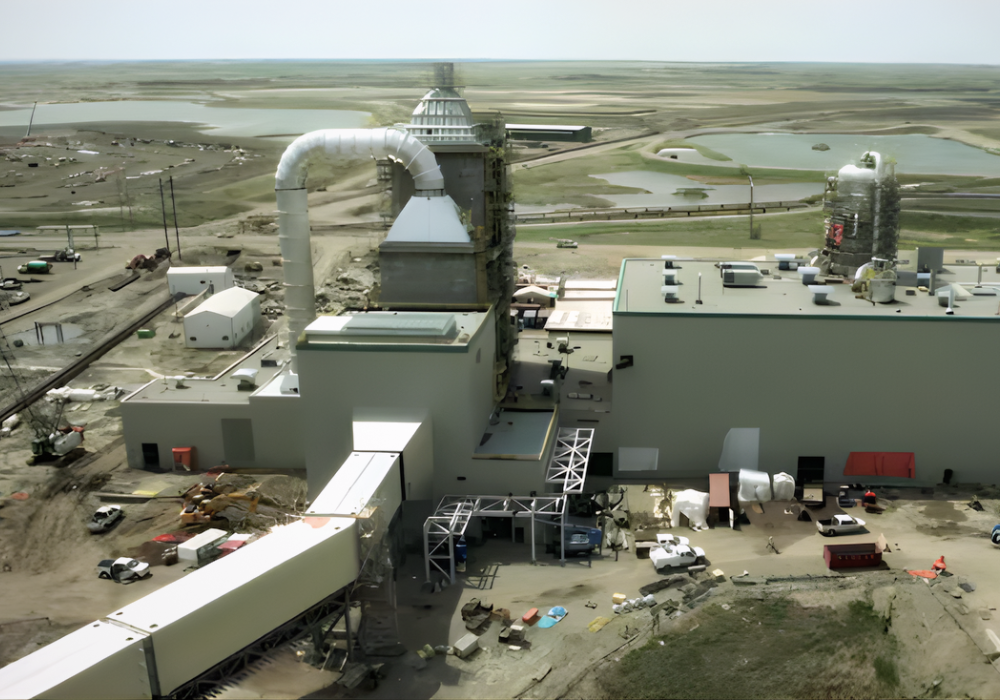
Disposing of carbon dioxide responsibly is more expensive than just dumping it into the atmosphere: which is why the Pathways CCS project in Alberta is costing $16 billion dollars. But part of the reason CCS is so expensive is the way it is funded: through taxpayer subsidies. If the government asks an industry how much they need to get rid of carbon dioxide, what company would say they can do it cheaply?
There is another way of funding CCS, which is to package the cost of carbon dioxide disposal in with the cost of fossil fuels themselves. We don’t have to dispose of 100% of that carbon dioxide right away, but we must make a start: in our geological net-zero paper, we suggested 10% in the early 2030s, rising to 100% by or soon after mid-century. A mandate to capture and store 10% of the carbon dioxide generated by its production and use would add just a few dollars to the cost of producing a barrel of oil – less than typical taxes and royalties. If companies are mandated to capture and store carbon dioxide as a licensing condition for continuing to sell fossil fuels, they have much more incentive to do it cost-effectively than if they are simply subsidized to install CCS. And as CCS becomes more widely adopted, its price tag plummets.
The world needs fossil fuels that don’t cause global warming. So, whoever works out how to supply the cheapest and most reliable fossil fuels that don’t cause global warming is going to clean up, literally, on a planetary scale.
That supplier could be Canada, blessed with an almost unique combination of three vital ingredients: abundant fossil fuels, even more abundant capacity for geological carbon dioxide disposal, and, crucially, a world-beating reputation for climate and geological sciences and responsible resource governance.
The Canadian label
Mark Carney emphasizes that Canada’s oil should be “low risk, low cost and low carbon.” There will come a time when the only low-risk oil is not just low-carbon, but net-zero carbon. One day, no one will want to risk using fossil fuels at all unless either they or their fuel supplier has taken care of all the carbon dioxide those fuels generate, for fear of being held liable for the impact of dumping it into the atmosphere. We cannot predict when that time will come, but as climate impacts accumulate along with public outrage, it may come sooner than even we would have predicted 20 years ago.
If, in the second half of this century, Europe or China or an environmentally conscious U.S. airline wants to buy a barrel of fully decarbonized oil – that is, oil bundled with a commitment to take back and dispose of all the carbon dioxide generated by its production and use, either directly through a pipeline or back out of the atmosphere – who will they want to buy it from? Not from Russia, surely, absent some truly dramatic changes in Russia’s reputation for waste management. Probably not from Venezuela either. Possibly not even from Texas, if the U.S. administration continues to gut the Environmental Protection Agency’s capacity to monitor leaks from potential carbon dioxide storage sites.
They will want to buy it from a country with a proven track record, respect for property rights and the rule of law; a country that, back in the 2020s, made history by being the first to make geological carbon dioxide disposal a licensing condition of extracting fossil fuels and has been progressively scaling up her carbon dioxide disposal industry ever since; a country whose customers can be 100% confident that decarbonized oil really does what it says on the label. The Canadian label.
Myles R. Allen teaches at the University of Oxford in the Department of Physics. Andrew J. Weaver teaches at the University of Victoria in the School of Earth and Ocean Sciences.
The Weekly Roundup
Get all our stories in one place, every Wednesday at noon EST.