This story was originally published by Inside Climate News. It has been edited to conform with Corporate Knights style.
Honda is being whipsawed by a decreasing emphasis on electric vehicles in the United States and a rapid shift to electric vehicles in China. The two markets are moving in opposite directions, with companies regretting EV investments in the United States and facing intense competition from upstart EV manufacturers in China.
Honda is not a company that expresses public frustration, but there was a sense of disappointment in its announcement last week about cancelling plans for three models of U.S.-made electric vehicles.
The U.S. government indicated just a few years ago that it would provide policy support for a transition to EVs and encouraged automakers to invest. Honda did just that, including a new battery plant in Ohio in partnership with LG Energy Solution. Then voters sent Donald Trump back to the White House and he dismantled this industrial strategy within months. Honda and other automakers were left exposed. Financial losses and job cuts followed.
That’s infuriating. But here is how Honda describes what happened, filtered through the language of corporate communication: “Previously, with stringent environmental regulations fully implemented in the U.S. and other countries, Honda pursued EV adoption with strong determination that striving for carbon neutrality is a responsibility Honda, as a manufacturer of mobility products, must fulfill for the future,” the company said in a news release. “However, in the U.S., the expansion of the EV market has slowed down due to several factors including the easing of fossil fuel regulations and revisions to EV incentives.”
I live in Columbus, Ohio, and I wrote about Honda for nine years while covering manufacturing and energy for The Columbus Dispatch. The company’s main North American manufacturing campus is less than an hour from Columbus, with factories in Marysville and East Liberty, Ohio.
While Honda is based in Japan, it produces more cars and light trucks in the United States than its home country and also has a major presence in China.
Honda’s announcement included disclosure of a US$15.7 billion charge related to restructuring its operations, which means the company is poised to post its first annual loss in about 70 years.
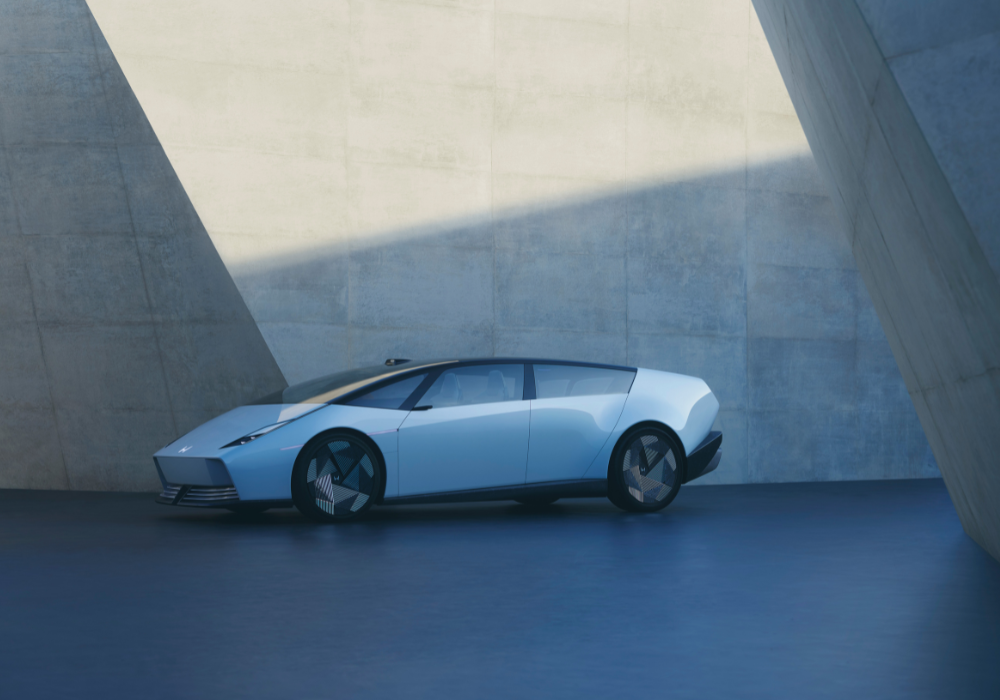
Previously, Honda had said it would manufacture three electric models in Ohio: the Honda 0 – that’s a zero – SUV, the Honda 0 Saloon and the Acura RSX. Now, all three are cancelled for production or sale in North America. They join other U.S. models that were cut, including those that made it to production, such as the Ford F-150 Lightning pickup and those halted before mass production, such as the all-electric Ram 1500 pickup.
It’s not clear what Honda’s decision means for the Honda-LG battery plant that began production late last year in Jeffersonville, Ohio. That plant, which has about 600 employees, was going to provide batteries for the RSX and other models. “As our company assesses the impact of Honda’s announcement on our operations, we are in discussions with our parent companies regarding related future business opportunities that align with the technology and expertise we have developed,” says Caroline Ramsey, a spokeswoman for the battery plant, in an email.
Honda’s other plants in the state will use the capacity that was slated for EVs to produce gasoline models, including gas-electric hybrids.
The company has struggled with its EV strategy over the last decade. Its greatest success has been the Honda Prologue SUV, introduced in 2024, which is part of a partnership with General Motors and shares components with the Chevrolet Blazer.
The now-scrapped models, headlined by the Honda 0 series, were part of the company’s attempt to signal a new beginning, with fresh designs and new technology.
There’s just so much uncertainty broadly in the U.S. economy right now.
— Hannah Hess, director of energy and climate practice at Rhodium
Honda is a major reason Ohio is a leader in automobile manufacturing employment, trailing only Michigan and Indiana. These next EVs were going to be Honda’s statement about how it intended to compete in the market of the near future.
Now, Honda and other automakers in the U.S. market are left to watch and wait.
Rhodium Group, a research firm, issued a report this week that gives a sense of the scale of investment that took place in recent years and the cancellation of some of that investment.
In 2025, companies said they were cancelling US$22 billion in previously announced EV or battery manufacturing projects in the United States, the report said. This exceeded the $17 billion in new EV or battery manufacturing announcements made last year.
To get a better sense of what’s happening, I looked at the indispensable database of project announcements from Rhodium and the Massachusetts Institute of Technology Center for Energy and Environmental Policy Research. It shows a spike in investment in 2022, the year President Joe Biden signed the Inflation Reduction Act, a law with incentives for EV manufacturing and purchases. Companies announced $80 billion in U.S. investment that year, and another $47 billion in 2023.
About half of last year’s cancellations by dollar value, or $11 billion, involved projects announced in 2022. The largest was a $4.3-billion EV manufacturing project from General Motors in Orion, Michigan. That’s a lot of investment going up in smoke, but I also urge observers to note that most of those 2022 projects are still active, either operational or under construction.
What we don’t know is if the cancellations to date are just the start of a larger wave. “The outlook looks cloudier than it did a year ago,” says Hannah Hess, director of Rhodium’s energy and climate practice. The next steps, she says, will be determined by many factors, including consumer demand for EVs and automakers’ assessment of where the market is heading. “There’s just so much uncertainty broadly in the U.S. economy right now.”
One thing the Rhodium report doesn’t capture are layoffs at plants that remain open, and that’s something else to watch.
SK On, the South Korean battery manufacturer, said last week that it is laying off 958 people at a plant in Commerce, Georgia, that had 2,566 workers before the reduction. The company cited a decline in demand for EV batteries.
Some jobs and investment could come back. The United States could reassert itself as a place where the cars of the future are built.
But gyrations in policies have a cumulative effect, reducing confidence in the staying power of any one policy. The next time a U.S. president says it’s time to invest, automakers are likely going to react more carefully.
The Weekly Roundup
Get all our stories in one place, every Wednesday at noon EST.