What a whirlwind year 2025 has been for climate policy.
The year started and ended with considerable uncertainty, but for different reasons. On the front end of the year, this was due to the federal election, where – depending on the outcome – a wholesale dismantling of Canada’s policy architecture was a real possibility.
But after a come-from-behind victory by Mark Carney’s Liberals, it became clear that the question ahead was a different one: what will Canada’s climate-policy approach include and how effective will it be at reducing emissions and supporting competitiveness in an era of disruption spawned by Donald Trump?
As the year comes to a close, we have a better idea of what some of that is likely to include: stronger industrial carbon pricing, stronger methane rules for oil and gas, finalized clean-electricity tax incentives, a climate investment taxonomy, support for critical minerals and more. But a fair number of these policy wins are still marked with ongoing uncertainty, including some of the most impactful on the list such as industrial carbon pricing.
Earlier in the year, my colleagues and I at the Canadian Climate Institute outlined a handful of top priorities the government could focus on to make meaningful policy progress. This was especially important given that our research showed that Canada was not going to be able to reach its 2030 emissions target and needed a course correction. That finding was confirmed this week by the federal government’s progress report on its climate plan.
Of the six policies we originally identified to get the country on the path to progress, three remain unfinished or uncertain.
Canada needs fast action on its new climate competitiveness strategy
The government has committed to strengthening industrial carbon pricing, but the details here will make or break this policy. Getting it right is especially important in light of the recent memorandum of understanding with Alberta, which pushes any clarity on this out to April of next year.
The MOU agreement is vague on specific outcomes: it agrees to increase the minimum carbon credit price to $130 per tonne of emissions – roughly six times the current level – but it doesn’t define a timeline. To be credible, both governments need to agree that this price should be reached by 2030.
Already we’ve seen worrying signs. The ink was barely dry on the MOU when the Alberta government went tinkering with their carbon-pricing system to further weaken it, just one week after the signing.
On a more positive note, the federal government finalized stronger methane rules for the oil and gas sector. Action on methane is a no-brainer, representing some of the lowest-cost actions available. The feds and Alberta need to agree to an effective equivalency agreement to ensure that the level of reduction committed to by the federal government – 72% by 2030 – is achieved. But this is generally good policy news.
On clean electricity, the federal government is currently implementing its long-promised investment tax credits in legislation, which should be passed early next year. And while the government appeared to reaffirm its commitment to the Clean Electricity Regulations, the MOU again undermined that with a carve-out for Alberta.
That risks copy-cat requests from other provinces and a race to the bottom in other areas of climate policy. For the moment, we’re holding out hope that the two parties can negotiate something approaching equivalency on this file.
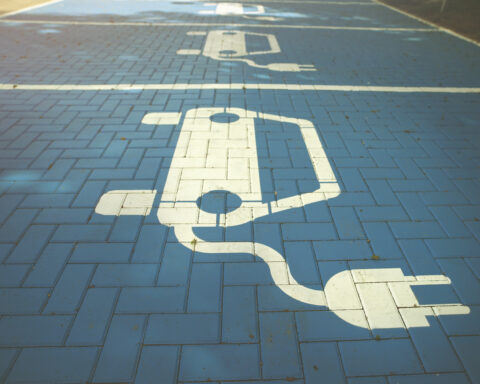
On electric vehicles, the government has paused its Electric Vehicle Availability Standard and consumer incentives, throwing into question one of the only policies Canada has to reduce emissions in the transportation sector.
Government has said that more information about the future of that policy should be coming soon, but the uncertainty has stymied EV sales in the country, which were previously rising steadily year over year. Maintaining a strong standard will help Canadians find better, more affordable vehicle options, while creating flexibility for vehicle manufacturers.
A fork in the road for the Canadian climate change discussion
The clearest case for progress has been with the federal government’s commitment to implement sustainable investment guidelines – also known as the climate taxonomy. The government has tasked the Canadian Climate Institute, working with Business Future Pathways, to do the technical work that will underpin the guidelines in order to help drive private investment into projects that are in line with the global energy transition.
Add it all together and we’re left with a policy picture that is still muddled.
That’s particularly unsettling given the stakes here: 2025 was also marked by the second-worst wildfire season in Canadian history. That meant people were faced with evacuation orders and alerts, especially those in remote and Indigenous communities. It meant millions of Canadians saw their neighbourhoods blanketed in toxic wildfire smoke for days at a time. And B.C.’s Lower Mainland recently had its major highways cut off from the Interior of the province, and floodwater is pouring into Abbotsford after an atmospheric river drenched the coast. That’s eerily reminiscent of the 2021 atmospheric river event that devastated much of the province and left billions of dollars in economic losses in its wake.
Yet, when it comes to concrete actions to protect people and communities across Canada, much is left wanting from all orders of governments.
All this is happening as clean and electric technologies – like renewables, batteries and electric vehicles – continue their inexorable march to transform global energy markets.
That on its own holds enormous potential to dramatically reduce future damages from climate change. It also offers a massive opportunity for Canada to increase prosperity, support affordability and bolster competitiveness in a world responding to new trade relationships.
Looking to the year ahead, Canada needs to resolve the policy uncertainty that’s standing in the way of progress as soon as possible. The problems we face are urgent, but the solutions are right in front of us.
No more grandiose rhetoric please: all I want for Christmas is some concrete delivery of long-promised climate change policy by Canadian governments.
Rick Smith is president of the Canadian Climate Institute, the co-author of two bestselling books on the effects of pollution on human health, and the executive producer of Plastic People, a 2024 documentary chronicling the damage done by microplastics in the human body.