With a population of 10.1 million, Peru’s capital of Lima is the fifth-largest city in the Americas – and one of the driest cities on Earth. Situated on a desert plain overlooking the Pacific Ocean, Lima receives just nine millimitres of rain a year – less than most Saharan villages. The city draws water mainly from aquifers and the polluted river Rímac, which rises 200 kilometres to the east in the Andes mountains and dribbles weakly through Lima’s shallow gullies. In the shantytowns high up the treeless mountainsides, residents have erected sheets of nylon netting to capture moisture from the fog.
Engineers promise more dams and more tunnels to bring water from the Amazon side of the Andes – but the accelerated melting of Peru’s tropical glaciers puts even those megaprojects into question.
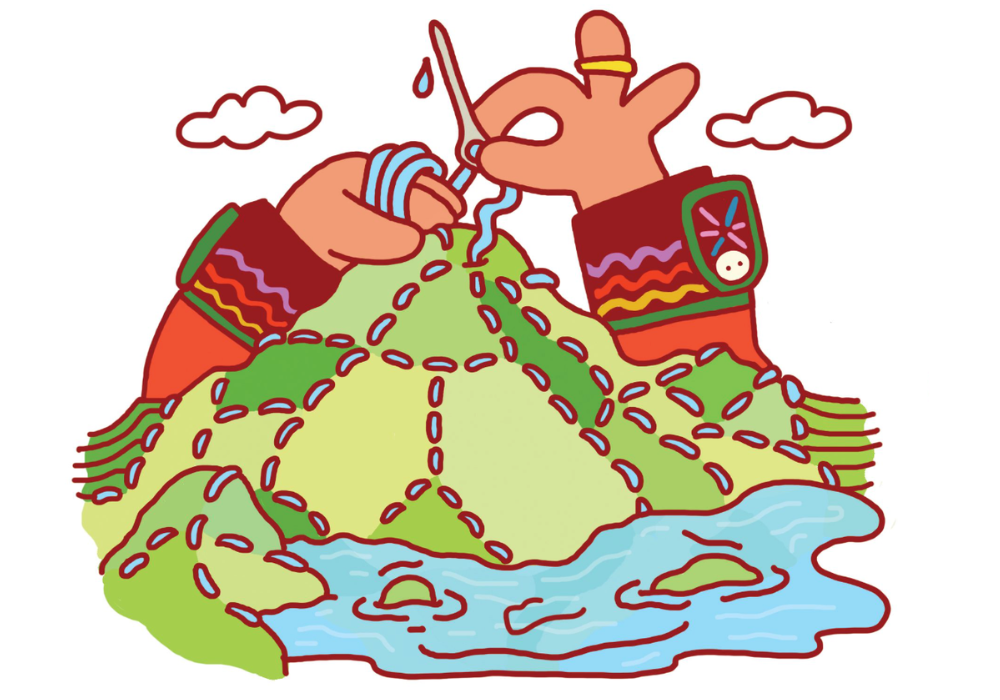
Where modern engineering fails, can traditional know-how succeed? The answer is “Si.” A Peruvian non-profit called Aquafondo is rallying high-Andean communities – where ancient knowledge is still preserved – to use nature-based tactics to “sow” new supplies of water. Local people are restoring thousand-year-old trenches high in the mountains to redirect water flow into ancient, stone-lined canals, revitalized wetlands and, eventually, the underground aquifers that supply Lima. They’re also restoring grasslands and forests that increase the mountains’ ability to absorb moisture, reducing runoff and increasing the water supplies available to local communities.
How meaningful can old ditches be? Studies by The Nature Conservancy in one community, San Pedro de Casta, found that restoring 20 kilometres of pre-Incan canals (known as “amunas”) boosted dry-season river volumes by 50%. Another study found that the cost of “sowing” the aquifers was just a third the cost of saving an equivalent amount of water behind a modern dam. Aquafondo now estimates that its community-based approach is adding more than 13 million square metres of water a year to Lima’s river basin – all while reinforcing traditional knowledge and creating new jobs in remote communities.
The COP30 climate conference in Brazil recognized this success in November, where Aquafondo won the global “Local Adaptation Champions” award for nature-based solutions. “We have strengthened our unity, our identity and our capacity to adapt without losing our roots,” Aquafondo executive director Mariella Sánchez said after winning the award. “This is not only a nature-based solution. It is a solution grounded in memory, dignity and the leadership of our communities.”
Rick Spence is editor-at-large at Corporate Knights.
The Weekly Roundup
Get all our stories in one place, every Wednesday at noon EST.