

“Each time a man stands up for an ideal, or acts to improve the lot of others, or strikes out against injustice, he sends forth a tiny ripple of hope, and crossing each other from a million different centres of energy and daring, those ripples build a current which can sweep down the mightiest walls of oppression and resistance.” – Robert F. Kennedy
Since I was a teenager, this has been my favourite quote. It hits home with the message that everything we do matters, and that, like the butterfly effect, you never know what mighty waves will rise from tiny ripples.
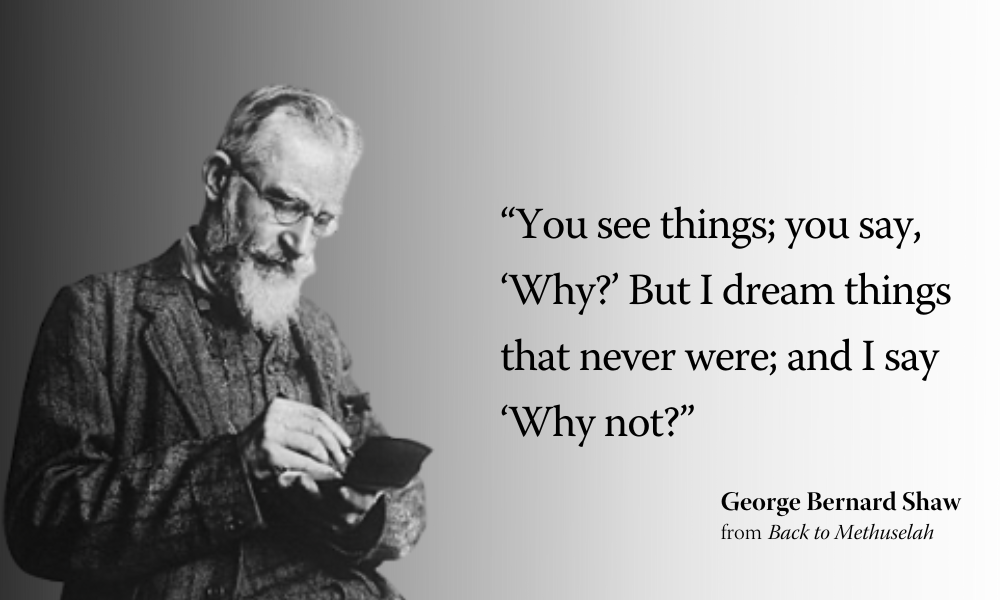
My second favourite quote served as the unofficial slogan for Robert F. Kennedy’s 1968 presidential campaign, borrowed from George Bernard Shaw: “Some men see things as they are and ask, ‘Why?’ I dream things that never were and ask, ‘Why not?’”
My third: If a tree falls in the forest and no one is around to hear it, does it make a sound?
These three quotes capture why the Global 100 exists: to amplify the ripples, to show what is possible, and to ensure the sound is heard.
The journey started 25 years ago when I knocked on the door of sustainability research pioneer Michael Jantzi (founder of what became Morningstar Sustainalytics) to see if he would help us produce our first ranking of Canada’s best corporate citizens. He agreed, and as a token of gratitude – after we published the ranking in Canada’s largest business newspaper – I gave him a framed copy with a plaque that read “You measure, we publish, they change.”
In 2005, we launched the Global 100 in partnership with Innovest Strategic Value Advisors (which later became MSCI ESG), founded by the visionary genius Matthew Kiernan. By necessity – and because of the sorry state of disclosure – those early rankings violated almost every tenet of a meaningful benchmark, except one. While they did rely on opaque black-box methodologies measuring supposedly hundreds of indicators, there was a shared purity of intention among our early collaborators: identify the 100 large companies from around the world, across sectors, doing the most to move the needle toward a more sustainable world where people can thrive in tandem with the planet.
By 2010, we brought the research in-house and made the methodology 100% transparent. This became a core tenet of our approach and a litmus test whereby anyone could replicate our results. As Don Lindsay, former CEO of Teck Resources, put it, “We like the Global 100 because it is clear why we are in or out and what we need to do.”
Disclosure limitations initially constrained us to measuring operational aspects of companies like emissions, taxes paid and board diversity. While these things all matter, the vagaries of voluntary disclosure meant we were often penalizing the best reporters, and on a bigger-picture scale we were missing what mattered most: the portion of a company’s core business that actually moves the world in a more sustainable direction.
In 2018, we came up with a rules-based industry-by-industry definition of sustainability and introduced the clean revenue indicator that measured what portion of a company’s revenue was sustainable. This evolved into sustainable revenues, then sustainable investment and aligned compensation.
This year, after passing 27 red-flag basic exclusionary hurdles (including board diversity and taxes paid), the Global 100 ranking is now 100% based on the portion of a business that makes the world more sustainable. We’re not abandoning operational impact – rather we’re doubling down on a more powerful measure. Much of the operational impact we once struggled to measure is now captured in our publicly available Corporate Knights Sustainable Economy Taxonomy, which clearly defines what is sustainable in each industry and is updated with further texture each year.
For more than two decades, we have stayed the course in our quest to help companies embrace the sustainability revolution. All along the way, we have been guided by three core principles:
1. Pure intention. This is our north star.
2. Focus on what matters most. Less is often more.
3. Radical transparency. This way, others can trust but verify our work.
Guided by our principles, we made the tough decision to let go of roughly 25 key performance indicators to focus on just four metrics: the portion of revenues and investment that are sustainable, how fast sustainable revenues are growing, and what percent of CEO compensation is linked to sustainability.
Since the founding of the Global 100 ranking, we have invested countless hours collecting data on all those different metrics, trying to get the angel in the detail right and defending the indicators in our ranking formula. The decision to simplify and refocus the ranking on our core mission did feel in part like a loss, but it puts us in a better place to weed out noise and tap into the signal to serve our core purpose of highlighting the business beacons for a more sustainable world.
We’re honoured to present this year’s Global 100 companies. These organizations show what kind of world is possible, sending out fast-growing ripples that give us a chance to rise to meet the mighty challenges of our time.
Toby Heaps is co-founder and publisher of Corporate Knights.
The Weekly Roundup
Get all our stories in one place, every Wednesday at noon EST.