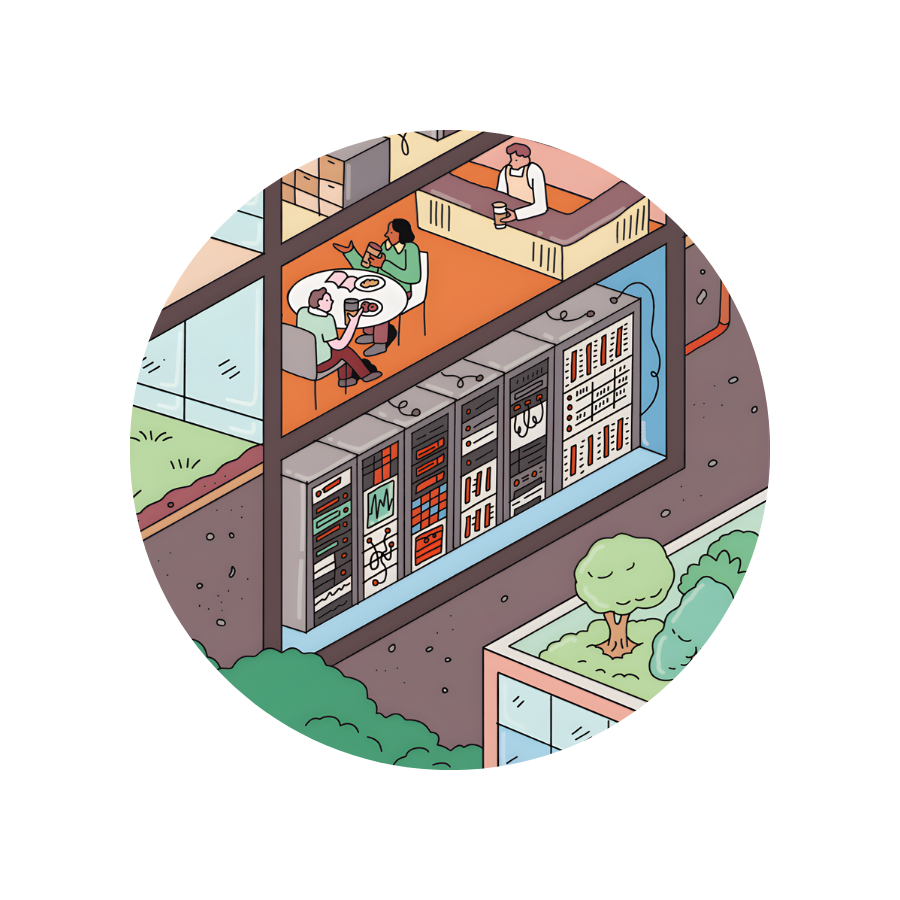
In recent years, the growth of enterprise data – and streaming movies at home – has led to frenzied construction of high-tech data centres around the world, packed full of dense server racks processing multiple complex operations all at once. But with the new boom in artificial intelligence, companies like Microsoft, Google, Amazon, Meta and OpenAI are racing to build new data centres to meet projected demand.
And it’s all happening so fast that these energy-guzzling data centres have shattered forecast patterns of energy growth, accelerating demand for fossil fuels at just the wrong time, and requiring untold quantities of scarce, clean water for cooling.
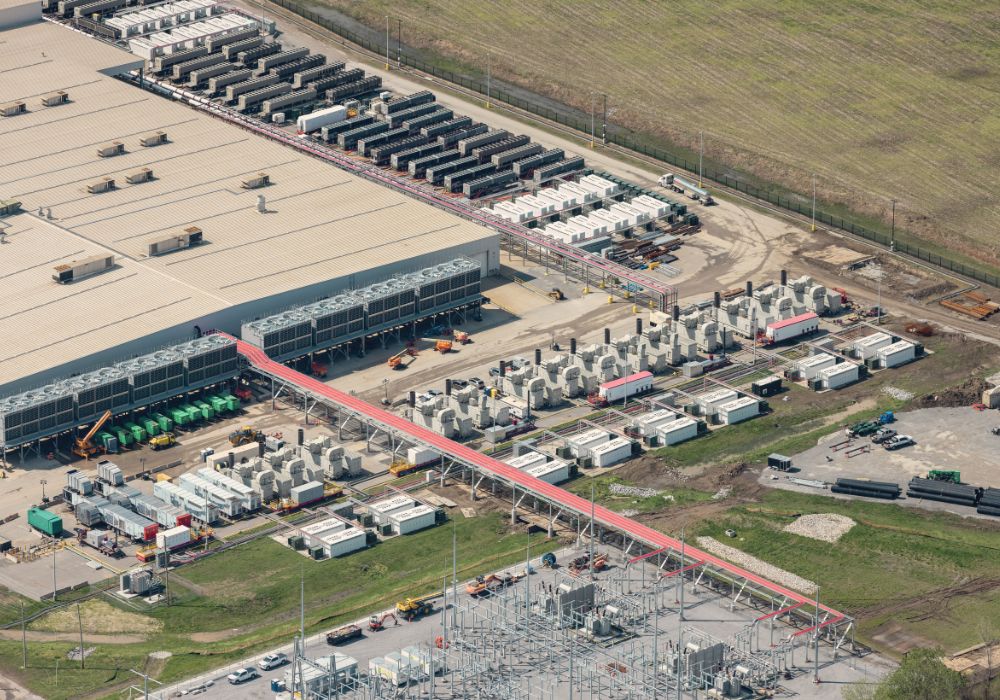
It wasn’t supposed to be that way. The computer industry has made great strides in reducing the energy required to process data. But then generative AI happened, demanding massive clusters of computing power that run hot and need powerful cooling technologies. A traditional enterprise rack of computing power, sufficient to run major corporations or browse Facebook, could get by on five to 10 kilowatts. By comparison, a rack of AI servers needs 30 to 100 kilowatts. But the real crunch comes from the timing of our new AI era. Where new power infrastructure generally takes five to 10 years to plan and build, AI has taken off in less than three.
Millions of farmers are trying to grow more food from shrinking, polluted, or disappearing water sources. Without rapid transitions toward water-smart agriculture, water bankruptcy will spread rapidly.
– Global Water Bankruptcy report
The result: the rapid growth of AI data centres has created a debilitating free-for-all in crucial energy and water systems. Competition for electricity in some U.S. states has resulted in higher electricity prices, costly upgrading projects, and conflicts over new transmission lines. In West London, the allocation of power to a new cluster of data centres has created an electricity shortage that has delayed new housing and commercial projects by as much as 10 to years.
Many tech firms intended to power their new data centres with renewable energy, but existing wind and solar supplies can’t keep up with demand. So now Microsoft, once a clean-energy leader, is tapping natural gas to fuel its showpiece data centres in Wisconsin, and Meta will use gas-fired turbines at its Hyperion project in Louisiana. The Washington Post recently counted 220 new gas projects in the United States, largely driven by AI.
Meta, the parent company of Facebook, recently announced what it called “landmark agreements” to expand the operation of three nuclear power plants and “boost the development of new advanced nuclear technology.”
Most tellingly, Microsoft is reviving Pennsylvania’s notorious Three Mile Island generating station – mothballed since its 1979 meltdown – to power its AI and cloud computing operations.
AI’s thirst trap
One way to reduce the energy needs of data centres is to use more water – which is 20 times more efficient than air at dissipating heat. But in the heated rivalry over AI, two-thirds of the U.S. data centres built since 2022 have been located in water-stressed areas such as Texas and Arizona. From Phoenix to the Netherlands, authorities are having increasing trouble balancing the needs of data centres, agriculture and new homeowners.
A recent investigation by The Guardian and SourceMaterial, a public-interest journalism project, found that Amazon, Microsoft and Google are operating 38 data centres in some of the world’s driest settings – including northern Spain and Maricopa County, Arizona – and plan to build 24 more. One Meta data centre in the drought-stricken community of Mesa, Arizona, consumes as much water as 10,000 homes.
While skeptics keep sounding the alarm over a potential AI bubble, Goldman Sachs predicts that investment in new data centres will grow 165% over the next five years. Data centres currently consume 1.5% of all energy on Earth, but by 2035 that share could triple.
A recent CBC report noted that one large AI training run can evaporate hundreds of thousands of litres of water. Unfortunately, data centres compete with people and wildlife for scarce water supplies because they need fresh, filtered water for cooling, and their equipment works best in low-humidity environments.
Even in Canada, water consumption matters. The Alberta government has announced its intention to woo new data centres, even though most of Alberta’s water comes from the seasonal Rocky Mountain snowpack.
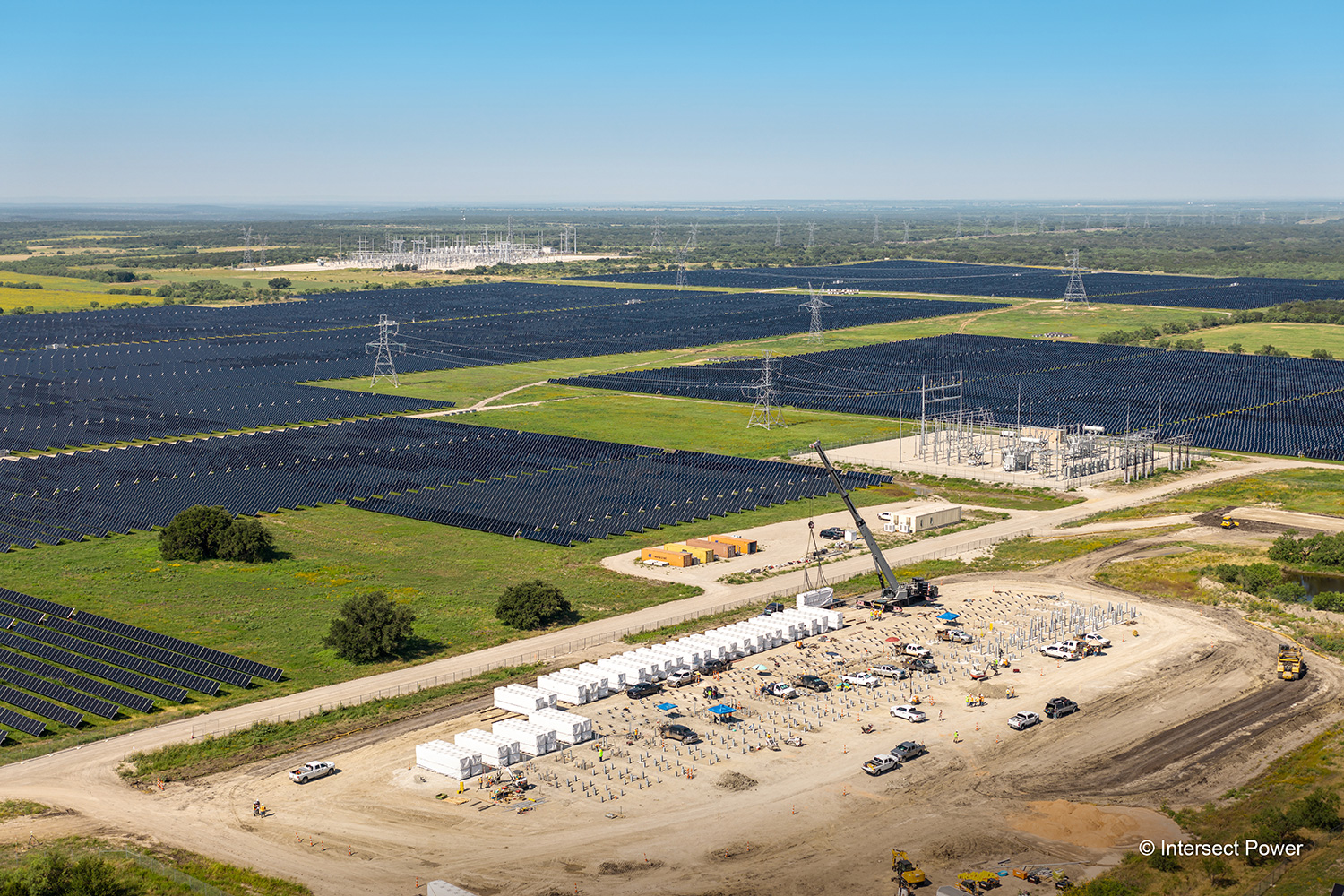
Some tech companies worsen the situation by shrouding their data operations in mystery. Another recent SourceMaterial investigation found that Amazon globally uses 924 data centres – double most industry estimates. And Microsoft once promised local farmers that a new Netherlands data centre would draw less than 20 million litres of water a year. Dutch journalists later found that plant used 84 million litres in 2021 – even as locals were urged to limit their water use.
A new UN study reminds us that human intelligence has a bad track record of managing its water supply. The report, Global Water Bankruptcy: Living Beyond Our Hydrological Means in the Post-Crisis Era, says many societies are depleting their water systems, drawing not just from their rivers and lakes, but from longer-term, irreplaceable sources such as aquifers, glaciers and wetlands. “Millions of farmers are trying to grow more food from shrinking, polluted, or disappearing water sources,” the report notes. “Without rapid transitions toward water-smart agriculture, water bankruptcy will spread rapidly.”
The authors hope their use of the term “bankruptcy” will provoke real change in water-management patterns. In particular, they encourage countries to reduce their dependence on “water-intensive” industries such as “water-hungry extractive industries and thirsty data centres.” Better, says the report, to embrace “water-dependent sectors, including knowledge-based services, manufacturing with low water footprints, and water-friendly renewable energy technologies.”
As confirmation, we posed a question to ChatGPT: “Which is more important: preserving water supplies, or cooling data centres?” Its response: “Both are important – but preserving water supplies is more fundamental, especially long-term. Water security underpins everything else – including technology infrastructure.”
Rick Spence is the editor-at-large at Corporate Knights. He is based in Toronto.
The Weekly Roundup
Get all our stories in one place, every Wednesday at noon EST.