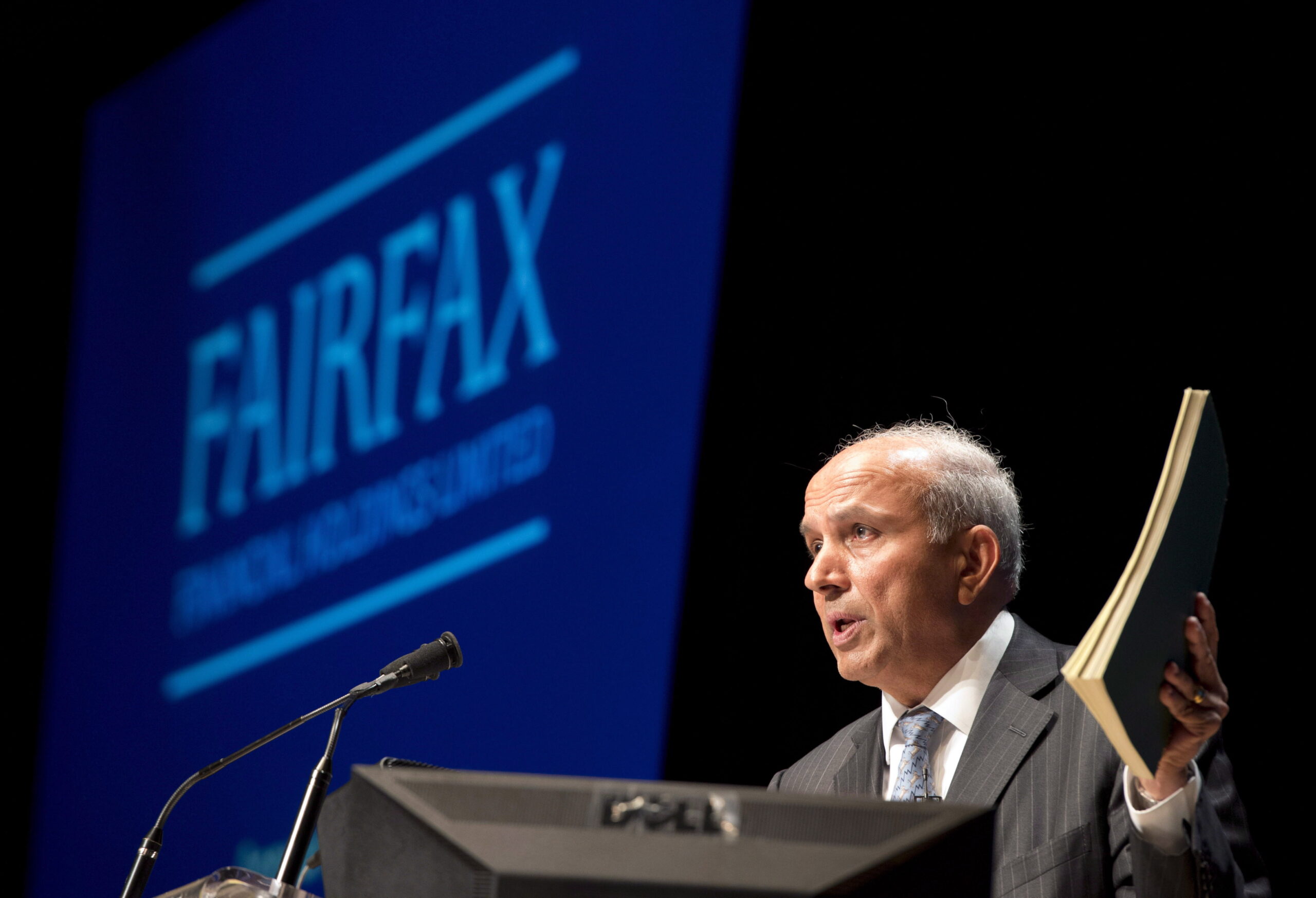
The Fairfax Way is a new portrait of Prem Watsa, the principled, philanthropic and famously reclusive leader of Fairfax Financial. The nearly 400-page biography gave author David Thomas unprecedented access into the life of the “Canadian Warren Buffett,” to learn about how he built Fairfax and the legacy he hopes will endure for generations.
With the book, Watsa partly wanted to ensure that outsiders understood Fairfax’s culture well enough not to dismantle it after he’s gone. I was drawn to the book not only because Watsa and I share an alma mater, the Ivey Business School, but also because of the curious gap between Watsa’s philosophy and the application of it when it comes to climate risk.
The irony is that by carefully documenting why Fairfax is designed for permanence, the book also exposes how ill-prepared it is for the most significant long-term risk facing the insurance industry from which it derives most of its revenue. Fairfax prioritizes reducing long-term losses over achieving short-term gains, led by a founder who cares about doing good and having a positive impact on the world. Yet it is the world’s third-largest insurer of fossil fuel projects and has little to no plan on how it manages climate risk.
I’ve spent the last two years trying to approach both Fairfax and its shareholders to address the climate risk that is facing their industry and business. This includes two shareholder resolutions, a bunch of letters – they refuse to meet – and even a complaint to the Ontario Securities Commission over lack of disclosure.
A long-term philosophy meets a long-term risk
Watsa’s value-investing philosophy favours patience, downside protection and trust over market fashions and short-term profits. This long-term orientation makes Fairfax’s position on climate risk harder to reconcile than for companies that justify inaction by pointing to short-term shareholder pressure.
“Our favourite holding period is forever” is a Warren Buffett line that Watsa returns to often. In the abstract, this is a refreshing counterweight to short-termism. In practice, it raises uncomfortable questions about the kinds of assets Fairfax intends to hold indefinitely. Those holdings include oil and gas investments, and “forever” is a long time to finance industries whose business models depend on expanding physical risk across the global economy, thereby biting the insurance industry.
Climate change barely appears in The Fairfax Way. A short section acknowledges that catastrophe losses are increasing and that Watsa finds watching the weather channel nerve-racking. Missing is any explanation of how accelerating climate damage fits into Fairfax’s commitment to downside protection, sound underwriting and enduring value creation. The company is simultaneously betting on long-term stability while underwriting and financing industries that undermine it.
Watsa has also said that “everything we do as a company rests on the strength of our insurance assets. Without them, there is no Fairfax.” The value of those assets depends on their ability to generate underwriting profits over long periods. Climate change directly weakens that equation. Insured wildfire losses in Canada have risen more than 1,000% in a little more than a decade, reflecting not a temporary spike in claims but a structural shift in the loss profile facing insurers. Fairfax itself reported approximately US$1.1 billion in catastrophe losses in 2024.
Why climate risk may be getting misclassified
One is left wondering whether climate risk simply does not arrive in the categories Fairfax is accustomed to managing. Fairfax can handle specific shocks that show up as short‑term volatility in a particular stock or line of business. Climate risk is different. It is systemic, cumulative and physical – the kind of risk that compounds quietly, until it doesn’t.
Watsa has repeatedly demonstrated an ability to navigate stress. Fairfax has anticipated multiple market shocks and had to navigate an attack by a U.S. hedge fund. That experience likely reinforced an institutional instinct that external pressure, whether from markets, media or activists, will not determine the company’s direction. Fairfax’s success in resisting noise became part of its identity.
That same instinct may have led Fairfax to misclassify climate risk as politics, as fashion or as ESG rhetoric rather than as signal.
Fairfax’s decentralized structure does not prevent clear direction from the top. Watsa is described as values-driven rather than prescriptive but decisive when principles are involved. That combination could support a serious response to climate risk if leadership chose to name it as such.
There is also a moral tension that feels unusually relevant because Watsa has made values central to Fairfax’s identity. He speaks often about honesty, integrity, humility, loyalty and the Golden Rule. He capped his own salary, donates hundreds of millions of dollars annually, and has said that success carries an obligation to give back and that “to whom much is given, much is expected.” Insurance, at its core, exists to help people recover when things go wrong.
Profiting from activities that intensify those harms is in direct competition with that purpose.
Even so, reading The Fairfax Way left me cautiously optimistic. If Fairfax is truly a contrarian institution focused on multi-generational success, then addressing climate risk is not optional; it is necessary. Trust, in a world of accelerating physical damage, means not funding the forces that undermine collective resilience.
The book presents the Fairfax approach as a shared agreement about how to live and operate, followed by the courage to act accordingly. Our collective response to climate change is based on the same thing.
Kiera Taylor is a senior policy analyst at Investors for Paris Compliance.
The Weekly Roundup
Get all our stories in one place, every Wednesday at noon EST.