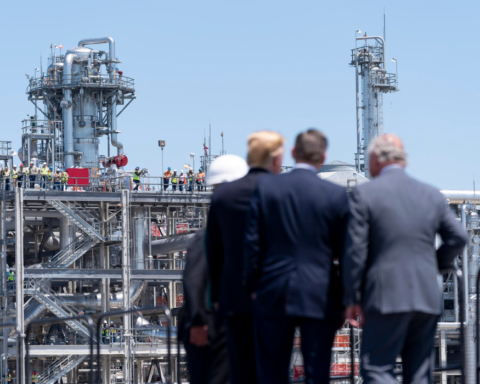
Since taking office, U.S. President Donald Trump has shown outright hostility to the renewable-energy sector and to wind power in particular. His administration has sought to shut down five offshore wind projects that were under construction off the East Coast, putting in jeopardy nearly US$30 billion in investment. Although courts later struck down the “stop work” orders, the attacks have cast a pall over the sector south of the border and made Canada look brighter for investment by contrast. Industry watchers say the Canadian industry is attracting growing interest from global investors who remain committed to the energy transition.
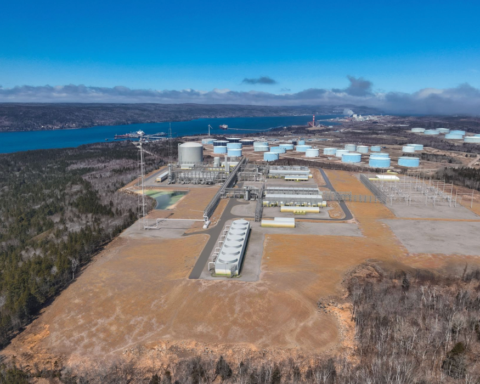
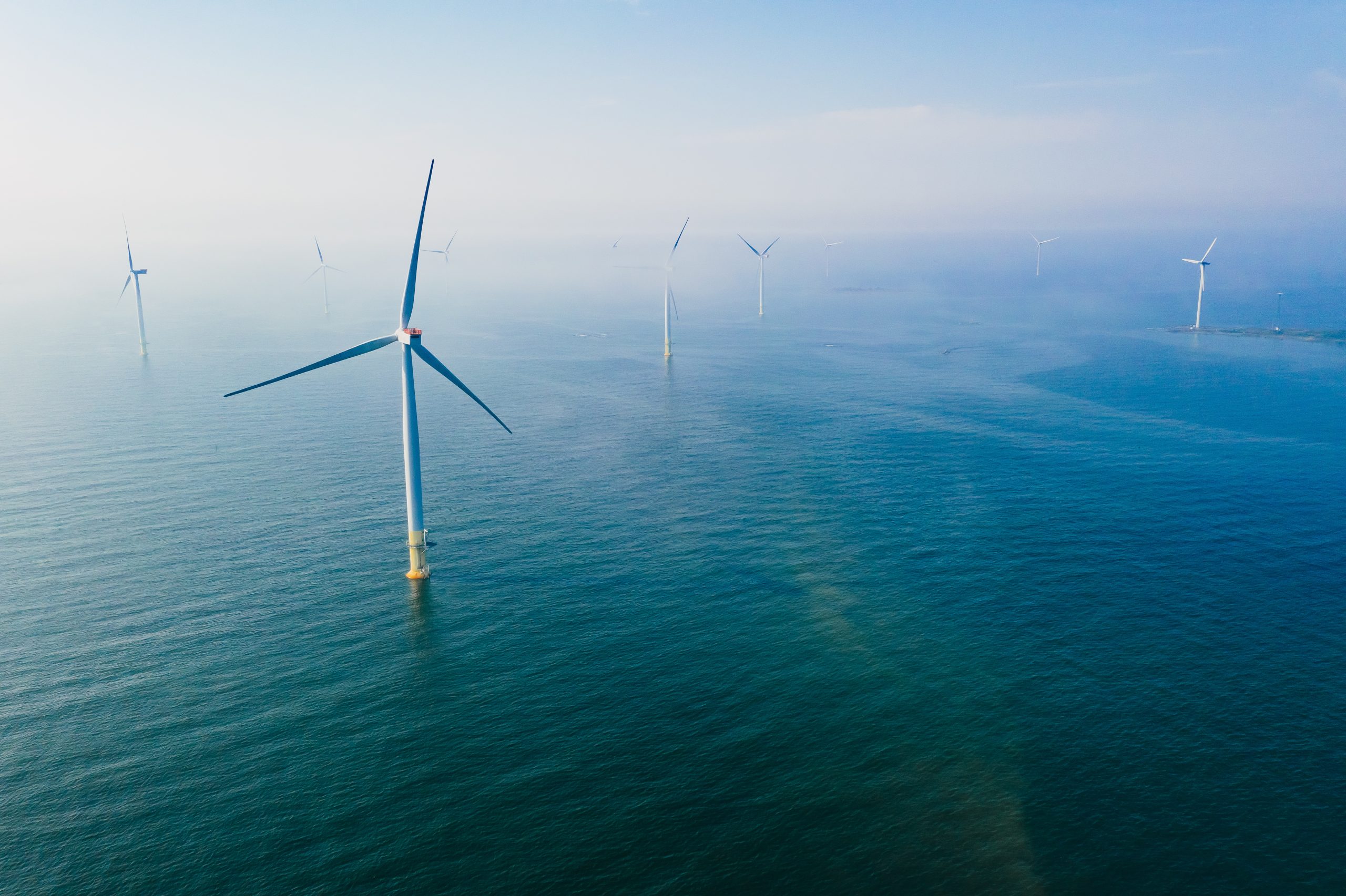
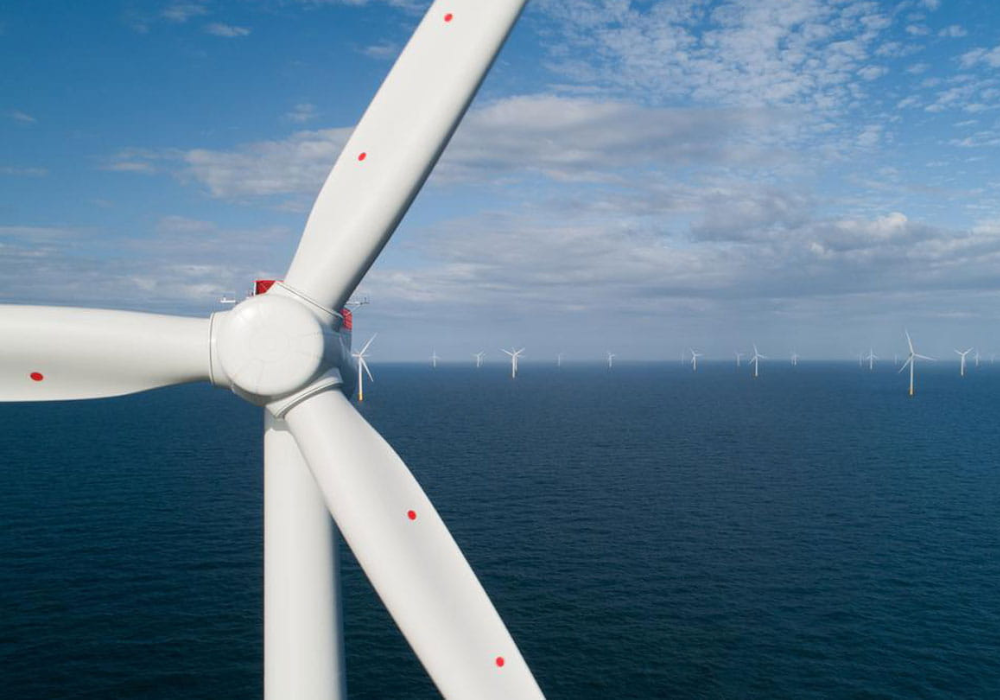
One place to watch is Nova Scotia, which has big plans to kick-start its offshore wind industry in order to meet electricity demand at home and beyond. Initially, the province is aiming for some 5,000 megawatts of offshore wind capacity.
“There is a lot of interest among developers,” says Elisa Obermann, executive director of Marine Renewables Canada, in an interview. “They’re looking for a country that has a stable regulatory environment and very predictable processes for their auctions and procurement.”
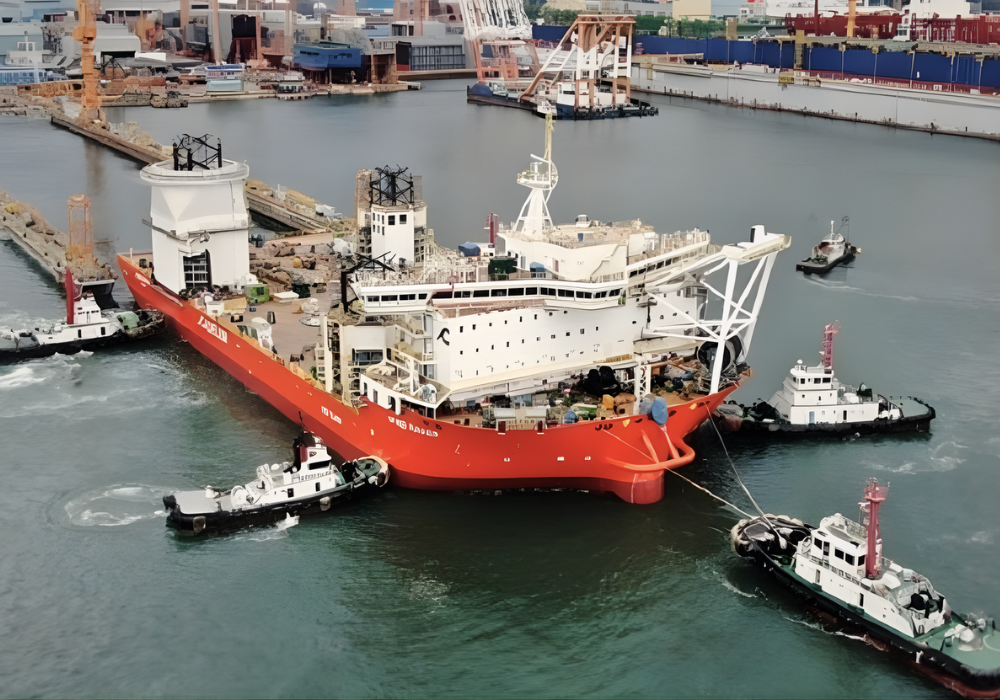
In January, the Canada-Nova Scotia Offshore Energy Regulator concluded a pre-qualification process for companies interested in participating in an upcoming call for bids. So far, Q Energy France, a division of South Korea’s Hanwha Group, has confirmed its interest and has publicly committed to investing in the province’s offshore workforce.
While total energy-transition investment rose in the U.S. last year, changes in U.S. climate policy are contributing to market uncertainty, and market uncertainty makes it difficult for companies and investors to plan ahead. The result is energy-transition investors start to consider putting their money elsewhere, outside of the U.S.
– Joanna Klimczak, Northern Light Capital Partners
But the federal and provincial governments will need to coordinate their efforts to ensure that heightened interest translates into tangible investment. Nova Scotia has a small domestic power market and is looking for federal support to build transmission to other provinces – and, possibly, the United States – in order to persuade offshore wind developers there will be a market for their power.
A nation-scale opportunity
On February 26, Canada’s energy minister, Timothy Hodgson, travelled to Nova Scotia to announce a $5-million federal support for a feasibility study into a proposed transmission project dubbed Wind West, which would deliver offshore wind power to markets beyond the province.
Nova Scotia “has an exceptional wind resource,” Hodgson told reporters. “The main constraint on [Wind West] is not the wind; the wind is there and it blows a lot,” he said. “The constraint would be where is the power going to go and how are we going to move it, so that’s what this is about today.”
The Nova Scotia effort is just one example of Canada’s surging interest in the energy transition. Across the country, federal, provincial and territorial governments are promoting investment in the sector to support the electrification of the economy and construction of new data centres. That includes renewable power, battery and long-duration storage, energy efficiency and electric vehicle infrastructure. Ontario is also pursuing nuclear, including the country’s first small modular reactor.
“There is no shortage of attractive opportunities for Canada to seize the moment,” says Joanna Klimczak, Montreal-based chief executive at Northern Light Capital Partners. “While total energy-transition investment rose in the U.S. last year, changes in U.S. climate policy are contributing to market uncertainty, and market uncertainty makes it difficult for companies and investors to plan ahead,” she says. “The result is energy-transition investors start to consider putting their money elsewhere, outside of the U.S.”
A front door for investment
Klimczak is a finance veteran who works with global asset owners on strategies to capitalize the energy transition. She recently co-convened a meeting between Energy Minister Hodgson and industry CEOs and executives. To secure foreign investment in clean-energy projects, Canada should have a “central front door” where global asset managers can go to track and access the investment opportunities across the country, she says. “Governments at all levels should consider to work together to centralize an entry point and market it highly, because the more investment capital Canada has to choose from and work with, the stronger our economy will be for all Canadians.”
In the United States, the Trump administration has rejected the scientific evidence of a mounting climate crisis and doubled down on fossil energy production while attacking the renewable sector. After record instalments in the third quarter of last year, the U.S. industry is anticipating a slowdown in the United States in 2026, the American Clean Power Association said in an end-of-year report: “Projects are facing heightened regulatory burdens and policy uncertainty, putting the future trajectory of clean power project deployments at risk.”
RELATED STORIES

All told, cancellations of clean-energy projects in the U.S. – including renewable power, storage and electric vehicle manufacturing – far outpaced new investment announcements in the U.S., according to the business coalition Environmental Entrepreneurs (E2), in a report released February 13. E2 recorded US$35 billion worth of investments abandoned last year, compared to US$12 billion of new investments that were announced. In 2024, the United States saw US$16 billion in clean-energy investments announced and only US$2.5 billion abandoned.
Canada’s renewable sector has seen setbacks, too, but the outlook remains bullish. The country’s wind, solar and electricity storage capacity grew by 56% over the past five years to 25 gigawatts, according to the Canadian Renewable Energy Association (CanREA). That’s equivalent to the capacity of 25 1,000-megawatt nuclear reactors.
Virtually every province or territory has some renewable-energy procurement underway. Over the next decade, CanREA forecasts that investment in new wind, solar and storage will be some $200 billion. CanRea doesn’t include nuclear or large-scale hydro in its forecast, but there, too, provinces are investing in new non-GHG-emitting power projects.
The missing piece: private suppliers
The growth rates would be even greater if provincial governments would unleash private-sector suppliers to meet surging demand without having to sell through government-controlled utilities. Alberta is the sole province with a market in which electricity producers can sell directly to industrial customers through power-purchase agreements. However, Premier Danielle Smith slammed the door on that option when her government ordered a moratorium on new renewable power projects.
Canada can quickly unlock much more corporate investment in renewables
In 2024, companies signed deals for more than 1,000 megawatts of renewable power, virtually all in Alberta, according to figures from the Business Renewables Centre (BRC) Canada, which advises companies on renewable power procurement. That market has since dried up except for some small activity through a Nova Scotia program.
BRC Canada director Jorden Dye says Canada could attract far more investment from multinational corporations that remain committed to meeting climate targets if provinces would relax their exclusive grip on power markets. The centre’s advisory council includes some of the world’s largest companies, including Amazon, Starbucks and Marriott International. “When you start seeing policy churn and policy uncertainty, companies start looking at whether there are opportunities to decarbonize other aspects of the business in other jurisdictions,” Dye says. “And Canada has definitely come up as a factor for that.”
Prime Minister Mark Carney has vowed to make Canada a clean-energy superpower, and both he and Energy Minister Hodgson have pointed to the need for electrification to make that happen. Trump’s war on renewables could prove a boon to Canadian clean-energy ambitions, but only if governments can create the necessary conditions to drive investment.
Shawn McCarthy is an Ottawa-based writer.
The Weekly Roundup
Get all our stories in one place, every Wednesday at noon EST.