Geothermal energy, thus far limited to a handful of locations where rare geological conditions can support it, has historically played a marginal role in the world’s clean-energy supply.
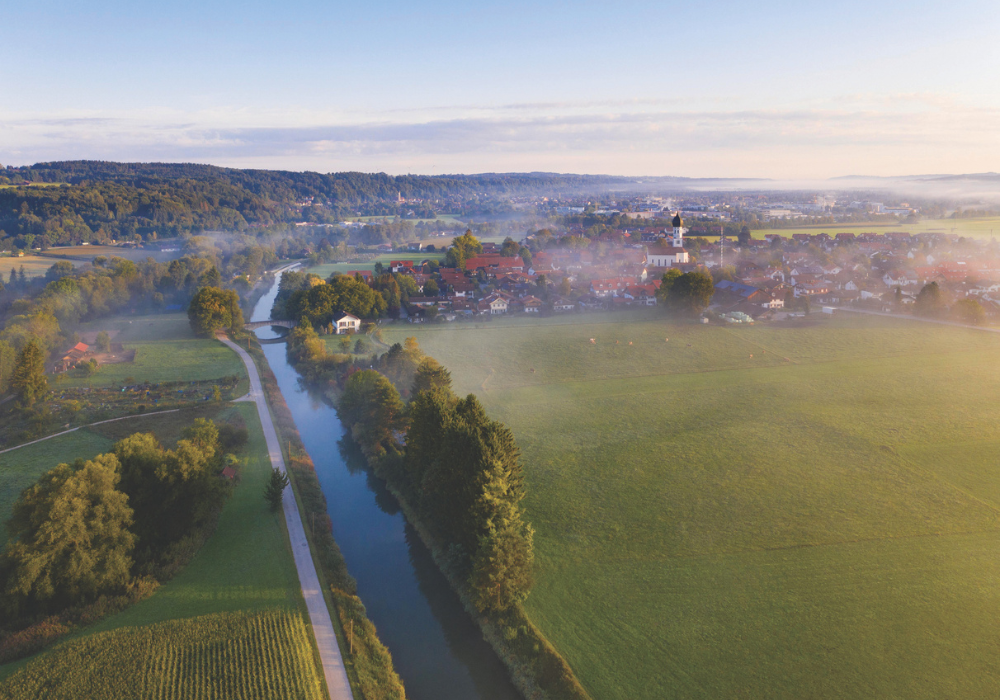
But in the small Bavarian town of Geretsried, near Munich, a new geothermal plant is quietly signalling a paradigm shift for the industry, as recent technological advances have opened up new territories, enabling the production of clean, baseload power.
Calgary-based Eavor Technologies, a pioneer in what’s being called “next-generation” or “advanced” geothermal, is part of a small pool of start-ups that is borrowing technical expertise gleaned from the oil and gas industry to drill for heat far below the earth’s surface and send it back up as a source of low-carbon energy.
“It has one of the smallest footprints for power generation of any technology,” says Steve Grasby, president of Geothermal Canada, a non-profit that supports research and development of geothermal projects. “It’s also highly reliable; the power is always there. And it’s easy to ramp up and down as needed, unlike nuclear, which needs to run all the time.”
Eavor’s latest milestone was achieved on December 4, 2025, when it became the first geothermal company to deliver electricity to a commercial power grid at its Geretsried facility, demonstrating that its “closed loop” system is capable of supplying emission-free power at scale. For this project representing the culmination of a decade’s worth of research and development, Eavor bored sealed pipes nearly 4.5 kilometres into the earth, connecting more than 300 kilometres of boreholes underground. Now completed, the eight-megawatt electric and 64-megawatt thermal project produces enough electricity for 8,000 homes and enough heat for 120,000 homes. Another Eavor project is in the works in the Netherlands.
The U.S. Air Force has also shown interest in advanced geothermal energy supply. In 2023, the Air Force began planning for two prototype-level geothermal projects at Mountain Home Air Force Base in Idaho and Joint Base San Antonio in Texas, awarding the Texas base project to Eavor.
Eavor believes its technology has the potential to generate power almost anywhere, and the firm has attracted hundreds of millions of dollars in venture capital with the promise of truly ubiquitous, dispatchable renewable energy. The venture capital arms of BP and Chevron have invested some US$40 million in Eavor, and, through the Canada Growth Fund, the federal government has funnelled $90 million to the company. Eavor has used investors’ capital on research and development to continue to scale up the number and size of its projects and trim costs.
Eavor is not the only player in the hydrothermal sector that is exploring new ways to dig for heat. Texas is a hub of innovation in next-generation geothermal power. Prominent start-ups, such as Sage and Fervo Energy, are based in Houston, which shouldn’t be surprising given that energy demand is surging in Texas, where Meta, OpenAI and Microsoft are building huge data centres.
In general, geothermal is becoming a growth sector as new drilling capabilities and other advances now enable projects to be developed across a much wider range of geologic settings than ever before.
What is geothermal energy and how does it work?
For more than a century, people have been using steam generated by deep underground water reservoirs that are heated by the earth’s mantle to power generators. Iceland and New Zealand get about 20% of their electricity from geothermal thanks to their volcanic landscapes, which host shallow, highly permeable underground heat reservoirs. Only a few sites on the planet, however, contain the geological conditions to support a geothermal system at scale, and geothermal contributes only a very small share of the world’s overall supply – approximately 16 gigawatts, representing less than 1% of total capacity installed worldwide. (The only commercial geothermal power plant in Canada is in Alberta, the Swan Hills Geothermal Power Project.) By comparison, wind and solar together supplied 17.6% of global electricity in the first three quarters of 2025, pushing the total share of low-carbon energy sources to 43%.
With the rise of next-generation technologies, geothermal could significantly raise its contribution to the world’s supply of renewable power. Key to both “enhanced” geothermal and “advanced” geothermal systems is that neither requires natural underground reservoirs. All that is required is the heat of the earth, which is available nearly everywhere.
Enhanced geothermal uses the fracking techniques of the oil and gas sector to drill into hot rock and create permeability.
Eavor’s advanced geothermal system forgoes fracking in favour of a closed-loop system. Started by veterans of the oil sector, Eavor has designed a kind of underground radiator where fluid is circulated through a closed loop of vertical pipes that connect a network of horizontal pipes deep within the earth. Absorbing heat from the rock, the temperature of the working fluid rises and is then pumped up to ground level to generate heat and power.
“If geothermal is ever going to scale,” Eavor’s chief executive, John Redfern, told The New York Times in 2023, “it has to be a repeatable process you can do over and over. We think we’ve got the best way to do that.”
Low risk, high rewards
Besides the scarcity of suitable locations, geothermal has long been hampered by its high capital costs, the bulk of which are spent on drilling, which can eat as much as half the cost of a project.
Still, as greater efficiencies are realized, costs are coming down – by an impressive 22% from 2021 to 2022 alone. Some systems are even cost-competitive with gas plants and cheaper than coal. Moreover, once built, geothermal is much cheaper to operate than other dispatchable sources like coal, gas and nuclear.
While some experts believe it possible to create geothermal energy almost anywhere, Grasby does offer a caveat. “You can’t really do this just anywhere. In some places, you may have to drill much deeper to get to the heat you need. Rocks vary in thermal connectivity; some rocks have high connectivity and others are low in connectivity. You need a certain temperature to make the system work.”
In Canada, as well, permitting and regulatory regimes have yet to catch up to the latest developments in the geothermal world. According to Grasby, only three provinces currently regulate geothermal energy production: Alberta, British Columbia and Nova Scotia.
Updates to regulatory frameworks may yet emerge should the momentum behind geothermal continue, especially given that hydrothermal offers round-the-clock, on-demand power, unlike wind and solar.
New analysis from the International Energy Agency forecasts next-generation geothermal as representing up to 800 gigawatts of clean electricity capacity by 2050 – roughly the world’s current geothermal capacity.
Analysts at Ember, a U.K.-based energy think tank, anticipate that geothermal will quickly accelerate, reporting that by 2030, nearly 1.5 gigawatts of new capacity is expected to come online each year globally, three times the level added in 2024. By 2050, geothermal could meet up to 15% of the growth in the world’s demand for clean power.
As a net-zero economy looks increasingly precarious, the latest geothermal breakthroughs offer a solution to the supply of firm, low-emission energy thanks in large part to the tools and expertise that originated in the oil field.
Victoria Foote is a writer and editor who specializes in clean energy and climate.
Get all our stories in one place, every Wednesday at noon EST.The Weekly Roundup