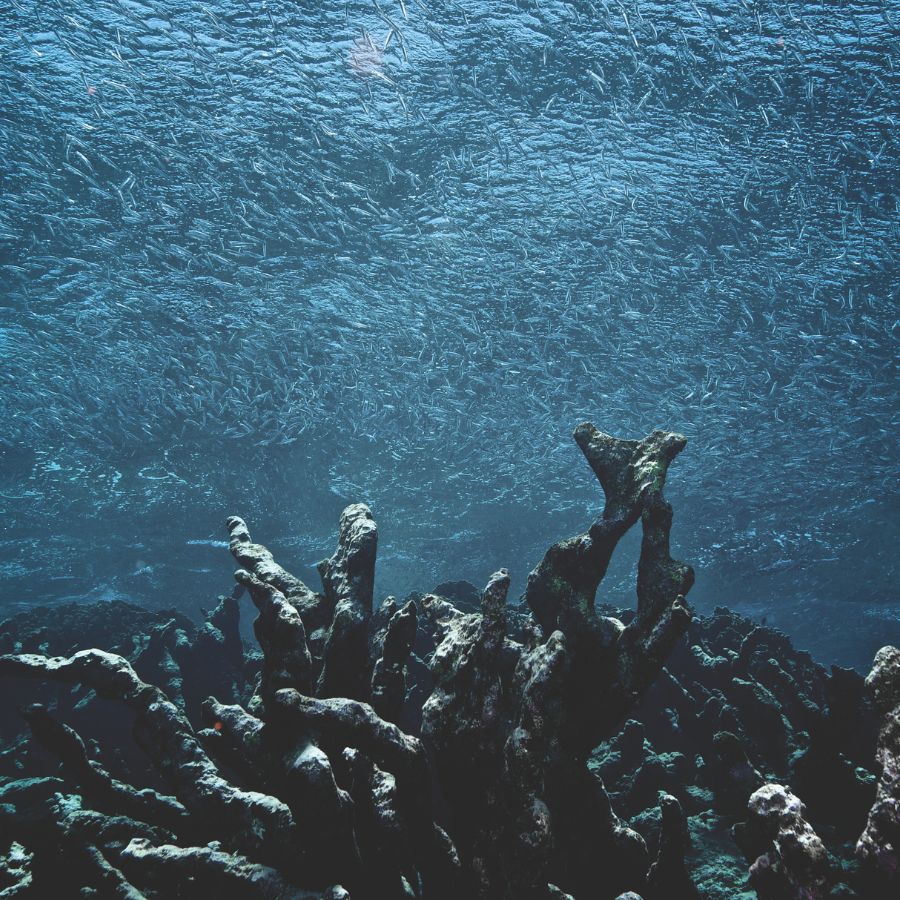

Of all the ways the world has entered a new era, one of the most consequential yet least discussed is unfolding beneath the ocean’s surface. The planet’s warm-water coral reefs are dying at an unfathomable speed and scale: as much as 40% in the last three years, equivalent to all the dieback of the previous five decades combined. Picture a plasma screen TV reverting to black and white, or a field of flowers turning monochrome.
That coral bleaching is an old story obscures the fact that it is also a new story. First reported in the early 1980s and then extensively in the 2000s and 2010s as mass bleaching events became more common, the tragedy of tropical reef habitats being drained of their kaleidoscopic beauty has long been a familiar trope in the climate-change narrative. But the situation changed during the last El Niño phase, between 2023 and 2025, when prolonged heat stress afflicted 84% of the world’s coral reef area, of which half didn’t survive, according to estimates by Carlos Duarte, a leading marine scientist.
“We’re in a new reality whereby we can now say that we’ve passed the first major climate tipping point, which is the coral reefs,” said Steve Smith, a research fellow at the Global Systems Institute, in an interview with CBS News. Smith is one of the co-authors of an October 2025 report by the University of Exeter that found that warm-water corals – where 830,000 species live, and upon which 33% of marine life depends – are the first planetary-scale system to enter irreversible decline. The latest mass bleaching event came soon after the previous one, from 2014 to 2017. “They don’t have time to recover,” says Marinez Scherer, who served as special envoy for the ocean at the COP30 climate conference in Brazil, in an interview. “The water is staying far too warm for them to survive.”
Scientists are horrified. “We’re talking about an extraordinary, catastrophic collapse,” Oliver Steeds, director of the species cataloguing initiative Ocean Census, said at a summit in Montreal in March. He called the coral dieback “an apocalyptic situation that is happening in our oceans.”
The start of the heat wave that killed off so many warm-water coral reefs coincided with another grim milestone: 2023 was the year the planet first sailed past the critical threshold of 1.5°C of global warming. The Intergovernmental Panel on Climate Change has found that crossing this marker probably means losing between 70% and 90% of tropical shallow water coral reefs, which are the vast majority of the world’s reef ecosystems. Go up to 2°C of warming and we’re facing 99% die-off. The world is currently on track for about 2.6°C by the end of the century, and fossil fuel emissions have not stopped rising.
While warming is generally measured as an average across decades, many scientists consider “overshoot” to no longer be a risk but rather a fact. We may still be at the gate, but we now live in the land beyond 1.5°C, where coral disappearance is but one of multiple cascading transformations – melting polar ice sheets, disruption to North Atlantic Ocean circulation, the dieback of the Amazon – that can no longer be considered merely theoretical.
“We know that scientists have told us that [overshoot] territory exposes us to potential non-linear trajectories of climate change,” said Ricken Patel, founder of the global online campaigning network Avaaz, speaking on the Outrage + Optimism podcast. Patel’s focus has shifted from pressuring governments to keep warming below 1.5°C to preparing for more catastrophic tipping points, because, he said, we are unlikely to avoid them: “I haven’t met anyone who said that we’re on track. Not a single person.”
The truth is that 1.5°C is not the magic number when corals start to wobble into irreversible decline. That was likely 1.2°C of warming, which we started to traverse about a decade ago.

But 1.5°C has been freighted with significance since it became the main reference point in international climate policy following the Paris Agreement, the climate accord agreed to by 195 countries in 2015. (The United States has since dropped out – twice.) At the time, the signatories set a goal to limit warming to well below 2°C but committed only to “pursuing efforts” to stay below 1.5°C. Even so, 1.5°C became one of the central pillars of global climate governance, particularly as the science coalesced around that marker as the real upper boundary for what’s relatively manageable.
“It’s a limit. It’s a ceiling. It’s a maximum temperature level,” Christiana Figueres, the Costa Rican diplomat who led the UN climate talks at COP21, has said. “It’s not a target.”
Whatever it is, it’s not happening, and the climate movement is still working out how to adjust to that fact. Some are calling for a reckoning, as climate action weathers a prolonged period of political hostility and public disaffection, with climate coverage down 35% across major U.S. networks in 2025. But even missed, 1.5°C won’t be killed, because it still retains its scientific significance and legal status. In short, we’ll have to get back to it in the future. But can the movement keep rallying around its most glaring failure?
A movement in crisis
The story of human-caused climate change follows three interconnecting pathways: what the science says, how it’s received, and what we’re doing about it. But it’s the science that runs down the middle, laying the track for the others to follow.
When the greenhouse effect was discovered in the mid-1800s, it did not take long for scientists to recognize that fossil fuel pollution would build up in the atmosphere and heat the earth. Through research and observation spanning disciplines and decades, the theory was validated and its impacts described and anticipated. But as the picture crystalized and the imperative to stop burning fossil fuels became apparent, the response split into two distinct dynamics.
On one track, applied scientists recognized the reality of the impending climate crisis and began to innovate. They invented solutions, started companies – many failed, some succeeded – and ultimately spawned whole new industries that are now pillars of the economic landscape. Wider society, too, reflexively accepted the science, but this response was hijacked by oil and gas companies, who spent billions on misinformation, greenwashing, legal attacks and lobbying. And so the climate crisis became, on one side, a technical challenge and an economic opportunity, and on the other, an actual “climate fight” between environmental campaigners and the incumbent industry, with scientists decidedly in one corner and policymakers trying to play both sides.
Stopping climate change has always been popular, but consensus around appropriate and effective climate action has been dazzlingly hard to produce. That impasse has never felt more stark. Humanity’s civilizational story of encountering existential peril and making a hard switch to a new energy system feels, on a bad day, like one of failure and defeat. Just ask David Suzuki. The famed environmentalist said in an interview with iPolitics last summer that it’s “too late” and that “we have lost the fight against climate change.”
Consider the evidence. There’s the spectacle of President Donald Trump swinging his golden wrecking ball through U.S. climate policy, obliterating environmental protections and stamping out climate science – and apparently without much opposition. There’s an ascendant cultural movement that derides and attacks climate ambitions, and anti-green political parties poised to seize power in Europe, the United Kingdom and elsewhere. There’s the sad scene of countries and corporations quietly shedding the goals they proclaimed only four or five years ago. And then there’s the annual Conference of the Parties to the Paris Agreement, shuffling from petrostate to petrostate, yielding less and less.
Arlo Brady, CEO of Freuds Group, a London-based PR agency with a history of supporting climate and sustainability campaigns, said in October that the movement “has lost the battle for hearts and minds.” Accepting that fact “paves the way for the adoption of a new approach, but only if we treat this as a learning moment,” Brady told a crowd at a taped recording for the Overshoot podcast, a documentary series by Laurie Laybourn about the implications of transgressing 1.5°C.
Brady decries the lack of “populist narratives for climate action” and warns that the environmental movement’s staple response of “outrage and turning up the volume” won’t work anymore. He argues that “the jargon and the ideology and the groupthink has gotten in the way” and that the sustainability movement should rally around the idea “that people might be able to live better lives.”
In that vein, BloombergNEF’s Michael Liebreich launched a manifesto for a “Pragmatic Climate Reset” in the fall, accusing climate campaigners of being tribalistic, elitist and unrealistic about the costs and challenges of a rapid transition. The movement’s main mistake, he says, was pinning policy to 1.5°C and net‑zero‑by‑2050 as non‑negotiable absolutes, despite the unlikelihood of achieving them. “It’s time to put the decade of 1.5°C behind us,” he wrote, and aim instead for “the hard 2°C target that lies at the heart of the Paris Agreement.”
But 1.5°C isn’t something we can quit like a bad habit. “The primary temperature goal is 1.5°C and not 2°C degrees,” climate lawyer Harj Narulla says in an interview. “In an overshoot scenario, that legal standard does not change. All that changes is that the factual emissions reduction pathway shifts and becomes more difficult, [because] we need to have more removals.”
Narulla was among the litigators who brought evidence and legal arguments before the International Court of Justice for its advisory opinion on states’ climate obligations, delivered last summer. That opinion, he says, effectively locked 1.5°C in as the legal standard for warming. Even in an overshoot world, the bar does not move; it simply means that states must bend temperatures back down through much faster cuts and large‑scale carbon removal. Equipped with the ICJ’s opinion, litigation is pouring more heat on fossil fuel production and methane emissions, he argues, because courts are starting to treat them as incompatible with getting back to 1.5°C.
Beyond fossil-fuel economics
Political scientist Jessica Green is ahead of the curve. She’s been pushing for a reckoning over the fundamental flaws in global climate governance for years, and she, too, argues for a pragmatic turn. But in her definition, pragmatism doesn’t mean softening ambition, but rather to use existing institutions to pull the props out from under the oil and gas industry. Her book Existential Politics: Why Global Climate Institutions Are Failing and How to Fix Them (Princeton, 2025) makes the case that climate governance has leaned too heavily on voluntary targets and carbon pricing and not nearly enough on industrial policy and confronting corporate power. She calls for “ditching the fiction that markets alone will deliver decarbonization” and instead using the state to plan and build the clean‑energy economy.
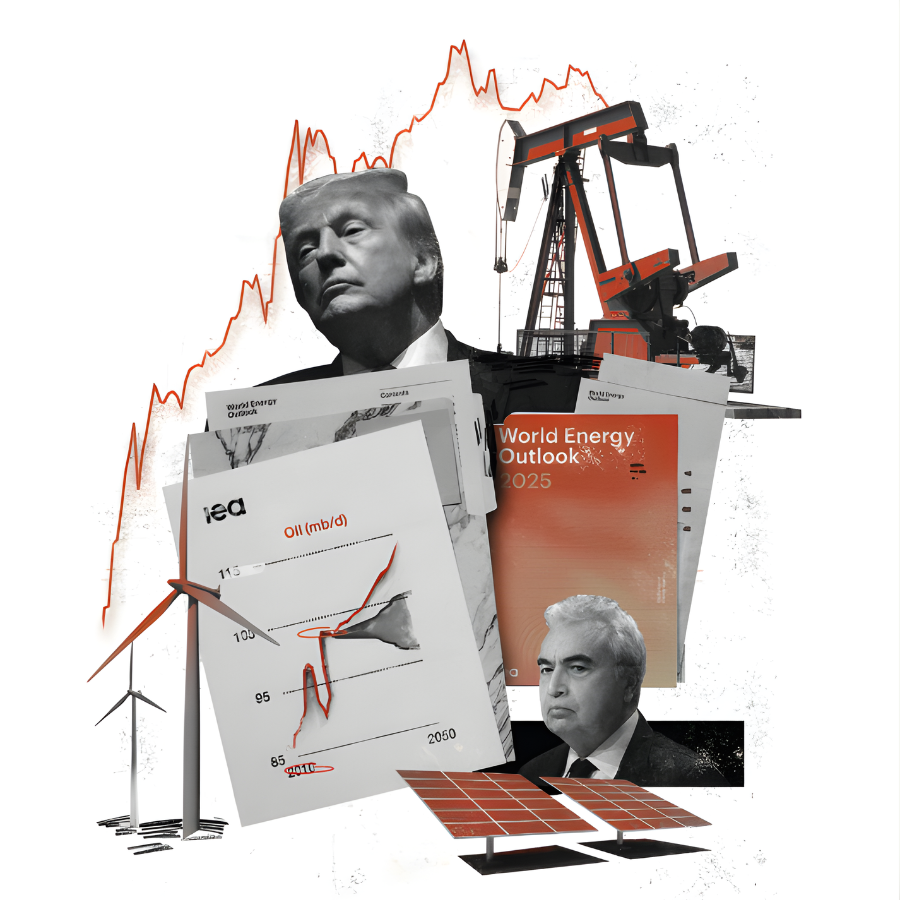
There’s an irony to the accusations and hand-wringing in the climate movement growing noisiest at precisely the moment when the energy transition has reached transformative momentum and scale. Global investment in renewables now roughly doubles spending on oil and gas, and electrified technologies are growing much faster than their fossil fuel alternatives in areas like transportation and heating. The oil price shock precipitated by the Iran war will create a lot of pain – and underscore the incentives for switching to renewables and electrification.
“We’re now at a point where clean technologies are cheaper and better for most uses,” says Chris Severson‑Baker, executive director of the Pembina Institute think tank in Canada, “but they still struggle to proliferate in regulatory environments built for fossil fuels.” He argues that climate advocates should focus less on “demonizing fossil fuels” and more on helping policymakers align climate goals with a positive vision of the future economy, showing how cleaner systems mean jobs, security and lower long‑term costs.
RELATED STORIES

But in the rush to find solutions and successes, climate campaigners are sorely at risk of failing to get credit where credit is due. None of the economic momentum we see now would exist without the many decades of effort by citizens, litigators and campaigners to force governments and markets to take climate seriously in the first place. They shouldn’t be discounted, either, as they are continually gaining economic allies among insurers, investment managers and wealth funds.
For Carlos Duarte, who leads the G20’s Coral Research & Development Accelerator Platform, the biggest challenge is defeatism. We already have a toolbox of imperfect but workable interventions that could keep reefs alive if we deploy them at scale. He estimates that about US$68 billion – roughly the cost of a major harbour or airport – would be enough to safeguard reefs for future generations, creating millions of jobs in the process, so long as we also keep phasing down fossil fuels. Most of that money would go to restoration rather than rescue, which he says “shows that conserving is a lot more cost‑efficient than having to repair when the damage is done.”
In the wider climate crisis, cost efficiency may be swiftly retreating, but ambition need not be. This is a story with many chapters left to be written.
Mark Mann is the managing editor of Corporate Knights. He’s based in Montreal.
The Weekly Roundup
Get all our stories in one place, every Wednesday at noon EST.