This story was originally published by Canary Media. It has been edited to conform with Corporate Knights style.
Lauren Phillips’s balcony just became a power plant. A very small, carbon-free one.
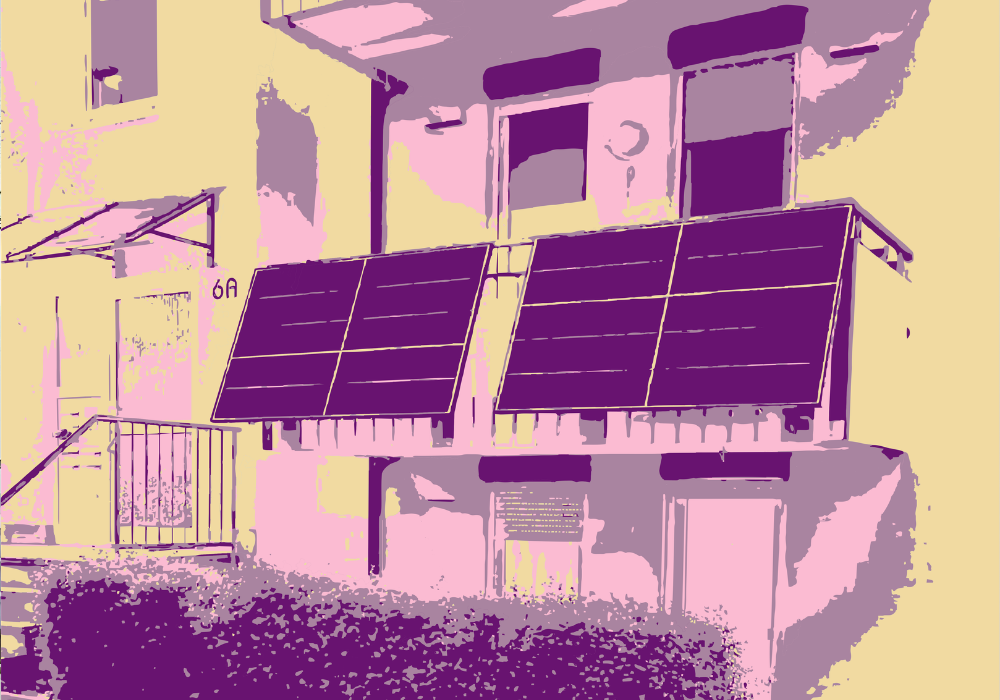
A few weeks ago, the attorney set up what may be the first plug-and-play solar panel in the Bronx. The 220-watt installation, which is secured to the balcony railing with zip ties, has been a boon for the renter and mother of two. “I have an enormous childcare bill every month. My electricity bills never go anything but up,” Phillips says. “Everywhere you turn, things are only getting more expensive.”
Plug-in solar non-profit Bright Saver, which provided the roughly US$400 panel to Phillips at no cost, estimates that it will produce about 15% to 20% of the electricity her family uses and save her about $100 per year. Every time Phillips gazes at the device, she says, she’s amazed that “this is just a thing that I plugged in, and I’m generating my own power.”
Phillips is one of the few intrepid Americans installing DIY solar without the permission of their utilities, taking advantage of a regulatory grey area. Only deep-red Utah has a law, passed in March 2025, that explicitly allows residents to plug in these devices. A few thousand households there have installed systems so far, Bright Saver says.
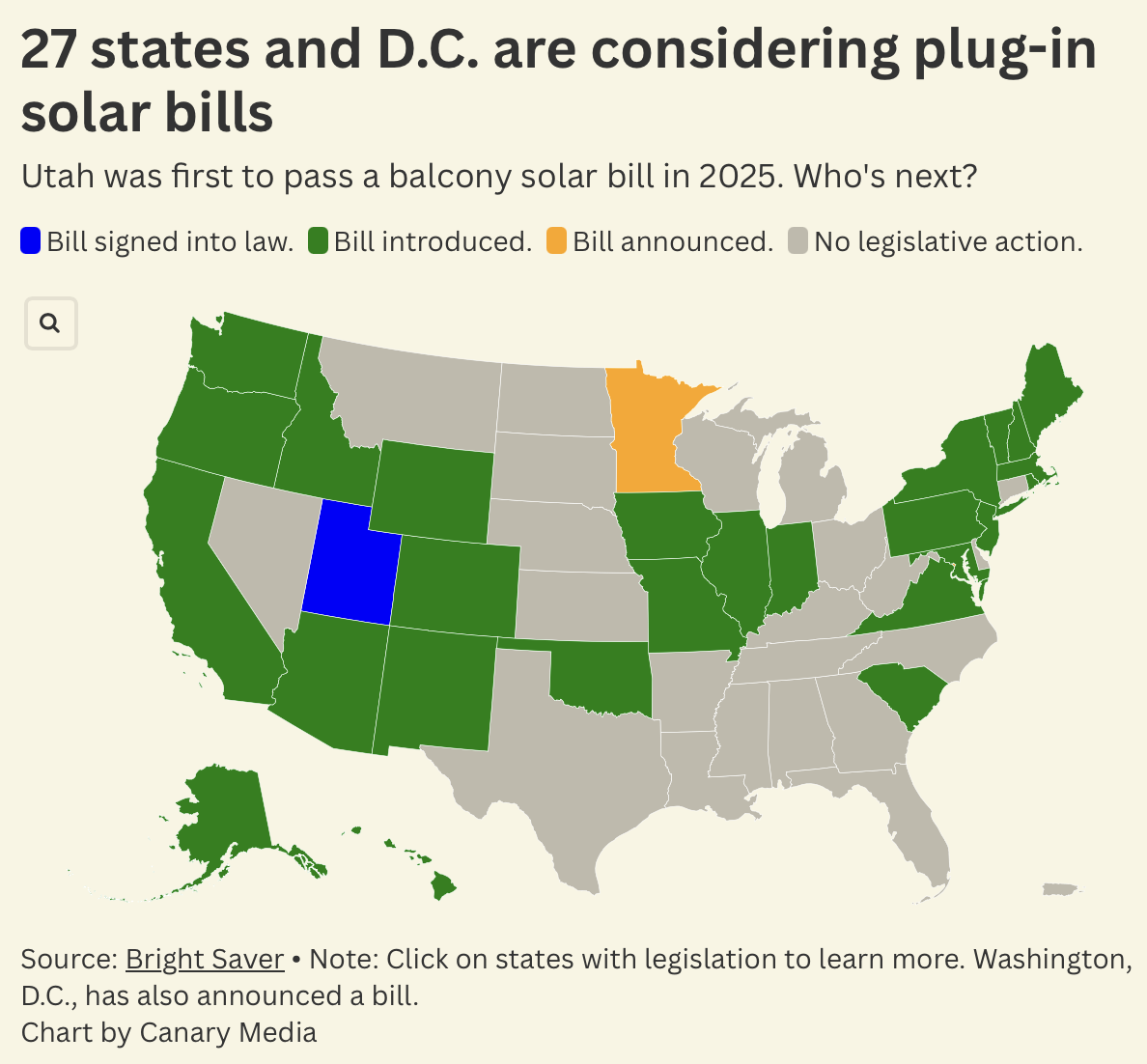
But other states, including New York, could soon follow Utah’s lead and unleash much broader adoption of solar panels that plug into a standard 120-volt wall outlet. As of Wednesday, Democratic and Republican lawmakers in 27 states and Washington, D.C., had announced their own legislation to make these systems permissible, according to Bright Saver.
As utility bills climb and contribute to broader cost-of-living challenges across the United States, legislators see the portable tech as an affordability tool. It literally empowers people, says Emily Gallagher, a Democratic member of the New York State Assembly who in September introduced a bill to pave the way for small-scale solar. “People are extremely enthusiastic about it,” notes Gallagher, a renter who longs for a plug-in system of her own.
An 800-watt unit that costs US$1,099 is capable of powering a fridge or a few small appliances for a sunny fraction of the day. That’s enough power to reduce bills for a New York household by $279 per year on average, Gallagher says. Assuming that utility costs continue to rise, those savings could increase to $327 per year by 2035.
Balcony limbo
Plug-in solar is already booming in Europe. As many as four million households in Germany have installed the systems, which people can order through Ikea.
But in the United States, outside of Utah, the tech is stuck in regulatory limbo. While the systems aren’t illegal, utilities often require users to sign an interconnection agreement before plugging in solar – just as they would for a large rooftop array. And those agreements can require fees and take weeks to months to get. Utah did away with that interconnection requirement, so long as a nationally recognized testing laboratory certifies that the solar device is safe to use. All the other legislation introduced since would do the same.
I was actually hospitalized with an asthma attack last year. For me, anything that we can do to green our power grid, to reduce pollution, is a matter of justice — especially for people who live where I live.
– Lauren Phillips, solar adopter
“The technology has evolved, and the law hasn’t caught up yet,” Phillips says. Putting up her own system might be “an act of solar civil disobedience,” she muses.
UL Solutions launched an initial testing protocol in January, which a panel of experts will refine in the coming months, according to Bernadette Del Chiaro, senior vice president for California of the non-profit Environmental Working Group and former executive director of trade group California Solar and Storage Association.
Meeting the moment
There’s a real hunger for plug-in solar, says Cora Stryker, co-founder of Bright Saver. Momentum for these devices is growing faster than she expected.
Some zealous legislators announced bills out of the blue, Stryker notes. A few chambers even saw multiple lawmakers introduce plug-in solar bills independently of each other.
Missouri State Representative Mark Matthiesen, a Republican, sponsored a DIY solar bill in December. Electricity rates are climbing fast in his state; families who get a system could save $30 to $40 per month and break even in as little as 25 months, he says. “Then, everything beyond that is money back in your pocket,” says Matthiesen, who got rooftop solar panels in 2024. “If people can buy something to invest in themselves, to save them money down the road, then we as a government just need to let people do that.”
Matthiesen heard about plug-in systems last year from fellow legislators when they met up at the site formerly known as the National Renewable Energy Laboratory in Golden, Colorado. As for South Carolina State Representative Mike Burns, another Republican who recently introduced a balcony solar bill, it was a passionate constituent who tipped him off.
A few proposals, including those in Missouri, Washington State and Wyoming, have stalled. Some utilities have opposed legislation for permission-less systems, saying there are safety risks, including from energy being fed back to the grid and potentially overwhelming its capacity.
Advocates, however, say that this argument ignores the physics of electricity. Because these are modest systems, which proposals generally cap at a size of 1,200 watts (that’s up to a sixth the size of the typical rooftop array), a home’s appliances will quickly gobble up the power they produce, according to Del Chiaro. Very little, if any, energy will flow back into the distribution grid.
Balcony solar bills in New Hampshire, Vermont, New Jersey and Illinois look on track to pass, according to Stryker. A proposal in California – a potentially massive market as the state with the second-highest electricity prices and largest state economy in the nation – is in committee. Stryker anticipates that still more lawmakers will announce legislation for the up-and-coming tech this year.
For Phillips, balcony solar is more than a means to save money; it’s a step toward a healthier future. She’s a third-generation native of the Bronx, an area disproportionately burdened by noxious pollutants. “I was actually hospitalized with an asthma attack last year,” she says. “For me, anything that we can do to green our power grid, to reduce pollution, is a matter of justice – especially for people who live where I live.”
Phillips has been talking to friends and family about her mini power plant. “Everybody wants one,” she says. States simply need to pass their portable solar bills to open the floodgates, Phillips notes. “I can’t wait to see solar panels peeking out of everyone’s balcony.”
Alison F. Takemura is a reporter at Canary Media.
The Weekly Roundup
Get all our stories in one place, every Wednesday at noon EST.