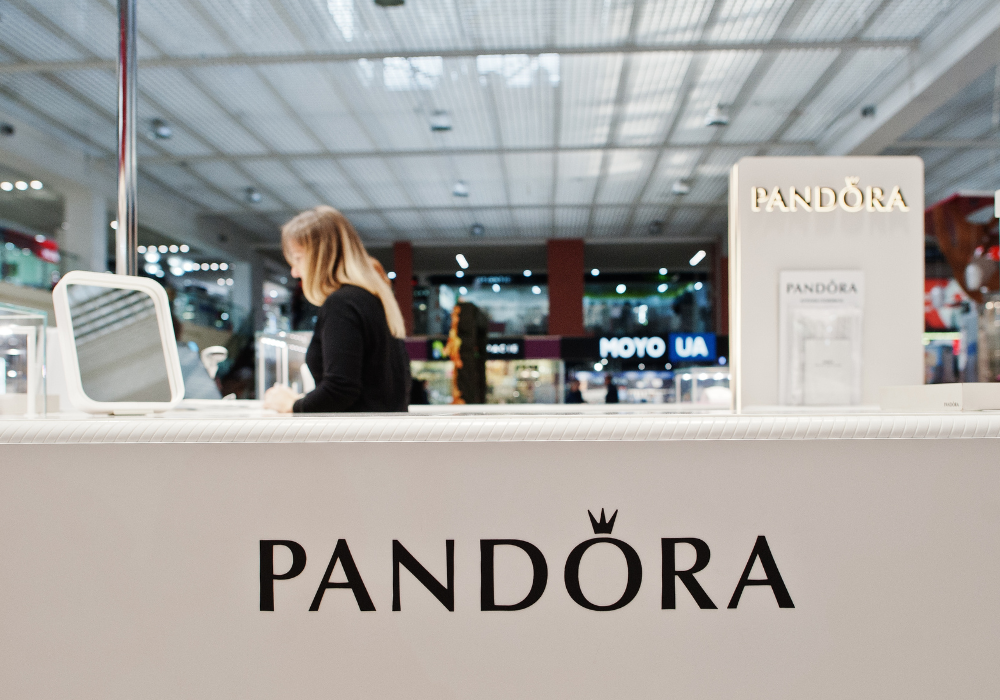
Pandora has come a long way in six years. In 2019, after weak sales and tepid revenue growth, the Denmark-based jewellery brand went all in on a turnaround plan by cutting costs and prioritizing sustainability. The brand switched to lab-made diamonds and, as of 2024, it exclusively uses 100% recycled silver and gold in all its jewellery.
That strategy seems to have paid off: revenue has grown 45% since 2019, according to Mads Twomey-Madsen, Pandora’s senior vice president of communications and sustainability. In that same period, he says, Pandora has cut emissions by 17% across the board.
“We can grow and become more sustainable at the same time,” he says. Adopting sustainable practices was a natural next step in Pandora becoming “future-proof,” he adds. “It’s not something that we did as a marketing play. We’re quite aware that many consumers are very interested in sustainable options . . . but it’s more something that we did to stand strong as a brand overall.”
Whatever the reason, the moves make Pandora stand out. And they have helped earn it the number two spot in the Corporate Knights Global 100 ranking, all the way up from 48 in 2025.
The fashion industry contributes up to 8% of global emissions, but a minority of brands are committed to incorporating circular processes. According to the 2022 S&P Global Corporate Sustainability Assessment, which surveyed 70 brands in the textile, apparel and luxury goods industry, 44% of brands had at least one circular fashion program in place.
Pandora isn’t alone in its sustainability ethos. Some of the biggest brands in fashion have launched recycling initiatives in recent years. The German athletic apparel giant Puma, for instance, now uses polyester textile waste saved from factory off-cuts, faulty goods and used clothes to make new garments under the brand’s Re:Fibre program. On average, about 25% of Puma’s products contain recycled materials.
Inditex Corp., the parent company of Zara, aims to use only textiles that have a low environmental impact by 2030. The brand claims to have used 39% recycled fibres in 2024. It is also working to scale up purchases of recycled materials – such as fibre made from cotton-rich textile waste and polyester made from textile waste – through offtake commitments. The brand also has several eco-certifications, including the Recycled Claim Standard.
Kering S.A., the holding company that owns some of the largest luxury brands, including Gucci, also carries a Recycled Claim Standard certification. The company works with Econyl, a brand-name nylon made from waste products, and partners with start-ups such as Worn Again, which has developed the technology to create fabric from non-reusable textiles.
A steep hill to climb
Despite these types of initiatives – several of which are still in their infancy – the overwhelming majority of textile waste ends up in landfills. According to Boston Consulting Group, only 12% of global textile waste is reused, with less than 1% recycled into new fibres. When it comes to jewellery, recycled gold makes up a larger percentage of the overall supply than recycled silver but these metals are still being mined extensively.
Pandora mostly deals with silver, which makes up about 67% of the brand’s product volume. “The world is not very good at recycling silver,” Twomey-Madsen says, adding that the metal often ends up in the landfill through electronic waste.
It took four years for the brand to completely transition into recycled metals. The process required Pandora to convince its suppliers – 40 total – to source recycled metal certified by the Responsible Jewellery Council Chain of Custody standard. The transition will add an additional US$10 million to annual operating costs, which includes investing in new equipment for suppliers to establish a separate recycled-metal process from their non-recycled metals.
That’s a cost of doing sustainable business that Pandora is willing to pay, Twomey-Madsen says. The added benefit, he says, is that Pandora’s suppliers can now offer recycled metals to other brands, too. “It’s available now for other companies that want to do the same. And I think that’s something that you encounter in these circularity changes,” he says. “These value streams aren’t really established yet. So when you go first, you need to invest in making that happen.”
Ayesha Habib is a Vancouver-based journalist who has written for The Globe and Mail, Maisonneuve and Chatelaine.
The Weekly Roundup
Get all our stories in one place, every Wednesday at noon EST.