Canada’s need for a national office for climate adaptation is clear. Despite notable adaptation initiatives by various financial institutions and forward-looking municipalities, major gaps in adaptation funding, policy and implementation continue to hamper federal and provincial governments. The lack of a national office to help address these public-sector weaknesses is remarkable given the escalating costs and rising risks of extreme weather from climate change.
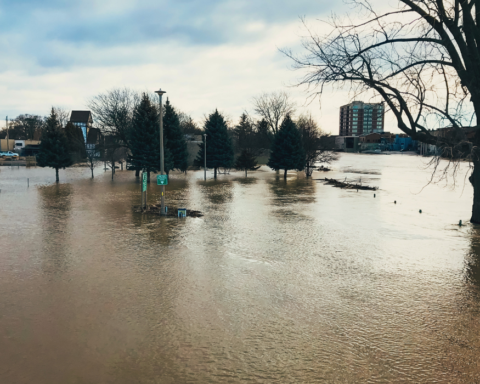
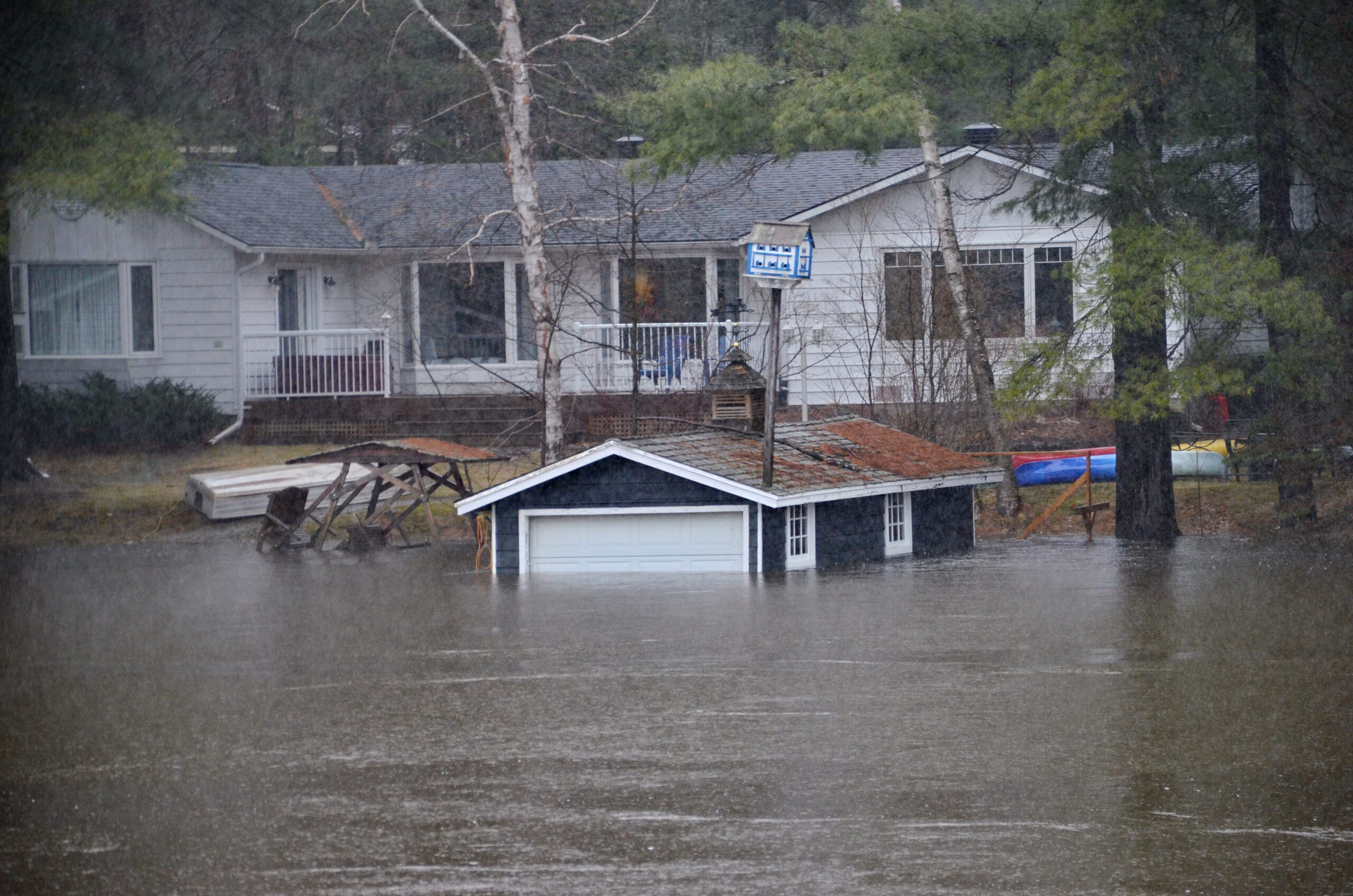
Since 1983, Canada has experienced more than 300 catastrophic weather events (extreme weather occurrences causing more than $30 million in insured losses; $25 million prior to 2022). Four decades ago, Canada averaged about two catastrophic events annually; by the mid-2020s, that figure climbed to roughly 15 per year. From 2009 through 2025, insured losses from climate-related disasters jumped to average nearly $3 billion annually versus $400 million to $700 million typically each year from 1983 to 2008.
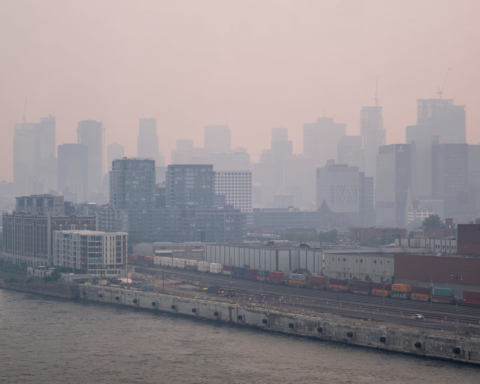
As disturbing as these figures are, they do not capture the full extent of losses. For every $1 of insured losses, there are usually another $3 to $4 of uninsured costs. Nor do insurance figures convey the lives lost or the full extent of the economic, financial and health impacts of catastrophic weather. The former includes the tragic loss of 619 lives during British Columbia’s heat dome in 2021. The latter includes large gross domestic product and income losses and the much higher government spending that occurs. For example, total economic loss estimates and the large-scale government firefighting and emergency assistance for the widespread Canadian wildfires in 2023 exceed $10 billion.
These and other tragic impacts and escalating costs from extreme weather make greater resiliency through climate adaptation both essential and long overdue.
Yet three major political barriers prevent effective Canadian adaptation from being a key policy goal: lack of understanding, inadequate will and weak policy capacity. The problem of understanding is that adaptation is not seen as core economic and fiscal policy as well as crucial environmental and health policy. The problem of will reflects the longstanding, excessive focus of government on announcing policy versus genuine and practical action, and the dominance of other priorities in the political agenda. The problem of capacity is evident in the modest funding for, and limited in-house expertise of Ottawa and the provinces in, adaptation design and implementation.
Creating a national office for climate adaptation is a critical step toward addressing these deficiencies. A national office would help lessen problems from the lack of understanding and political will. It would provide much-needed analytical and advisory capacity to improve federal policy design and implementation.
-
Lack of political understanding
Climate adaptation and mitigation are both essential
Mitigation means preventing or reducing greenhouse gas emissions that drive climate change. This is an existential Canadian need now and, especially, over the medium to long term. Adaptation refers to protecting or lessening the impacts on people, business and infrastructure from climate change and extreme weather. Adaptation is vital to contain the rising costs and risks of climate change while giving Canada the opportunity to make substantive progress in mitigation.
Effective climate-change policy comprises adaptation and mitigation. It is a false narrative that there is choice between them. Mitigation depends upon adaptation to allow the time for its measures to succeed. Adaptation will not work if climate change is not mitigated. Success depends crucially on both.
Adaptation is a fundamental economic, fiscal and financial requirement
Federal adaptation funding and resources as well as program implementation have been a small fraction of those for mitigation. Leading experts point to the imbalance of “$1 spent on mitigation for every $0.05 spent on adaptation,” or approximately a 20:1 ratio. Adaptation has received too little federal and provincial attention apart from weather disasters. Even then, governments’ focus tends to ebb away quickly once the emergency phase ends.
Ottawa’s funding approach, and that of most provinces, demonstrates a clear lack of understanding that climate adaptation is fundamental economic and fiscal policy. In addition, populist leaders at both levels continue to make deeply flawed arguments such as there being a choice between economic growth and preserving natural assets (e.g., wetlands and forests) that are critical to adaptation and mitigation. They have created and sustained the mistaken view that Canadians cannot afford essential adaptation investments.
Yet the reality is the exact opposite. Wetlands lessen flood damage and risk. Forests sequester carbon and help regulate water flows. Ecosystems help reduce coastal communities’ impacts from storms and erosion. Urban green spaces reduce heat stress and improve public-health outcomes. Moreover, adaptation requires sustaining and enhancing natural (green) infrastructure and improving the resilience of built (grey) infrastructure. Canadian communities, businesses, households and governments depend heavily upon high-quality green and grey infrastructure for their economic, financial and health needs.
Extensive international and Canadian research shows that climate change and catastrophic weather reduce gross domestic product, productivity and incomes. This occurs through multiple channels. Supply is reduced from damage to utility, transportation and communication networks as well as harm to or destruction of commercial buildings and equipment. Extreme heat reduces workers’ cognitive and physical capacity, while heat stress and wildfire smoke increase absenteeism. Lesser income from these supply impacts reduces key sources of demand such as investment and consumption, further decreasing GDP.
Increasing fiscal costs result from surging expenses for emergency assistance and infrastructure repairs and growing need to invest in resilient infrastructure. A 2026 study on proactively upgrading grey infrastructure assets to adapt to extreme rainfall and rising heat estimated that Canada could save up to $9 billion annually in net costs compared to not making these adaptation investments. The savings exceed $4 billion per year relative to a reactive approach, where upgrades are made only at the time of asset replacement.
For businesses, extreme weather means higher insurance premiums plus the costs of immediate repairs, long-term recovery and investment in more resilient offices, factories, warehouses and equipment. Individuals face income disruptions, time away from work and lower personal productivity. Households are confronted by fewer mortgage options in high-risk areas, plus repair and rebuilding costs not covered by insurance.
-
Inadequate political will
Too little long-term thinking and the absence of a systems approach
It is difficult for governments to think long-term when acute crises and large-scale shocks occur, especially when these create a polycrisis whereby multiple, inter-related crises and shocks occur simultaneously. From the pandemic and the surge in inflation and interest rates in the early 2020s to the ongoing geopolitical shocks (as of June 2026) from Russia’s invasion of Ukraine, major wars in the Middle East, and structural U.S. disruptions in trade, defence and Canada–U.S. relations, the polycrisis has led to near-term needs dominating government focus.
The polycrisis challenges have meant that long-term thinking and strategy to deal with climate risk – despite its chronic nature becoming devastatingly acute this decade – received far too little attention from Ottawa and the provinces apart from mainly short-term responses to catastrophic weather events.
This insufficient long-term thinking has been compounded by the absence of a systems approach. The lack of systems policymaking was and is evident in the priority of short-term economic (e.g., building housing in high-risk flood areas) and fiscal (e.g., delaying investments in resilient infrastructure) benefits at the expense of higher medium- and long-term costs. It also meant that serious harms to the environment and health of Canadians occurred from the failure to factor the adverse effects on these related systems into policy.
Policy and strategy announcements with very modest follow-through
Over the past 15 years, there have been numerous federal announcements of adaptation programs and initiatives, culminating in the 2023 National Adaptation Strategy. Despite the proliferation of these efforts from 2015 onwards, and various laudable objectives and selected notable content in the NAS, federal spending on adaptation during the Justin Trudeau years was a small fraction of the outlays on mitigation.
Under the Mark Carney government, mitigation remains the main climate-change policy focus, even though overall funding and policy support have fallen compared with the Trudeau era. While the National Adaptation Strategy remains in place, adaptation spending continues to be much lower than on mitigation, accounting for only a small share of climate-related expenditures from 2025 through June 2026. Ottawa’s emphasis has been on carbon capture and electrification to fight climate change and, more recently, a renewed goal of sustaining natural capital, which included citing nature assets’ role in adaptation. For their part, provincial funding and focus continue to be insufficient.
Looking at just local government needs alone, a 2020 analysis determined that municipal infrastructure and other local adaptation requirements were $5.3 billion annually, a figure that would be substantially higher in mid-2026 given inflation over the past six years and the increasing occurrence and impacts of catastrophic weather events. It bears emphasis that this figure does not include the spending and investment needed by firms, homeowners and senior levels of government to achieve more robust adaptation resilience.
-
Lack of policy capacity
Resilience in Ottawa’s nation-building strategy will be crucially dependent on building right the first time. As of June 2026, more than $25 billion in federal capital spending has been announced in defence, housing and other infrastructure. Important additional investments in these areas include multibillion-dollar commitments from the private sector.
Given the scale and pace of these investments, it is imperative that Canadian infrastructure and other economic assets be designed and constructed from the outset to better withstand extreme weather. Resilience needs to be embedded in the design and construction of military installations and other critical infrastructure such as transportation, energy, hospitals, water systems and emergency operations. Greater climate adaptation in new and existing housing is also vital for homeowners and communities alike.
Yet the federal capacity to make policy and to advise and assess these resilience needs is far too disparate, limited and uncoordinated.
Ottawa’s robust strengths in climate forecasting and weather analysis are clear. Significant specific knowledge about natural assets exists in the public sector, including Statistics Canada’s expertise from its Census of Environment efforts and selected staff in leading municipalities such as Calgary and Mississauga that have implemented unaudited disclosures of natural assets on their balance sheets. Canada Mortgage and Housing Corporation’s work in housing and climate change resiliency is a notable advantage.
Yet far more capacity is present in the non-profit sector. Examples include the advanced economic analytical and modelling capabilities on climate change impacts in organizations such as the Canadian Climate Institute and the Smart Prosperity Institute. Robust technical abilities in adaptation analysis, practical implementation and related expertise reside in leading national entities like the Intact Centre on Climate Adaptation and the Climate Risk Institute. Various government-funded non-profit regional climate service entities – CLIMAtlantic, Ouranos (in Quebec), the Ontario Resource Centre for Climate Adaptation, ClimateWest in the Prairies, and the Pacific Climate Impacts Consortium in British Columbia and the Yukon – offer local and regional adaptation knowledge and capacity.
The problem is that not enough adaptation intelligence and know-how resides within the federal government – even though it designs national policy and plays a key liaison role with provincial and municipal governments in climate adaptation. Ottawa’s capabilities are neither sufficient nor are they set up to provide sustained analytical and information support, let alone coordination advice, for: the federal policy reset, especially the massive investments in defence, housing, infrastructure and major projects; and for initiatives across two or all three levels of government.
The latter problem is particularly acute for most municipalities, especially small and medium-size local governments, given their constraints in budgets, staff and systems. The adaptation challenge is accelerating faster and in more complex ways than municipalities can handle.
Beyond these absolute needs and problems, the very large disparity in resources, especially staffing versus other federal priorities, stands out. The modest budgets and other resources for federal adaptation policymaking and program design and implementation contrast starkly with the funding and staffing provided to defence, housing and infrastructure. The Major Projects Office and Defence Investment Agency, set up in mid-2025 and early 2026, respectively, illustrate the far greater priority and support federally for these areas.
It is hard to describe federal support in terms of funding and other institutional resources for adaptation other than as decidedly inadequate given the creation of these and other new agencies in the first year of the Carney era, the financing provided to them, and their respective mandates to operate as separate entities from government departments and to hire an array of private-sector expertise to build their “in-house” capacity.
-
Why a national office helps address these challenges
A national office for climate adaptation would provide Canada with a much-needed policy focal point, bolster federal analytical and information capacity, and create a non-partisan adaptation champion within government. Its ability to hire experts from the non-profit and private sectors should be stressed. The Major Projects Office’s and the Defence Investment Agency’s successes in attracting non-public-sector expertise are notable. Indeed, the scale and scope of these two new entities relative to traditional federal departments merit highlighting even though we are not advocating for similar scope and powers for a national office’s role.
Canada’s adaptation policy needs to have a clear catalyst and robust assessment capacity. A national office for climate adaptation would be a central entity to help address the vast array of design implementation and other construction, equipment and systems requirements for effective climate resilience in defence, housing, infrastructure and major projects. These tasks include building grey infrastructure assets for resilience from the start of their design and construction. In green infrastructure, examples include understanding and applying the lessons from leading countries such as the United Kingdom and the Netherlands in integrating natural capital and ecosystem service information into public policy to boost resiliency and mitigation such as in new infrastructure, land use and housing development.
Lastly, in strongly advocating for a national office for climate adaptation, we want to avoid being overly prescriptive in its specifics. Such detail is beyond the scope of this article, including whether this entity would be a new agency or whether it would report to the Privy Council Office, the Prime Minister’s Office or the minister of the environment, climate change and nature. We also recommend solid links to Public Safety Canada and the Ministry of Finance given adaptation’s importance for both.
The crucial minimum aspects for a national office for climate adaptation are (1) its ability to hire private- and non-profit-sector expertise and (2) a mandate to examine, assess and provide information support on adaptation requirements across applicable federal, provincial and municipal activities.
Conclusion
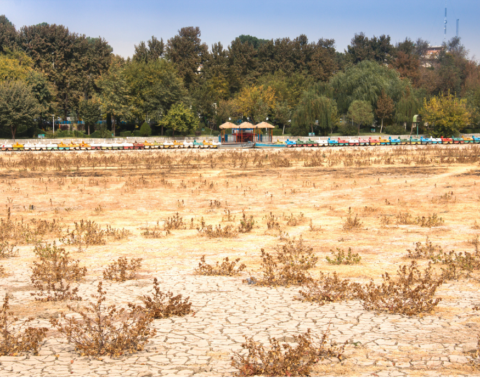
Extreme weather and climate change continue to be escalating threats in Canada. Major prairie hailstorms; serious flooding in central Ontario, Montreal and the Prairies; and severe wildfires in Western Canada and the Northwest Territories have occurred already in 2026. With El Niño underway, the likelihood of climate extremes globally, rising costs and growing risks for Canada are clear.
In 2015, then Bank of England Governor Mark Carney presciently identified and described the tragedy of the horizon from the severe repercussions of climate change occurring well beyond the short-term focus of political and business cycles, and of technocratic authorities. In 2021, while UN special envoy on climate action and finance, he devoted a whole chapter to “Breaking the Tragedy of the Horizon” in his book Value(s).
The reality with climate adaptation in Canada today is that the tragedy is no longer on the horizon. The tragedy is unfolding now and will be far worse unless an effective national office for climate adaptation is created and soon.
James K. Stewart is an economist, a senior fellow at the C.D. Howe Institute, and a member of the Advisory Committee for the Intact Centre on Climate Adaptation.
Hugh O’Reilly sits on a number of boards including the Rick Hansen Foundation, is a member of the Advisory Committee for the Intact Centre on Climate Adaptation and is the former CEO of a Canadian public sector pension plan.
The Weekly Roundup
Get all our stories in one place, every Wednesday at noon EST.